Introduction
Leaky ductwork is one of the most common—and most overlooked—sources of wasted energy and uneven comfort in Elizabeth, New Jersey homes and businesses. Whether your HVAC runs constantly or certain rooms never feel quite right, small cracks, gaps, and failed seams in ducts can quietly undermine performance year-round. If you have noticed drafty spaces, stuffy bedrooms, or dust collecting faster than usual, your system may be pushing conditioned air into attics, basements, or wall cavities instead of where you need it. Early attention to leaks prevents escalating problems, protects indoor air quality, and helps your equipment last longer. If you are just beginning to research solutions, professional air duct repair is often the fastest path to measurable improvement.
In this in-depth guide, you will learn how to spot the most telling symptoms of duct leakage, what typically causes the problem in Elizabeth’s housing stock, how pros diagnose leaks accurately, and what fixes are most effective and durable. You will also find step-by-step tips to reduce risk, guidance on when to DIY and when to call a technician, and a helpful FAQ to answer common concerns.
Why Duct Leaks Matter More Than You Think
When supply or return ducts leak, your HVAC system must work harder to deliver the same comfort. Cooled or heated air escapes before reaching registers, while dirty, unconditioned air can be pulled into the system through return leaks. The results include longer run times, fluctuating temperatures, and more contaminants circulating indoors. Over time, this constant strain can shorten blower motor life, degrade coils, and increase the frequency of maintenance needs.
In New Jersey’s four-season climate, the downsides compound across winter and summer. In winter, leaks bleed warm air into unconditioned spaces, forcing furnaces to cycle more frequently. In summer, supply leaks dump cooled air into attics and basements while return leaks pull in hot, humid air that taxes your air conditioner. The end result is discomfort and avoidable energy waste just when your system is needed most.
Common Signs of Air Duct Leaks in Elizabeth Homes
- Uneven room temperatures: Bedrooms or additions that are consistently warmer in summer or colder in winter are classic indicators.
- Weak airflow at registers: If vents barely move air while the blower is running, you may have disconnected or leaking sections.
- Dust buildup that returns quickly after cleaning: Leaks can draw dusty air from attics, crawlspaces, or garages and disperse it indoors.
- Musty or attic-like smells: Odors from unconditioned areas can be carried into living spaces via return-side leaks.
- Longer HVAC run times: The system cycles more often because conditioned air never reaches target rooms efficiently.
- Whistling or whooshing sounds: Air escaping or entering through gaps can produce audible noises at joints and seams.
- Hot walls or floors above ducts: Supply leaks in concealed chases may warm or cool surfaces unexpectedly.
Typical Causes of Leaky Ductwork
Air ducts can develop leaks for many reasons, some preventable and others related to age or local building practices. In Elizabeth, we frequently see a combination of the following factors:
- Old, dried-out sealing materials: Mastic, tape adhesives, and gaskets can fail over time, especially under temperature swings.
- Poor initial installation: Insufficiently crimped joints, unsealed takeoffs, and loose hangers leave weak points that grow.
- Vibration and movement: Equipment vibrations and building settling can loosen screws, clamps, and seams year after year.
- Rodent or pest damage: In some attics and crawlspaces, pests chew flexible duct or insulation jackets, creating holes.
- Excess static pressure: Oversized equipment, clogged filters, or closed registers can stress duct seams and fittings.
- Corrosion or moisture intrusion: Basements and coastal humidity accelerate rust on metal ducts, especially near joints.
How Professionals Find Duct Leaks
Visual checks alone can miss significant leakage. That’s why reputable technicians pair careful inspection with pressure-based tests and targeted tools:
- Pressure testing with a duct blaster: This temporarily pressurizes the system and measures leakage to quantify the problem.
- Smoke pencils or theatrical fog: Visible wisps show exactly where air is escaping or being drawn into the system.
- Thermal imaging: Hot or cool plumes around seams, boots, and plenums reveal hidden losses during system operation.
- Camera inspection: For concealed chases, cameras help locate disconnected sections and crushed flex duct.
- Airflow measurements: Anemometers at registers confirm whether delivered airflow matches design expectations.
With accurate diagnostics, pros can recommend the right blend of sealing, reinforcement, and selective replacement. They will also check airflow balance and filtration to ensure fixes deliver comfort that lasts.
Proven Fixes for Leaky Ducts
Once leaks are identified, technicians choose materials and methods suited to duct type, location, and severity. Durable, code-compliant repairs usually include:
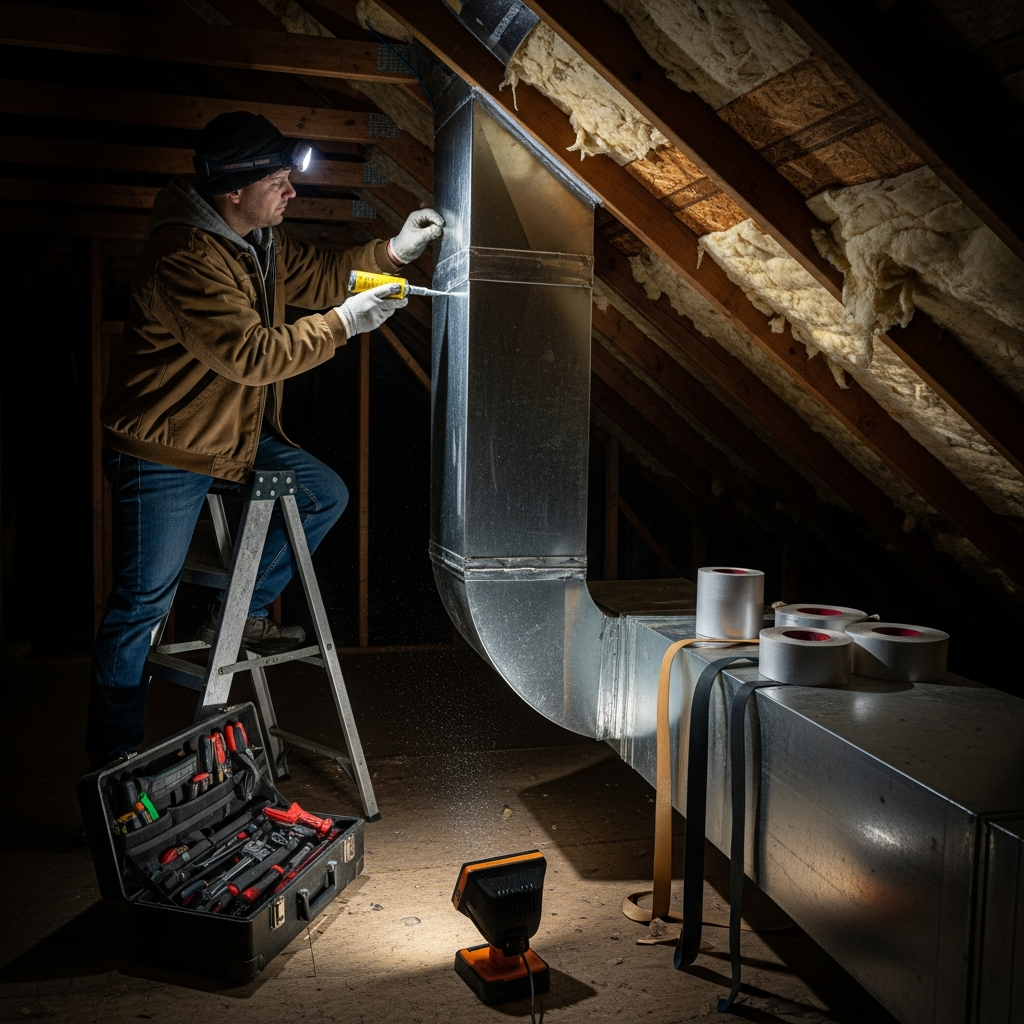
- Mastic sealing: A thick, paint-on sealant that remains flexible and adheres well to clean metal joints and seams.
- UL 181-rated foil tape: Specialized HVAC tape that resists heat and aging—very different from household duct tape.
- Reinforced connections: Sheet-metal screws or drawbands at collars and takeoffs to prevent future loosening.
- Aerosolized internal sealant (in some cases): A fogged sealant that plugs micro-leaks from the inside when access is limited.
- Section replacement: Severely damaged or corroded sections, including crushed flex duct, are better replaced than patched.
- Boot and plenum sealing: Register boots, returns, and the air handler plenum often hide the largest leaks; sealing here is high impact.
- Insulation repair: After sealing, damaged insulation is restored to reduce heat gain or loss along runs.
Sealing is most effective when combined with system balancing. After repairs, technicians can adjust dampers or recommend register changes so each room receives the right amount of air. The result is quieter operation, more stable temperatures, and improved indoor air quality.
DIY vs. Professional Repairs
Homeowners with basic skills can address obvious, accessible leaks—especially at exposed metal joints near the air handler or in basements. If you try DIY, clean surfaces thoroughly, use mastic or UL 181 foil tape (never cloth duct tape), and avoid kinking flexible duct. However, there are clear cases where pros deliver better outcomes:
- Hidden leaks: Concealed chases, attics, and tight cavities require specialized testing and tools to fix effectively.
- System balancing: Getting airflow right after sealing takes instruments and experience.
- Large or multi-branch systems: Bigger networks magnify the effects of small mistakes.
- Health and safety: Return leaks can increase dust and allergens; gas appliances require careful evaluation to avoid backdraft risks.
Professionals also document before-and-after leakage, giving you confidence that your investment translated into real results.
Prevention: Keep Ducts Tight Over Time
After sealing, a few habits will help your duct system stay tight and efficient:
- Replace filters on schedule to maintain airflow and reduce static pressure.
- Keep supply registers and returns unblocked by furniture or rugs.
- Schedule periodic inspections, especially after renovation or equipment changes.
- Monitor humidity in basements and crawlspaces to deter corrosion and pest damage.
- Address unusual noises or new comfort issues promptly—small problems grow if ignored.
Local Context: Elizabeth, New Jersey
Elizabeth’s mix of pre-war homes, post-war bungalows, and newer townhomes means duct materials and routing vary widely. Older properties may rely on retrofitted chases with tight turns, while newer builds may run ducts through attics with significant seasonal temperature swings. In both cases, regular evaluation and targeted sealing deliver outsized benefits—especially during February cold snaps and August humidity. Homeowners also find that sealing complements insulation and air-sealing upgrades, producing a more comfortable, quieter home altogether.
Real-World Scenario: From Drafty to Comfortable
Consider a two-story Elizabeth colonial where the second-floor bedrooms never cooled properly. A duct blaster test revealed significant leakage at supply trunks in the attic and unsealed return boots. After mastic-sealing the trunks, adding screws and foil tape to collars, and resealing the returns, the technician re-balanced dampers and restored attic insulation disturbed by previous work. Follow-up testing showed a dramatic drop in leakage, and airflow at bedroom registers rose to target levels. Nighttime temperatures stabilized, cycles shortened, and the homeowner reported less dust on surfaces.
Results like this are common when sealing focuses on the biggest leaks and is paired with airflow adjustments. For homes that have suffered recurring comfort issues for years, comprehensive air duct repair often feels like a complete system upgrade, even though the equipment remains the same.
Step-by-Step Overview of a Leak Repair Visit
- Initial walkthrough and symptom review: The tech listens to concerns, notes problem rooms, and checks filter condition.
- Access and safety: Power is cut as needed, ladders and protective coverings are placed, and access doors are opened.
- Testing and inspection: Pressure testing, smoke tracing, and targeted imaging locate leaks and disconnected runs.
- Preparation: Surfaces are cleaned; loose insulation is pulled back; joints are tightened with screws or clamps.
- Sealing: Mastic, UL 181 tape, or aerosol sealant is applied appropriately; boots, collars, and plenums get special attention.
- Reinforcement: Flex-to-metal connections receive drawbands; supports are added where sagging contributed to gaps.
- Insulation restoration: Jackets are repaired or replaced to protect newly sealed sections.
- Balancing and verification: Dampers are set, airflow is measured, and a final leakage test confirms improvement.
- Cleanup and report: Work areas are tidied; the homeowner receives findings, photos, and maintenance tips.
Frequently Asked Questions
- Q: How can I tell if the problem is a leak or an undersized system? A: Testing can distinguish between capacity issues and leakage. If airflow and pressures are restored after sealing, your existing system may deliver the comfort you need without replacement.
- Q: Will sealing make my home less dusty? A: Yes, especially if return leaks were drawing dusty air from attics or basements. Better filtration and sealed returns reduce the amount of particulates entering living spaces.
- Q: Is aerosolized sealant safe for homes? A: When used by trained professionals and in the right scenarios, internal sealants are tested for safety. However, they are not always necessary; many systems benefit most from targeted mastic and tape repairs.
- Q: Can I just use regular duct tape? A: No. Household duct tape fails quickly in HVAC environments. Pros use mastic and UL 181-rated foil tape designed for temperature swings and airflow.
- Q: How long do repairs last? A: Properly installed mastic and reinforced joints can provide many years of reliable performance, especially when filters are maintained and airflow is balanced.
- Q: Do I need new ducts to solve leakage? A: Not usually. Selective replacement is reserved for crushed, severely corroded, or improperly routed sections. Most systems respond very well to sealing and reinforcement.
- Q: Will I notice immediate changes? A: Many homeowners report steadier temperatures and quieter operation right away. Verification tests and airflow measurements confirm the improvement.
Simple Maintenance Checklist
- Check and replace HVAC filters regularly.
- Keep at least a few feet clear around returns and the air handler.
- Listen for new whistling or rattling sounds after seasonal changeovers.
- Have a pro recheck balancing after equipment upgrades or renovations.
- Inspect accessible ducts annually for insulation damage or loose hangers.
Ready for Reliable Comfort in Elizabeth?
If you have been coping with uneven rooms, dusty surfaces, or long HVAC cycles, targeted sealing can make a dramatic difference. For a careful assessment and durable fixes from local specialists, schedule professional air duct repair and start enjoying steadier temperatures and cleaner indoor air in every room.
