Understanding What Shapes Your Air Duct Installation in Elizabeth, New Jersey
Homeowners and building managers across Elizabeth often begin planning with one big question: what shapes the overall investment in a new duct system? While every property is unique, several predictable elements determine scope, timeline, and the expertise required. If you are evaluating options for air duct installation, understanding these variables will help you map a smoother project from the outset.
Elizabeth’s housing stock blends historic homes, post-war single-family residences, multi-family buildings, and adaptive reuse spaces. This variety creates different routing, sealing, and balancing needs. Add in the area’s four-season climate and humidity swings, and the demands on air distribution, filtration, and return pathways become even more important to indoor comfort and energy efficiency.
This guide explains how property characteristics, material choices, airflow design, and quality control influence the scope of a new duct system. It also outlines planning steps that help you avoid disruptions, reduce rework, and support better performance for years to come.
Project Scope Drivers Specific to Elizabeth
Project scope grows from a few core questions: Where will supply and return runs travel? How accessible are chases, crawlspaces, attics, and basements? What is the condition of framing, insulation, and existing mechanicals? Answers to these practical issues shape labor hours, the number of fittings, and the level of coordination required with other trades.
- Building age and construction: Older homes may have plaster walls, tight joist bays, or irregular framing that require custom transitions and careful sealing.
- System capacity and zoning: Multi-story properties benefit from zoning that balances temperatures between floors and rooms with different solar exposure.
- Access and logistics: Narrow row-house corridors, compact basements, or limited attic clearance can slow installation and demand creative routing solutions.
- Indoor air quality goals: If occupants have allergies or sensitivities, filtration upgrades and thoughtful return placement can enhance comfort.
Because many Elizabeth properties have been renovated over time, drawings may not reflect the current reality behind walls and ceilings. Field verification—measuring runs, identifying obstructions, and testing return pathways—reduces surprises and aligns expectations.
Home and Building Characteristics That Matter
The path ductwork takes is as important as the equipment connected to it. Solid planning considers how conditioned air leaves the air handler, travels through trunks and branches, and returns efficiently.
- Existing chases and soffits: Reusing viable chases can preserve finishes and shorten the project schedule.
- Attic and crawlspace conditions: Proper insulation and air sealing around ducts help stabilize temperatures and protect efficiency year-round.
- Noise considerations: Proper sizing, radius elbows, and lined sections reduce whoosh and rumble in bedrooms, offices, and meeting areas.
- Return-air strategy: Balanced return placement prevents pressure imbalances that can draw dust from basements or humid air from crawlspaces.
In Elizabeth’s variable climate, supply registers should be positioned to reduce drafts in winter and support even airflow during summer cooling. Careful diffuser selection and throw patterns can help address hot or cold spots without overcompensating at the thermostat.
Materials, Fittings, and Design Choices
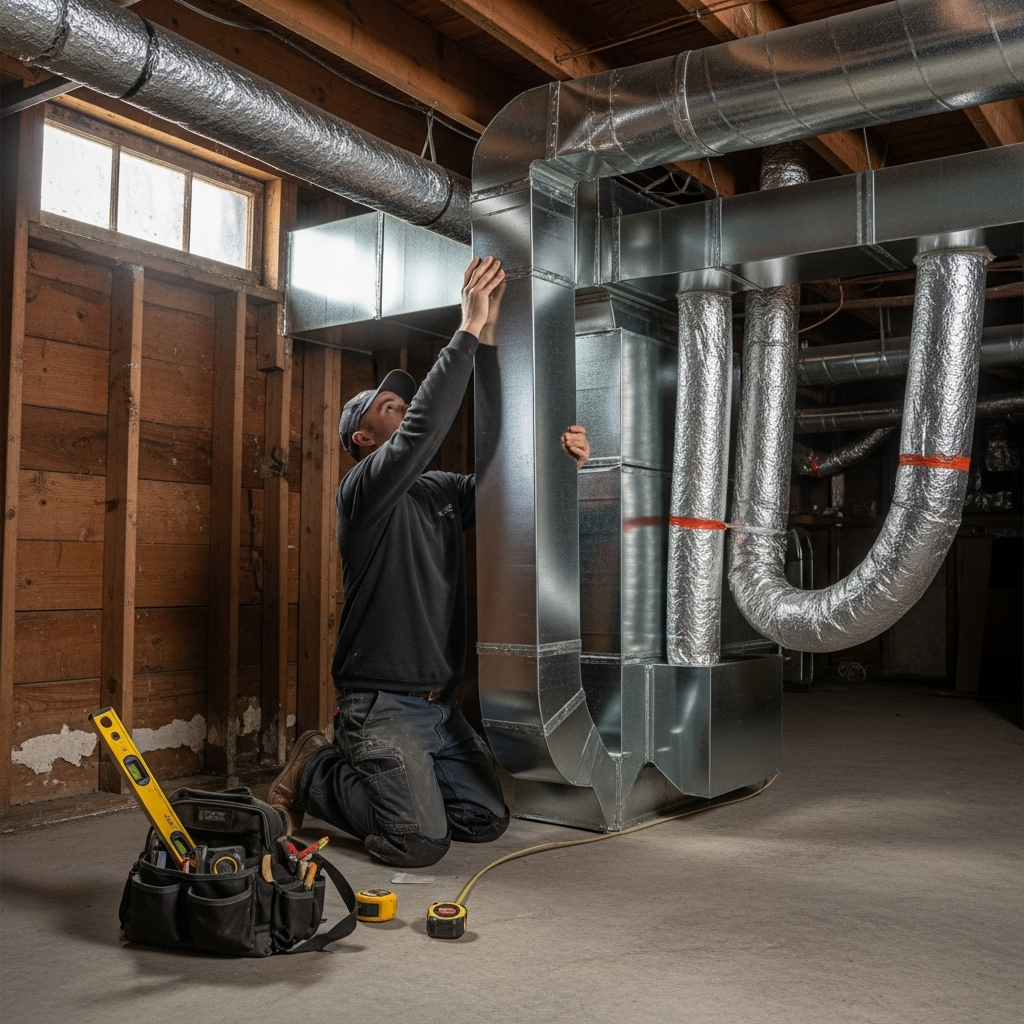
Material selection sets the foundation for durability and performance. Common choices include galvanized sheet metal trunk lines paired with flexible or rigid branch runs, as well as sealed duct board in certain applications. The right mix is guided by layout, noise goals, and the need for tight, consistent sealing.
- Sheet metal trunks: Durable, smooth interiors promote efficient airflow and easier cleaning.
- Flexible branches: Useful for final connections where gentle sweeps are possible; avoid tight bends to reduce friction.
- Duct board: Offers thermal and acoustic benefits when properly fabricated and sealed.
- Sealing and mastic: Quality sealing combats leakage that undermines comfort and can drive up energy use.
Properly sized returns, transitions, and takeoffs reduce static pressure that can strain equipment. Elizabeth’s older framing often benefits from custom plenums and radius fittings to maintain airflow while navigating structural constraints.
Labor Planning, Timing, and Coordination
Coordination with other trades—carpentry, electrical, and insulation—keeps the project moving. In occupied homes, sequencing rooms and establishing daily cleanup protocols minimize disruption. Access to parking, stairways, and elevator schedules in multi-unit buildings can also influence how efficiently crews work.
Another key step is documenting the design. A measured layout, takeoff list, and fitting schedule help ensure the field team arrives prepared, reducing delays and change-related rework.
Permits, Codes, and Inspection Considerations
Local code compliance promotes safety and long-term reliability. Clearances around combustion appliances, proper support spacing, and fire-stopping at penetrations are crucial. Coordinating inspections helps avoid last-minute changes that can ripple through ceilings, soffits, or mechanical rooms.
Elizabeth’s mix of building types means venting paths and support hangers must follow best practices across joists and trusses. When in doubt, measured verification and photos provide a documented path for inspectors and owners alike.
Long-Term Value and Comfort Results
A well-designed duct system does more than move air; it protects comfort, indoor air quality, and the health of your building materials. Even airflow minimizes condensation issues, while balanced returns help your equipment work within intended pressures. Over time, that can reduce wear on components and keep rooms more consistently comfortable.
Thoughtful diffuser placement, return sizing, and sealing also protect against noise and drafts. The result is a calmer, quieter indoor environment that supports daily living or business operations without constant thermostat adjustments.
Comparing Proposals the Right Way
When reviewing plans, focus on clarity of the layout, sizing rationale, and sealing methods. Ask about static pressure targets, return strategies, and how installers will protect insulation and finishes. If you are exploring options for air duct installation, request a simple diagram that shows trunk routes, branch paths, and register placement so you can visualize how the system will serve each space.
- Request details on sealing products and testing methods.
- Confirm diffuser types and expected throw patterns for key rooms.
- Understand how installers will navigate tight spaces and preserve finishes.
- Clarify cleanup practices and debris control to protect living areas.
Frequently Asked Questions
Q: How do I know my home needs new ductwork rather than spot repairs?
A: Multiple comfort issues, visible damage, persistent dust, and high static pressure readings can signal that a comprehensive redesign will outperform piecemeal fixes.
Q: Can new duct design reduce noise in bedrooms and living areas?
A: Yes. Proper sizing, smooth-radius fittings, lined sections where appropriate, and thoughtful diffuser placement can dramatically quiet airflow.
Q: What does balancing mean, and why is it important?
A: Balancing uses dampers and register adjustments to achieve even temperatures across rooms. It is a critical final step to make the design perform as intended.
Q: Will insulation around ducts make a difference in comfort?
A: In attics, crawlspaces, and unconditioned basements, insulation and air sealing around ducts reduce energy waste and improve seasonal comfort.
Q: What should I expect during installation in an occupied home?
A: A clear sequence, floor protection, daily cleanup, and communication about access help keep households running while work proceeds.
Q: How long will the system last?
A: With proper sealing, support, and maintenance, duct systems can serve reliably for many years, especially when inspected periodically.
Ready to Plan Your Project in Elizabeth?
Whether you are renovating an older home or upgrading airflow in a multi-unit building, a measured, code-conscious approach will yield the best comfort and reliability. For expert guidance, schedule an assessment with a trusted local specialist. To align design, execution, and long-term performance, consider professional air duct installation from a team that understands Elizabeth’s buildings and climate.
