The question of whether to handle dryer vent cleaning yourself or hire a professional comes up often in Elizabeth, New Jersey households. With a range of do-it-yourself kits available, it can be tempting to give the task a try. Yet vent layouts, materials, and the safety implications of restricted airflow make this decision more complex than it first appears. By understanding the strengths and limitations of DIY approaches and what professional dryer vent cleaning delivers, you can choose the path that best safeguards your home while keeping everyday laundry simple and reliable.
Lint accumulation is not just an efficiency issue; it is also a safety concern. High operating temperatures, combustible lint, and restricted airflow can combine into conditions that stress the dryer and, in the worst cases, pose a risk of ignition inside the vent line. The right cleaning breaks this cycle by removing lint throughout the run and restoring free airflow from the appliance to the exterior hood.
What DIY kits can do well
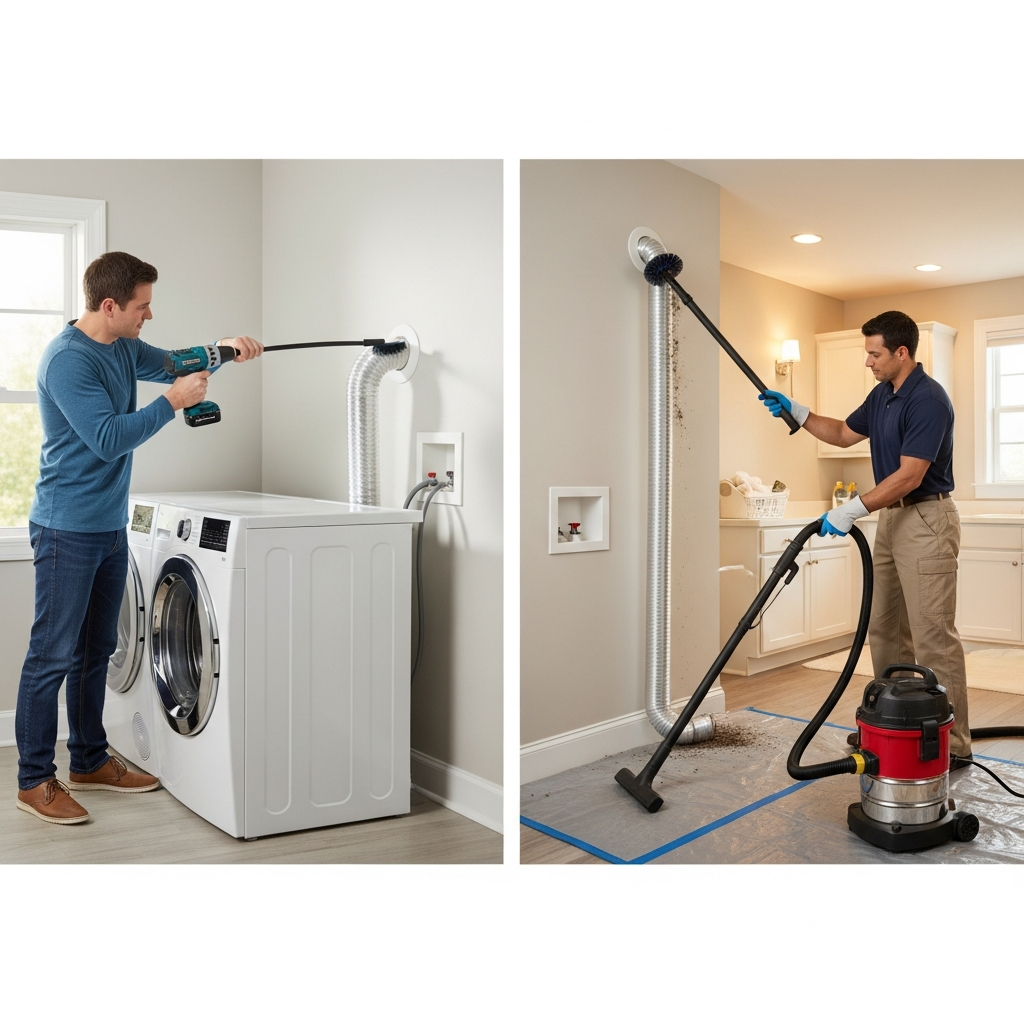
DIY kits typically include flexible rods that connect to a drill and a brush head designed to navigate turns. For short, relatively straight vent runs with good exterior access, a kit can loosen and move a substantial amount of lint. If you are comfortable carefully pulling the dryer forward, disconnecting the transition duct, and working slowly, you may be able to perform a basic clearing that improves airflow.
DIY also offers immediate feedback: you can see lint coming out and confirm that the exterior hood flap is moving more freely. For homeowners who enjoy hands-on maintenance, this can be satisfying and educational, providing a clearer picture of how the vent is routed and where obstructions tend to collect.
Limitations and risks of DIY approaches
However, DIY kits have constraints. Long runs with multiple elbows, fragile or outdated duct materials, roof terminations, or vents routed behind built-ins can exceed the capability of consumer tools. Aggressive brushing with the wrong head can damage foil ducts or separate joints, leading to leaks that push moist air and lint into wall cavities. Without adequate vacuum capture, lint can be redistributed inside the home, creating a mess and new accumulation points.
Another common challenge is incomplete clearing. Lint tends to compact at elbows and junctions, especially where screws protrude into the duct or where ducts transition between materials. A brush that spins without sustained, controlled contact can tunnel a path through lint rather than thoroughly removing it. Without airflow measurements or inspection devices, it is hard to verify that restrictions are fully gone.
What professionals bring to the table
Professionals adapt to all kinds of vent paths. They carry a range of brush sizes, specialized rods, and high-powered vacuums with filtration designed to capture fine lint. Many use inspection cameras or airflow meters to validate results. They understand how to protect delicate transitions, secure connections, and verify that the exterior hood operates properly. In multifamily buildings common to parts of Elizabeth, experienced teams also know how to coordinate access and safely manage rooftop or courtyard terminations.
The process is methodical: inspect, protect the work area, disconnect the transition, brush and vacuum from the appliance side and the exterior side, confirm clear elbows, and test airflow. The finish work is just as important, ensuring that the transition duct is reconnected without crushing, the appliance is leveled, and all hoses and cords are secured before the dryer is returned to place.
Elizabeth-specific considerations
Older homes in Elizabeth often feature renovations that created unusual vent paths. Sharp turns or long horizontal runs hidden in ceilings can trap lint even after a basic clearing. Roof vents and hoods that face prevailing winds may accumulate debris more quickly. A professional is equipped to manage those complexities, recommend safer materials, and ensure the final airflow supports consistent drying times in every season.
When DIY makes sense—and when to call a pro
DIY can make sense for short, accessible vents in good condition. If you choose to try it, work gently, use appropriate brush sizes, and stop if you encounter resistance that feels like a solid obstruction or if the brush head seems stuck. Always unplug or disconnect power and turn off gas (if applicable) before moving the dryer, and keep the area clear of clutter.
It is wise to call a professional if your vent is longer or has multiple bends, if you cannot access the exterior hood easily, if the vent terminates on a roof, or if you notice signs of persistent restriction such as hot appliance surfaces, musty odors on clothes, or frequent automatic shutdowns. These symptoms suggest more thorough clearing and verification is needed to restore safe operation.
Verifying results: the crucial difference
A key advantage of professional service is objective verification. Before-and-after airflow measurements, visual checks at each elbow, and a final inspection of the exterior hood remove guesswork. You will know the vent is clear, the flap is moving correctly, and the transition duct is secure and not pinched. This validation is especially valuable in multifamily settings, where shared structural elements or longer vent runs raise the stakes for getting the job done right.
Professionals also take responsibility for protecting your home. Floor coverings, careful handling of the appliance, and dust control reflect a commitment to cleanliness. If they find unsafe routing or outdated materials, they will discuss practical, code-compliant improvements that enhance performance and reduce future maintenance needs.
Maintaining a clean vent after service
Once airflow is restored, simple habits extend the benefits: empty the lint screen before every load, avoid running back-to-back heavy cycles without letting the dryer cool, and occasionally check the exterior hood during operation to confirm strong airflow. If you regularly dry towels, fleece, or bedding, consider scheduling maintenance on a shorter interval. Keep the laundry area organized so the dryer can be gently moved as needed without snagging hoses or cords.
In the middle of your maintenance plan, it is helpful to reevaluate your setup. Are your run lengths reasonable? Is the transition duct smooth-walled metal rather than plastic or thin foil? Does the exterior hood close fully when the dryer is off? If any answers raise concerns, consult professional dryer vent cleaning services to review options and maintain reliable performance.
FAQs
Q: Can a DIY kit damage my vent? A: If used aggressively or with the wrong brush size, yes. Gentle, controlled motion and the right tools are essential to avoid tearing or separating ducts.
Q: How do I know my vent is really clear? A: Strong exterior airflow, shorter drying times, and a cooler-to-the-touch dryer are good signs. Professionals confirm with measurements and visual checks.
Q: What about roof terminations? A: Roof hoods require safe access and weather-aware techniques. Many homeowners prefer to leave these to trained technicians.
Q: Is flexible foil duct acceptable behind the dryer? A: Smooth-walled metal transitions are generally safer and more durable. Upgrading can reduce kinks and improve airflow.
Q: How often should I address the vent? A: Usage, fabrics, and layout all matter. Many households benefit from annual attention, with more frequent service for heavy use.
Q: Will cleaning void my dryer warranty? A: Routine maintenance that preserves airflow supports proper operation. When in doubt, review your manual and consult a professional.
Choose the approach that fits your home
The right decision balances your vent’s complexity, your comfort level with hands-on maintenance, and the importance of objective verification. If you want a straightforward, confidence-inspiring result, schedule professional dryer vent cleaning and enjoy safer, faster drying in your Elizabeth home.
