What to Ask a Duct Cleaning Company in NJ Before You Book
Dust settling back onto furniture within days of cleaning. A stale, musty burst of air every time the HVAC kicks on. A filter that looks gray two weeks after you replaced it. These are the quiet signals that something is wrong inside your duct system, and ignoring them lets the problem compound season after season. For homeowners in Westfield and across Union County, the decision to hire a duct cleaning company is usually straightforward once the symptoms appear. The harder part is choosing who to call, and knowing whether the company that shows up will actually fix the problem or just run a vacuum down one register and hand you an invoice.
This guide gives you a practical checklist of questions to ask any NJ duct cleaning company before you commit. Think of it as a filter for your hiring process, the same way a clean filter protects your HVAC. If a company can answer these questions clearly and confidently, you are in good hands. If they hedge, dodge, or give you a vague non-answer, that tells you something important too. For background on what a thorough inspection should actually turn up, see our complete guide to dusty HVAC startup in Westfield before you make any calls.
Why the Questions You Ask Matter as Much as the Price
Duct cleaning is one of those services where the difference between a thorough job and a superficial one is almost invisible to the untrained eye. Once the technician leaves, your ducts are sealed back up inside walls and ceilings. You have no easy way to verify what was done. That information asymmetry is exactly why asking the right questions upfront, before anyone sets foot in your home, is so valuable.
The questions below are organized into four categories that mirror the stages of a legitimate duct cleaning job: credentials and process, equipment, what the inspection covers, and what happens after. We have also included a comparison table so you can quickly evaluate how different answers stack up against each other.
Category 1: Credentials and Process
A qualified HVAC system cleaning technician should be able to explain their process without hesitation. These questions help you separate companies that follow industry-standard procedures from those who are winging it.
Are your technicians NADCA-certified or trained to NADCA standards?
NADCA, the National Air Duct Cleaners Association, publishes the industry standard (ACR) for assessing, cleaning, and restoring HVAC systems. Certification is not legally required in New Jersey, but it signals that a company has invested in proper training. Ask specifically whether the technician coming to your home, not just the company owner, has completed that training.
Can you walk me through your cleaning process step by step?
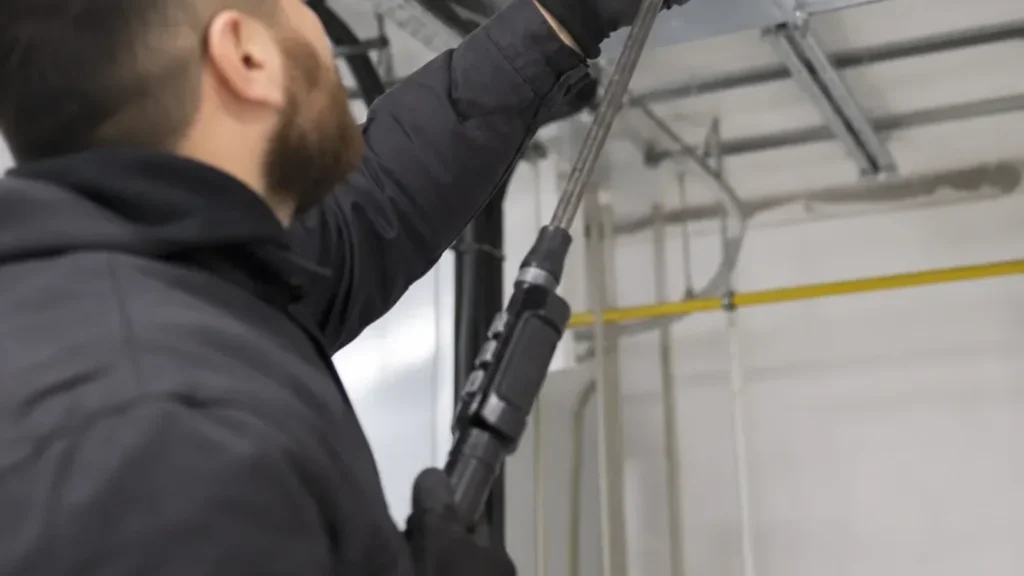
A legitimate process involves putting the system under negative pressure (creating a vacuum inside the ductwork), then agitating debris with brushes or compressed air tools so it gets captured rather than redistributed. The technician should clean supply and return ducts, registers, grilles, the air handler, and the coil housing. If the answer is vague or skips any of those components, push for specifics.
Do you clean the entire system, or just the accessible ducts?
Some companies clean only the main trunk lines or the registers they can easily reach. A thorough job covers the full network, including return-air ducts, which are often the dustiest part of the system. If you have already read about the signs your ducts are overdue for service, you know that return-side buildup is one of the most common culprits behind that first-blast dusty smell.
Category 2: Equipment
If you want it handled correctly the first time, consider professional air duct cleaning and repair in elizabeth new jersey what to expect in Westfield.
The equipment a company uses tells you a great deal about the quality of the job they can deliver. Undersized or outdated gear simply cannot remove debris the way a proper setup can.
What type of vacuum collection system do you use?
The gold standard is a truck-mounted or large portable negative-air machine with HEPA filtration. HEPA filters capture particles down to 0.3 microns, which means the debris dislodged from your ducts gets collected rather than exhausted back into your home or yard. Ask whether the vacuum unit is rated for the square footage of your home, because undersized equipment loses suction quickly in larger systems.
Do you use mechanical agitation tools, or just compressed air?
Compressed air alone can loosen surface dust, but it often leaves matted debris clinging to duct walls. Rotary brushes, air whips, or skipper balls physically scrub the interior surfaces and are especially important in older homes where dust has had years to compact. Westfield has a significant share of mid-century construction where this kind of buildup is common (more on that below).
Will you show me before-and-after photos from inside the ducts?
Many professional companies use a camera or scope to document conditions before and after cleaning. This is not a universal requirement, but it is a strong indicator of transparency. A company confident in their work should have no objection to showing you what they found and what they removed.
Category 3: What the Inspection Covers
A duct cleaning visit is also an opportunity to catch other issues that affect air quality and system performance. A thorough technician will flag these things even if they are outside the immediate scope of the cleaning.
Do you inspect for mold, moisture, or duct damage during the cleaning?
Moisture inside ductwork, whether from a past condensation issue, a slow coil leak, or improperly sealed joints, creates conditions where biological growth can take hold. A qualified technician should note any visible moisture staining, separation at duct joints, or areas where flex duct has kinked or collapsed. They do not need to be a mold remediation specialist to flag these findings for follow-up.
Will you check the dryer vent as part of the visit?
This is worth asking because dryer vent blockages are a separate but related issue that many homeowners overlook. A clogged dryer vent is a genuine fire hazard, and the symptoms (longer dry times, heat buildup in the laundry room) are easy to miss until they become serious. Some companies offer a combined inspection, which can save a separate service call. You can learn more about how to distinguish these two problems in our article on dryer vent clogs versus duct dust buildup.
Do you offer air quality testing?
If your household has noticed persistent odors, increased dust, or unexplained respiratory irritation, a baseline air quality test before and after cleaning gives you measurable data. Not every company offers this, but it is worth asking whether it is available as an add-on.
Westfield and Union County: Why Local Experience Matters
Many Westfield homeowners rely on expert air duct cleaning and repair in elizabeth new jersey what to expect in Westfield for exactly this.
Westfield’s housing stock skews older. Much of the town developed between the 1920s and the 1970s, and a large portion of those homes still have their original ductwork, or ductwork that was retrofitted during the shift from oil-to-gas heating in the 1980s and 1990s. Older galvanized steel ducts develop interior rust and surface corrosion over time, which creates rough surfaces that trap debris far more readily than smooth modern ductwork. Flex duct added during retrofits is prone to sagging, which creates low spots where dust and moisture accumulate.
Union County’s climate adds another layer. Westfield sits in a humid continental zone, with hot, humid summers and cold winters. That seasonal swing means HVAC systems cycle between heating and cooling modes, and during the shoulder months, systems often sit idle for weeks. When the system restarts, any debris that settled during the off-season gets pushed through the supply registers all at once. That is the exact mechanism behind the dusty startup smell that many Westfield homeowners notice in May and again in October. A technician familiar with local housing conditions will recognize these patterns and know where to look first. For a deeper look at why this happens, our guide to dusty HVAC air in Westfield covers the mechanics in detail.
Also worth noting: New Jersey does not have a statewide licensing requirement specific to duct cleaning, though HVAC contractors are licensed through the Division of Consumer Affairs. Requirements can vary, so it is always worth asking a company whether they carry general liability insurance and workers’ compensation coverage. This protects you if anything is damaged during the job or if a technician is injured on your property. Check with your local municipality if you have questions about permit requirements for any associated repair work.
Comparing How Companies Typically Answer These Questions
The table below contrasts the kinds of answers you want to hear against the kinds of answers that should give you pause. No column represents a specific company; these are general patterns to help you evaluate any NJ duct cleaning quote.
| Question | Strong Answer | Weak or Vague Answer |
|---|---|---|
| NADCA certification or equivalent training? | Technician is NADCA-certified or trained to ACR standards; can provide documentation | “We’ve been doing this for years” with no mention of specific training or standards |
| Step-by-step process? | Explains negative pressure, mechanical agitation, full system coverage including air handler | “We vacuum out the vents” or a vague description that skips key components |
| Equipment type? | Names the vacuum unit, confirms HEPA filtration, describes agitation tools used | Cannot describe the equipment or says “standard equipment” |
| Before-and-after documentation? | Offers photos or camera inspection; willing to show findings on-site | “You’ll just have to trust us” or no mention of documentation |
| Inspection for damage or moisture? | Confirms they note and report any visible issues; explains what happens next | “That’s not our department” with no referral process |
| Insurance coverage? | Carries general liability and workers’ comp; can provide certificate on request | Hesitates, changes the subject, or cannot confirm coverage |
Which Answers Should Drive Your Decision for Westfield Homes
For most Westfield homeowners, the single most telling question is the process walkthrough. A company that can clearly explain negative pressure, mechanical agitation, and full-system coverage (not just the visible registers) is demonstrating genuine competence. A company that cannot, or that describes a process that skips those steps, is likely to deliver a superficial result regardless of how professional they look on the surface.
Insurance documentation is the second filter. General liability and workers’ compensation are basic protections that any legitimate service business should carry. If a company cannot confirm coverage or asks you to take their word for it, that is a meaningful red flag, particularly for a job that involves accessing walls, ceilings, and mechanical equipment.
For older Westfield homes specifically, ask whether the technician has experience with galvanized steel ductwork and retrofitted flex duct. These materials require slightly different handling than modern sheet metal systems, and a technician who recognizes that distinction is more likely to catch the issues that are most common in Union County’s older housing stock.
Ready for the next step? Learn how air duct cleaning and repair in elizabeth new jersey what to expect services in Westfield can help and reach out to the team.
Finally, if cost is a factor in your decision, understanding what drives the price difference between quotes is more useful than comparing numbers in isolation. Our breakdown of what affects duct cleaning costs in NJ explains the variables so you can evaluate quotes on an apples-to-apples basis rather than defaulting to the lowest number.
Frequently Asked Questions
How long should a professional duct cleaning take for a typical Westfield home?
For an average single-family home in Westfield, a thorough cleaning typically takes between two and four hours. Larger homes, systems with extensive flex duct, or particularly heavy buildup may take longer. A job completed in under an hour for a full-sized home is unlikely to have been done thoroughly.
Should I be home during the duct cleaning?
It is generally a good idea to be present, at least at the start and end of the job. Being there at the start lets the technician walk you through what they find during the initial inspection. Being there at the end gives you the chance to ask questions about any issues noted and to confirm that registers and access panels have been properly resealed.
How often do ducts in NJ homes typically need cleaning?
Most industry guidance suggests every three to five years for average residential use, though homes with pets, recent renovation work, or older ductwork may benefit from more frequent service. If you have noticed the symptoms described in our guide to dusty startup air, that is a signal to schedule sooner rather than waiting for the calendar.
What should I do to prepare before the technician arrives?
Clear a path to your air handler and furnace, and make sure all supply and return registers are accessible (move furniture if needed). Change your filter the day after the cleaning, not before, so the technician can assess how loaded the current filter is. That condition gives them useful information about how hard the system has been working.
Is there anything a duct cleaning company should never do?
Be cautious of any company that recommends applying chemical sealants or biocides inside your ductwork without a clear documented reason. Encapsulants and antimicrobial sprays have legitimate uses in specific situations, but they should never be a default add-on or a substitute for mechanical cleaning. Ask for the specific reason and the product data sheet if this is recommended.
What if the technician finds duct damage during the cleaning?
A reputable company will document the damage with photos and explain the options clearly before doing any additional work. Duct repair is a separate service from cleaning, and you should receive a clear explanation of what was found and what the repair involves before authorizing anything beyond the original scope.
Book a Free Estimate with AMG Duct Cleaning in Westfield
AMG Duct Cleaning serves Westfield and the surrounding Union County area with residential air duct cleaning, dryer vent cleaning, and HVAC system cleaning. We offer free estimates so you can get a clear picture of what your system needs before committing to anything. If you have questions about our process, our equipment, or what a cleaning visit involves for your specific home, we are straightforward about all of it. Reach out to schedule your free estimate or to ask any of the questions from this checklist directly. You deserve a clear answer before anyone opens a vent in your home.
