How to Tell If Your Air Ducts Need Cleaning in Westfield, NJ
You flip on the AC for the first time after a long winter, and within seconds a faint musty smell drifts through the room. Or maybe you’ve noticed a thin film of dust settling on furniture faster than it used to, no matter how often you clean. If either scenario sounds familiar in your Westfield home, your ductwork may be trying to tell you something. Knowing how to tell if air ducts need cleaning can save you from months of breathing recycled grime and help your HVAC system run the way it should.
This guide walks through the physical signs that point toward dirty ductwork, explains why they happen in homes like yours, and helps you decide when it’s time to stop guessing and call a professional. If your system is already blasting out visible dust clouds at startup, the full guide on dusty HVAC air in Westfield goes deeper on that specific problem.
The Scenario That Sends Westfield Homeowners Searching
Picture a Saturday morning in late May. You push the thermostat from heat to cool for the first time this season. The blower kicks on, and for a few seconds the air coming from the vents has a stale, almost chalky quality. You check the filter. It looks okay. You shrug and go about your day. A week later, you’re wiping down the same surfaces you cleaned last weekend, and the dust is already back.
This is one of the most common patterns that leads Westfield residents to wonder whether their duct system is the culprit. It usually is, at least in part. But the dusty startup moment is just the most dramatic symptom. There are quieter signals that show up long before a system reaches that point, and catching them early makes the cleaning process simpler and the results more noticeable.
Why Westfield Homes Are Particularly Prone to Duct Buildup
Westfield’s housing stock skews older. A large share of the borough’s residential neighborhoods were built between the 1940s and the 1980s, and many of those homes have original or early-generation ductwork that was sized and sealed to standards that don’t hold up well over decades of use. Gaps at joints, flex connections that have loosened over time, and sheet metal that has never been properly sealed all allow unconditioned attic or basement air to pull into the system. That air carries dust, insulation fibers, and whatever else lives in those unconditioned spaces.
Westfield also sits in Union County, where seasonal humidity swings are real. Hot, humid summers followed by dry, dusty winters create conditions where dust and debris accumulate during low-use periods and then get mobilized when the system fires up again. Homes near the downtown core or along older tree-lined streets see additional organic debris from mature trees, which contributes pollen and mold spores to the mix. None of this is unusual for northern New Jersey, but it does mean that duct systems here tend to accumulate buildup faster than homeowners expect.
The Physical Signs That Point to Dirty Ductwork
Not every sign of a dirty duct system is as obvious as a dust cloud at startup. Some of the most reliable indicators are easy to overlook precisely because they develop gradually. Here’s what to pay attention to.
If you want it handled correctly the first time, consider professional air duct cleaning and repair in elizabeth new jersey what to expect in Westfield.
Visible dust or debris around vent covers. Pull a return-air grille off the wall or ceiling and look at the back side. A light coating of household dust is normal. A thick, matted layer of gray or brownish debris is not. If the inside of the grille looks like the underside of a neglected refrigerator coil, the duct behind it likely looks similar or worse. The same check applies to supply registers. Run a finger along the inside of the collar where the register meets the duct. If you pull back a fingertip coated in grime, that material is circulating through your home every time the blower runs.
Uneven airflow between rooms. If one bedroom feels stuffy while the living room is comfortable, and the thermostat is set the same for both, restricted airflow is a likely explanation. Buildup inside duct runs can partially block the passage of conditioned air, creating hot and cold spots that feel like an HVAC problem but are actually a duct problem. This symptom is worth noting alongside others rather than treating as definitive on its own, since it can also result from damper settings or equipment issues.
A musty or stale odor when the system runs. A dusty smell from the AC or furnace, especially at first startup after a dormant period, is one of the most consistent signals homeowners report. The odor usually comes from accumulated dust being heated or cooled as it passes over the heat exchanger or evaporator coil, or from organic material that has settled in the duct lining. If the smell fades after the first few minutes of operation, it does not mean the ducts are clean. It means the immediate surface layer has been blown through. The underlying buildup remains.
Dust resettling faster than usual. This one is harder to quantify but very consistent in practice. If you’re dusting surfaces every few days and still finding a visible layer, and you’ve already ruled out open windows and a neglected filter, the duct system deserves attention. Forced-air systems circulate the entire volume of air in a home multiple times per day. If that air is picking up debris from inside the ducts, it deposits that debris on every horizontal surface in the house.
A filter that loads up unusually fast. A one-inch filter in a typical residential system should last roughly 30 to 90 days depending on filter rating and household conditions. If you’re pulling a visibly clogged filter after two or three weeks, the system is working harder than it should be. Some of that load comes from a dirty duct system pushing debris back through the return side. It’s also worth checking whether the filter is properly seated with no gaps around the edges, since bypass air is a separate but related problem.
Recent renovation or construction work. Drywall dust, insulation particles, and sawdust are particularly problematic in duct systems. Even with vents covered during a renovation, fine particles find their way in through gaps and return-air pathways. If your Westfield home has had any significant interior work in the past few years and the ducts haven’t been cleaned since, that alone is a strong reason to schedule an inspection. For more on how construction and everyday living contribute to faster dust accumulation in Union County homes, see why Westfield homes collect dust so quickly.
Signs That Go Beyond Dust and Point to a Bigger Problem
Some indicators suggest the duct system has a more serious issue than ordinary dust accumulation. These are worth knowing because they change the scope of what a professional cleaning visit should include.
Dark streaks or discoloration around vent openings. Soot-like staining around a supply register, particularly one near a return, can indicate that air is being pulled through gaps in the duct system or through the building envelope itself. This is sometimes called filtration soiling, and while it is partly a duct cleanliness issue, it can also point to air sealing problems that a cleaning alone won’t fully resolve.
Many Westfield homeowners rely on expert air duct cleaning and repair in elizabeth new jersey what to expect in Westfield for exactly this.
Visible signs of moisture inside ducts. If you shine a flashlight into a duct and see rust staining, water marks, or any fuzzy growth on the interior surface, that’s a signal that requires professional assessment before a standard cleaning proceeds. Moisture in ductwork can result from a condensation problem, a duct leak in a humid space, or an improperly sized system that runs short cycles and doesn’t dehumidify effectively. The Westfield HVAC dusty air startup guide covers what happens when these conditions combine with a first-of-season system startup.
Pest activity or evidence of nesting. Rodent droppings, insect casings, or nesting material inside a duct run are obvious indicators that cleaning is overdue, but they also mean the cleaning needs to address more than routine dust. A professional technician can assess whether the system has been compromised and what remediation is appropriate.
What a Professional Duct Cleaning Actually Addresses
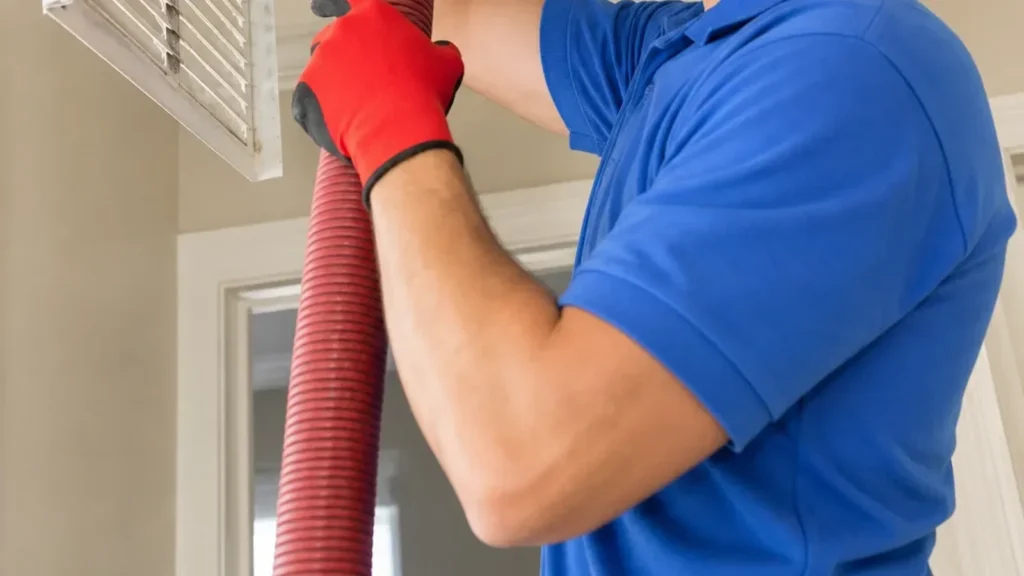
Understanding what the process involves helps set realistic expectations. A thorough air duct cleaning service uses negative pressure equipment to create a controlled vacuum inside the duct system while mechanical agitation tools dislodge debris from duct walls. The goal is to extract accumulated material from the full length of each duct run, not just the visible section near the register.
At AMG Duct Cleaning, the process covers supply and return ducts, registers, grilles, and the accessible components of the air handler, including the blower compartment. This matters because a system where only the registers are wiped down will continue to circulate debris from the untouched duct interior. The difference in results between a surface wipe and a full negative-pressure cleaning is significant, and it’s one of the questions worth asking any provider before scheduling. For a full list of what to ask, the questions to ask your NJ duct cleaner is a useful reference before you book.
After a proper cleaning, most homeowners notice that the startup odor is gone or significantly reduced, that the filter stays cleaner longer between changes, and that dust accumulation on surfaces slows down. These are practical, observable outcomes rather than abstract air quality claims.
How Often Westfield Homes Typically Need Duct Cleaning
There is no single interval that applies to every home. The EPA and industry guidance generally suggest that duct cleaning is warranted when there is visible contamination, occupant sensitivity to airborne particles, or following renovation work rather than on a fixed schedule. In practice, Westfield homes with older ductwork, pets, or recent construction work often benefit from cleaning every three to five years. Homes with newer, well-sealed duct systems and no unusual contamination sources may go longer without needing attention.
The physical signs described above are more reliable indicators than any calendar interval. If you’re seeing multiple symptoms at once, that’s a stronger signal than any single indicator alone. If you’re unsure whether what you’re seeing qualifies, AMG Duct Cleaning offers free estimates, which means a technician can assess the system before any commitment is made.
Ready for the next step? Learn how air duct cleaning and repair in elizabeth new jersey what to expect services in Westfield can help and reach out to the team.
It’s also worth noting that dryer vent cleaning is a separate service with its own indicators and a different risk profile. If your dryer is taking longer than one cycle to dry a full load, the vent rather than the duct system may be the more pressing concern. The dryer vent clog versus duct dust comparison breaks down how to tell which system is the source of the problem.
Frequently Asked Questions
Can I check my ducts myself before calling a professional?
You can do a basic visual inspection by removing accessible vent covers and looking inside with a flashlight. Check for visible dust buildup, debris, discoloration, or any signs of moisture. This gives you a rough sense of conditions near the register, but it won’t show you what’s happening deeper in the duct run, which is where most of the accumulated material tends to be. A professional inspection covers the full system.
Does a new HVAC system mean my ducts are clean?
Not necessarily. A new furnace or air handler is installed into the existing duct system in most cases. If the ducts were dirty before the new equipment went in, they remain dirty after. In fact, a new, more powerful blower can dislodge debris that a weaker old system had left sitting undisturbed, which is why some homeowners notice more dust after a system replacement rather than less.
Is the dusty smell at startup a health risk?
The startup odor itself is not a defined medical hazard, but it does indicate that accumulated material is being circulated through the living space. Households with members who have respiratory sensitivities may find that the air feels more irritating during these periods. A professional cleaning addresses the source of the odor rather than masking it.
How long does a professional duct cleaning take in a typical Westfield home?
Most residential jobs in a standard single-family home take between two and four hours, depending on the number of vents, the layout of the duct system, and the degree of buildup. Homes with complex layouts or additional services like dryer vent cleaning scheduled at the same visit may take longer. A technician can give you a more specific estimate after reviewing the system.
The Practical Next Step
If you’ve read through this list and recognized two or more of these signs in your Westfield home, the duct system is worth a closer look. A free estimate from AMG Duct Cleaning costs you nothing and gives you a clear picture of what the system actually contains before any work begins. Reach out to schedule an assessment, and get a straight answer about whether cleaning is warranted and what the process would involve for your specific home.
For context on what drives the cost of duct cleaning services in New Jersey, the cost factors for duct cleaning in NJ explains what affects the scope of a job and how to evaluate a quote. And if your system is already past the warning signs and into the dusty-startup territory, the guide to why Westfield HVAC systems blow dusty air at startup covers exactly what’s happening inside the system and what it takes to fix it.
