Air Duct Cleaning in NJ: What Westfield Homeowners Should Know Before Hiring Anyone
Most homeowners only think about their ductwork when something feels off, the air smells musty at startup, certain rooms never quite reach the right temperature, or the filter clogs faster than it used to. If you’re weighing professional duct cleaning in Westfield or anywhere across New Jersey, the real question isn’t just “how much does it cost?” It’s whether the service you’re getting is actually thorough. This guide breaks down the process, the cost drivers, and the quality markers that separate a genuine cleaning from a surface-level pass.
Why Ductwork Accumulates More Debris Than You’d Expect
What’s Actually Building Up Inside Your Ducts
Every time your HVAC system runs, air moves through a network of supply and return ducts that can span hundreds of linear feet in a typical New Jersey home. That air carries fine particles: dust, pet dander, pollen, insulation fibers, and in older homes, residue from construction or renovation work. Over months and years, these particles settle on the interior walls of the ductwork, particularly at bends, joints, and registers where airflow slows.
The result isn’t just cosmetic. Heavy buildup on duct surfaces can restrict airflow, force your system to work harder, and push particles back into living spaces every time the blower kicks on. Homeowners often notice the air feels fresher and the first burst from the vents smells cleaner after a proper cleaning, not because the service is a cure-all, but because the physical debris causing those issues has been removed.
New Jersey’s Specific Conditions
Westfield and the broader Union County area sit in a climate zone that runs air conditioning hard through humid summers and heating systems through cold winters. That near-year-round HVAC use means ductwork accumulates debris faster than in milder climates. Older housing stock, and Westfield has plenty of it, often includes original duct systems with accumulated decades of buildup, seams that have loosened over time, and occasionally older insulation materials that shed into the airstream. None of that is unusual, but it does mean a cleaning here isn’t a quick job if it’s done right.
When Cleaning Makes the Most Sense
There’s no universal rule that every home needs duct cleaning on a fixed schedule. The situations where it genuinely pays off tend to be specific: after a renovation or remodel that generated drywall dust or debris, when moving into a home where the duct history is unknown, after a rodent or pest issue has been resolved, when visible debris or heavy dust is coming from registers, or when the system simply hasn’t been cleaned in many years. A visual inspection of a few registers and the area around the air handler can tell you a lot before you commit to anything.
The Actual Process: What a Thorough Cleaning Involves
Equipment That Does the Work
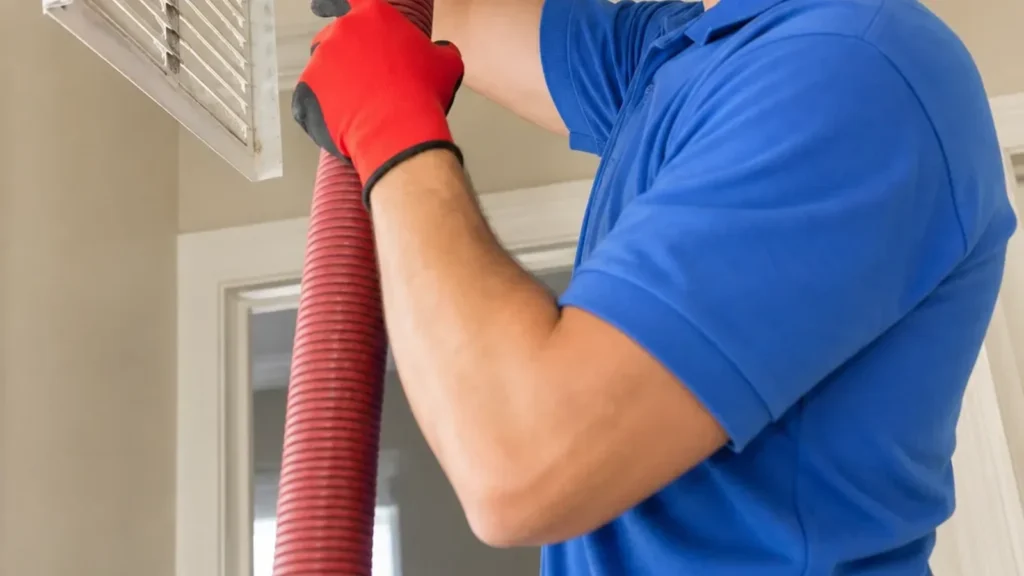
The single biggest differentiator between a thorough cleaning and a superficial one is the equipment. A proper HVAC system cleaning uses a truck-mounted or high-powered portable vacuum unit capable of generating significant negative pressure, enough to pull loosened debris through the entire duct system and into a collection unit rather than just redistributing it. The vacuum connects to the system at or near the air handler, creating negative pressure throughout the duct network.
Alongside the vacuum, technicians use agitation tools: rotary brushes, air whips, and compressed air tools sized for different duct diameters. These tools dislodge debris that has bonded to duct surfaces over years. Without mechanical agitation, a vacuum alone can’t clean duct walls, it can only pull out what’s already loose. That distinction matters when you’re evaluating what a provider actually does during a service call.
Step-by-Step: What to Expect on the Day
A complete residential duct cleaning at AMG Duct Cleaning typically follows a consistent sequence. The technician starts with an inspection of accessible ductwork, the air handler, and the blower compartment to understand the system layout and identify any concerns (like disconnected sections or visible moisture damage) before work begins.
Next, all supply and return registers are removed and cleaned individually. The main trunk lines and branch ducts are then accessed, the vacuum system is connected, and agitation tools work through each duct run systematically. The air handler cabinet, including the blower wheel, evaporator coil area, and drain pan, is cleaned as part of a thorough service, because debris accumulates on those components just as it does in the ductwork itself. Registers are reinstalled, and the system is run briefly to confirm airflow is restored properly.
The whole process for a standard-sized home typically takes several hours. A service that wraps up in under an hour for a full house is almost certainly not covering the full system.
What Gets Cleaned Beyond the Ducts
A complete air duct cleaning service covers more than just the metal or flex duct runs. The return air plenum (the large box that feeds air back to the air handler), the supply plenum, the blower assembly, and the area around the evaporator coil all collect debris. Skipping these components means leaving significant contamination sources in place. When you’re asking a provider what their service includes, those specific components are worth asking about directly.
Cost Drivers: What Makes One Job Different from Another
System Size and Complexity
Duct cleaning isn’t a one-size job. The number of supply and return vents, the total square footage of the home, whether the system has one zone or multiple air handlers, and the duct material (sheet metal, flex duct, or fiberboard) all affect how long the job takes and what tools are needed. A two-story colonial in Westfield with a full basement and a secondary unit for the upper floor is a meaningfully larger job than a single-story ranch with one air handler.
Fiberboard ducts require more careful agitation than sheet metal to avoid damage, and flex duct requires different brush sizing. A provider who quotes every job identically regardless of system size is either padding the simple jobs or cutting corners on the complex ones.
Condition and Access
Systems that haven’t been cleaned in a long time, or that have unusual debris loads (post-renovation dust, pest activity, or water intrusion), take longer to clean properly. Ductwork in tight crawlspaces or unconditioned attics is harder to access and service than ducts in a finished basement. These are legitimate factors that affect the scope of work, not pretexts for unnecessary upselling.
Access also matters for inspection. If a technician can’t get eyes on a section of ductwork, they can’t confirm its condition. Homes with unusual layouts or older construction sometimes require creative access approaches, and that’s worth discussing upfront before work begins.
Add-On Services Worth Considering
Some situations call for services beyond a standard cleaning. If an inspection reveals a disconnected duct section, gaps at joints, or deteriorating flex duct, air duct repair addresses those issues directly and prevents conditioned air from leaking into unconditioned spaces, which both wastes energy and can draw in unconditioned air and debris. If the dryer vent hasn’t been serviced recently, combining a dryer vent cleaning with a duct cleaning appointment is efficient and addresses a separate but significant maintenance item. Clogged dryer vents are a genuine fire hazard, and Westfield homes with long or multi-bend vent runs are particularly prone to lint accumulation.
Spotting Quality Work Before You Book
Questions That Reveal a Lot
Before scheduling any duct cleaning in NJ, a few direct questions help separate thorough providers from those offering a low-effort service at a low price:
- What vacuum equipment do you use, and what is its CFM rating? Higher airflow capacity means more effective negative pressure throughout the system.
- Do you clean the air handler cabinet, blower wheel, and evaporator coil area, or just the duct runs? A complete service covers both.
- What agitation tools do you use, and how do you adjust for different duct materials? Rotary brushes and air whips should be part of the answer.
- How long will the job take for a home of my size? A realistic answer for a full-size home is several hours.
- Do you offer a free estimate after an inspection? AMG Duct Cleaning provides free estimates, which allows for an accurate scope before any commitment.
Red Flags to Watch For
Unusually low flat-rate offers that don’t account for system size are worth scrutinizing. So are providers who can’t clearly describe their equipment or process, or who quote a job over the phone without asking about the system’s size and configuration. A legitimate provider needs basic information about your home to give you an honest estimate.
Also watch for pressure to add services during the job that weren’t discussed beforehand, particularly chemical treatments or sealants. While some situations genuinely warrant additional steps, those conversations should happen with clear explanation of why, not as a surprise add-on once the technician is already in your home.
Industry Standards Worth Knowing
NADCA (the National Air Duct Cleaners Association) publishes standards for HVAC system cleaning that describe the equipment, process, and scope a proper cleaning should follow. Those standards aren’t a guarantee of quality on their own, but familiarity with them gives you a framework for evaluating what a provider tells you. When a provider’s described process aligns with those standards, that’s a meaningful signal.
Comparing Service Scopes: What’s Included vs. What’s Extra
| Service Component | Should Be Standard | Sometimes an Add-On | Separate Service |
|---|---|---|---|
| Supply duct runs | Yes | ||
| Return duct runs | Yes | ||
| Supply and return registers (cleaned) | Yes | ||
| Air handler cabinet / blower wheel | Yes (thorough providers) | ||
| Evaporator coil area / drain pan | Yes (thorough providers) | ||
| Dryer vent cleaning | Yes, separate service | ||
| Duct repair (leaks, disconnections) | Yes, separate service | ||
| Antimicrobial treatment | Sometimes, if warranted |
What AMG Duct Cleaning Does Differently in Westfield
A Workmanlike Approach to Every Job
AMG Duct Cleaning serves Westfield and surrounding Union County communities with a straightforward approach: show up with the right equipment, do the full job, and leave the system in genuinely better condition than we found it. That means cleaning the air handler components alongside the duct runs, using proper agitation tools for each duct type, and not rushing through a job to hit an unrealistic time window.
With 379 five-star Google reviews, the feedback we hear most often is that the difference is noticeable, not just at the vents, but in how the system runs afterward. One reviewer noted that the AC used to give a rough, dusty smell at startup, and after the cleaning, the first burst of air felt much cleaner. That’s the kind of outcome a thorough job produces.
Free Estimates and Transparent Scope
Every job starts with a free estimate. That means a technician can assess your specific system, its size, layout, duct material, and condition, before quoting the work. You know exactly what’s being done and why, with no surprises on the day of service. Payment by check is accepted, and there are no hidden fees for standard service components.
Beyond Ducts: Related Services Under One Roof
For Westfield homeowners who want to address multiple systems in a single appointment, AMG Duct Cleaning also handles dryer vent cleaning, chimney sweeping, air duct repair, and kitchen hood cleaning for commercial kitchens. Bundling related services saves time and ensures that the technician already familiar with your home’s layout can address multiple items efficiently.
Frequently Asked Questions
How often should ducts be cleaned in a New Jersey home?
There’s no fixed universal schedule. Most homes benefit from cleaning every several years, but specific triggers, recent renovation, pest activity, moving into a home with unknown duct history, or visible debris at registers, matter more than a calendar interval. An inspection can tell you whether cleaning is warranted right now.
Will duct cleaning reduce dust in my home?
It can help reduce the amount of settled debris that gets redistributed by the HVAC system. Homeowners often notice less visible dust accumulation on surfaces near vents after a thorough cleaning. It won’t eliminate all household dust, which comes from many sources beyond the ductwork.
How long does a residential duct cleaning take?
For a typical single-family home in Westfield, a thorough cleaning takes several hours. Larger homes, systems with multiple air handlers, or systems with heavy buildup take longer. A job that wraps up in under an hour for a full house almost certainly didn’t cover the complete system.
Is duct cleaning safe for older homes with flex duct or fiberboard ducts?
Yes, when done with the right tools. Fiberboard and flex duct require different agitation equipment than rigid sheet metal to avoid damage. A technician should ask about your duct type before starting and adjust their approach accordingly.
Do I need to be home during the cleaning?
Yes. The technician needs access to your air handler, all registers, and any mechanical areas where ductwork is accessible. Someone should be present to provide access and to review the technician’s findings before and after the job.
Can duct cleaning help if my HVAC system smells musty at startup?
A musty odor at startup is often related to debris or moisture on interior duct surfaces or on the evaporator coil. A thorough cleaning that includes the air handler components may help reduce or eliminate that odor. If moisture or microbial growth is the underlying cause, that should be identified and addressed directly during the inspection.
Ready to Schedule?
If your Westfield home is overdue for a professional cleaning, or you simply want to know what condition your ductwork is in, the best first step is a free estimate from a technician who can actually look at your system. Schedule your air duct cleaning with AMG Duct Cleaning today and get a clear picture of what your HVAC system needs, with no obligation and no guesswork.
