Introduction
Understanding kitchen exhaust hood cleaning requirements in Elizabeth, New Jersey is about more than a spotless canopy—it is about safety, documentation, and a maintenance rhythm that supports compliance and performance. While specific enforcement practices can vary, operators are expected to manage grease accumulation proactively and maintain records that demonstrate control. This guide explains practical expectations, scheduling logic, documentation habits, and quality standards you can apply now. For benchmarks or periodic comprehensive support that reinforces your program, coordinate with trusted providers of kitchen exhaust hood cleaning who align their work with widely referenced industry standards and sound facility practices.
Elizabeth’s kitchens run the gamut from neighborhood takeout to high-volume production lines. Each faces different accumulation rates based on menu, hours, and equipment. A requirements-minded approach balances frequent in-house steps—like filter cycles and canopy wipe-downs—with scheduled comprehensive services for ducts and fans. Together, these actions protect staff, guests, and property while keeping inspections straightforward.
Core Expectations: Cleanliness and Control
At the heart of any requirement is control over grease accumulation. The visible canopy should be free of sticky films, streaks, and residue. Filters must be clean, properly oriented, and seated so airflow is unobstructed. Grease troughs and cups should be emptied and cleaned before they overfill. While the duct and fan are often out of sight, they should be serviced at intervals that prevent dangerous buildup. These practical expectations form the baseline for a safe, professional kitchen.
Control also means predictability. Establish a routine that you can demonstrate with logs and photos. Consistent intervals based on observed accumulation show that you manage the system proactively rather than waiting for problems. When inspectors or managers ask about your ventilation maintenance, you can point to a calendar, entries, and images that reflect reality on the cookline.
Determining Frequency
Frequency depends on what and how much you cook. Fry-heavy menus load filters fastest, while charbroiling and griddle work can generate varied particulates that cling to metal. Many operations in Elizabeth adopt weekly filter cleaning and monthly canopy detailing as starting points, then adjust based on observed returns. If odors persist or airflow slows despite clean filters, it is time to schedule comprehensive service for ducts and fans.
Seasonality matters. In colder months, indoor humidity and closed windows can concentrate vapors, contributing to tacky films that appear within days of a heavy rush. Summer heat can amplify odors and make thin residues more noticeable. Track these effects in your log and tighten intervals during peak seasons or special events that push your line harder than usual.
Record your rationale for frequency decisions. Note any menu changes, equipment additions, or staffing shifts that affected accumulation. This history helps explain your schedule to inspectors and ensures continuity when team members change.
Standards for Visible Cleanliness
Define visual criteria so “clean” is not subjective. Under angled light, interior panels should not smear, haze, or show rainbow sheens. Seams, screws, and the hood lip should be free of sticky residue. Filters, when held to the light, should reveal clear channels with no dull patches. The exterior face and surrounding stainless should present an even finish without fingerprints or streaks. These tangible standards make training easier and verification faster.
Make the fingertip test part of your standard. A clean surface feels smooth and does not pick up residue. Teach staff to verify with this test plus angled-light inspection before reassembly. Clear standards reduce rework and allow managers to sign off with confidence.
Documentation and Proof of Control
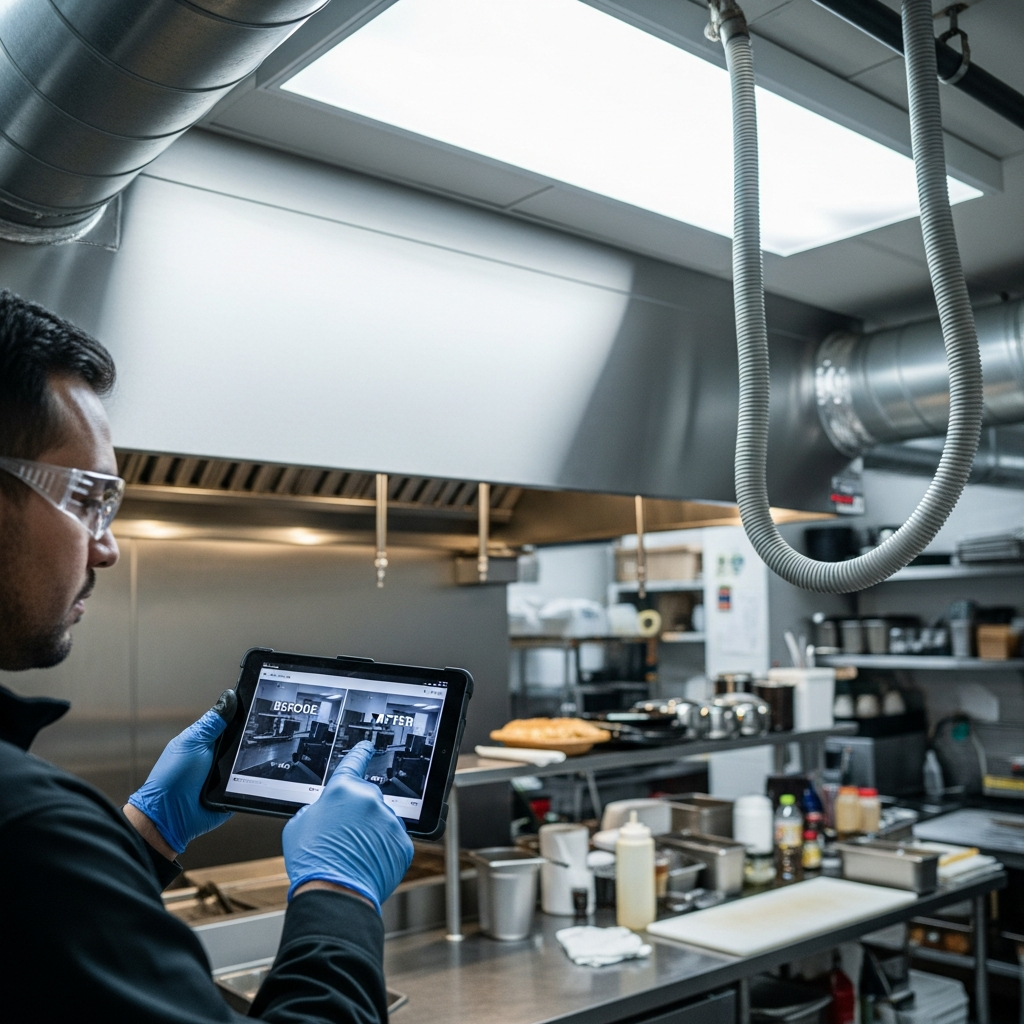
Keep a log with dates, tasks performed, staff initials, observations, and next due dates. Supplement entries with photos focused on the plenum, interior panels, filter faces, and grease cups immediately after cleaning. Store the images by date in a shared folder so managers can confirm results and inspectors can see proof of control. Over time, this record becomes your maintenance history and a basis for scheduling decisions.
When you engage outside specialists, retain their completion reports and photos alongside your in-house logs. Note any recommendations they make and how you implemented them. This continuity shows that you treat ventilation as a managed system rather than a series of isolated tasks.
Products, Techniques, and Material Care
Use foodservice-grade degreasers compatible with your hood materials, especially if you have aluminum filters. Follow label dilution and dwell times to avoid dulling finishes or leaving films that attract dust. Work top to bottom, back to front, and wipe with a damp cloth before drying with lint-free towels. Clean seams, fasteners, grease troughs, and cups. Handle filters carefully, brushing along the baffle direction during cleaning and ensuring they are fully dry before reinstallation.
Exterior polishing should follow the grain with a mild stainless cleaner after interior work is complete. Control moisture to protect electrical components and avoid dripping onto hot surfaces when cooking resumes. These practices are not only effective—they are defensible standards you can explain and teach.
Airflow Checks and Performance Signs
After reassembly, run the fan and feel for consistent pull along the hood face. Uneven draw can signal misseated filters, baffle channels with lingering film, or obstructions deeper in the system. Use a simple smoke source during off-hours to visualize how air moves under the canopy. Smooth capture along the length is the goal; turbulence or backflow suggests adjustments or deeper service are needed.
Listen for unusual noise after cleaning. Rattles may indicate a filter is not seated securely. Whistling can signal airflow restriction. Address small issues immediately; minor seating adjustments often fix the problem without further intervention.
When Comprehensive Service Is Required
Requirements-minded operations recognize when the task exceeds in-house scope. If you see visible deposits beyond the canopy, experience slow airflow despite clean filters, or notice persistent odors after a careful clean, schedule comprehensive service for ducts and fans. These areas require specialized access, containment, and safety controls that go beyond a standard canopy routine.
Plan comprehensive service before seasonal peaks, audits, or menu expansions that increase vapor production. A freshly serviced system cools the line more effectively and prevents strain on staff during high-demand periods. Integrating in-house routines with timely comprehensive work creates a reliable maintenance rhythm.
Training and Role Clarity
Train multiple team members to execute canopy cleaning to the same standard. Demonstrate the sequence, explain why each step matters, and model angled-light inspections. Provide a short guide with reference photos so expectations are concrete. Assign roles—who removes and soaks filters, who details the plenum, who performs final verification—and rotate roles to ensure coverage across shifts and vacations.
Include a two-minute debrief at the end of each cycle. Capture what slowed progress and what could speed things up next time. Maybe you move the soak station closer, adjust chemical dilution, or protect floors more effectively. Iterative improvements lower effort and raise quality over time.
Environmental Stewardship and Waste Handling
Protect drains with strainers, collect heavy grease separately in sealable containers, and dispose of it according to local rules. Avoid flushing concentrated chemicals or oily water into storm drains. Wipe spills promptly and keep floors dry to prevent slips. These practices protect your facility and community while reinforcing a culture of responsibility.
Elizabeth, NJ Operational Considerations
Elizabeth’s kitchens operate in close quarters with busy streets, variable seasons, and diverse menus. Plan cleaning windows that minimize disruption to deliveries and service. Communicate with adjacent tenants if you share ventilation shafts or rooftops so access for comprehensive service is clear. Build extra time into winter schedules to let equipment cool and dry completely, and in summer, manage humidity that can make thin films feel tacky.
FAQ
Q: How often should filters be cleaned? A: Weekly is a common starting point in Elizabeth, adjusted for frying volume, menu style, and observed accumulation.
Q: What shows that my canopy meets a visible cleanliness standard? A: Under angled light, interior panels should show no haze or smear, seams should be free of residue, and filters should have clear channels when held to the light.
Q: When do I need comprehensive duct and fan service? A: When airflow remains weak after filter cleaning, when odors persist, or when visible deposits extend beyond the canopy, schedule comprehensive service.
Q: What documentation should I keep? A: Maintain a dated log with tasks, staff, observations, next due dates, and photos of key areas. Keep external service reports with your in-house records.
Q: Which products are appropriate? A: Foodservice-grade degreasers compatible with your materials, plus mild stainless cleaner for exteriors, are standard. Follow label guidance for dilution and dwell time.
Q: How do I verify results quickly? A: Use angled-light inspection, perform a fingertip smear test, and run the fan to check for uniform draw across the hood face.
Q: How do seasons affect cleaning needs? A: Cold months concentrate humidity and can produce tacky films; hot months can intensify odors. Adjust intervals accordingly and note changes in your log.
Q: How do I prepare for inspections? A: Keep your log and photo history current, verify the canopy meets visible standards, and ensure filters are clean, dry, and properly seated before service.
Ready to Align With Strong Requirements?
Set clear visual standards, log every cycle, and schedule comprehensive service before busy seasons or audits. With predictable routines and documented results, your operation will feel calmer, inspection conversations will be simpler, and airflow will stay consistent. When you want a benchmark deep clean or support beyond the canopy, engage specialists in kitchen exhaust hood cleaning. A requirements-focused approach keeps Elizabeth kitchens safer, more comfortable, and confidently prepared for whatever the season brings.
