Introduction
Commercial kitchens in Elizabeth, New Jersey run on air as much as on food and flame. Your exhaust hood and its connected system—filters, plenum, ductwork, and fan—move heat, smoke, and vapor away from the cookline so people can work safely and comfortably. When grease accumulates, airflow drops, odors rise, and risks increase. This comprehensive guide explains the practices, schedules, and training approaches that keep commercial hoods clean and reliable. If you are seeking a performance benchmark or periodic deep cleaning for areas beyond the canopy, coordinate with experts in kitchen exhaust hood cleaning who understand documentation, access protocols, and safety controls.
Elizabeth’s dining landscape spans quick-service counters to high-capacity banquet operations, and each faces unique ventilation demands. Fryers load filters faster than grills, and wok stations generate high-velocity vapor bursts. A thoughtful cleaning plan addresses these realities with a mix of frequent in-house routines and scheduled comprehensive services. The payoff is steadier airflow, fewer odor complaints, and a safer, more pleasant workplace.
Operational Realities and Risk Management
In commercial settings, the stakes are higher. Extended hours and heavy volumes accelerate grease deposition throughout the system. The visible canopy is only part of the equation; ducts and fans accumulate residue out of sight. When buildup crosses a threshold, heat and ignition sources can become more dangerous. A structured program of canopy cleaning, filter maintenance, and periodic duct and fan service helps reduce those risks while keeping your kitchen inspection-ready.
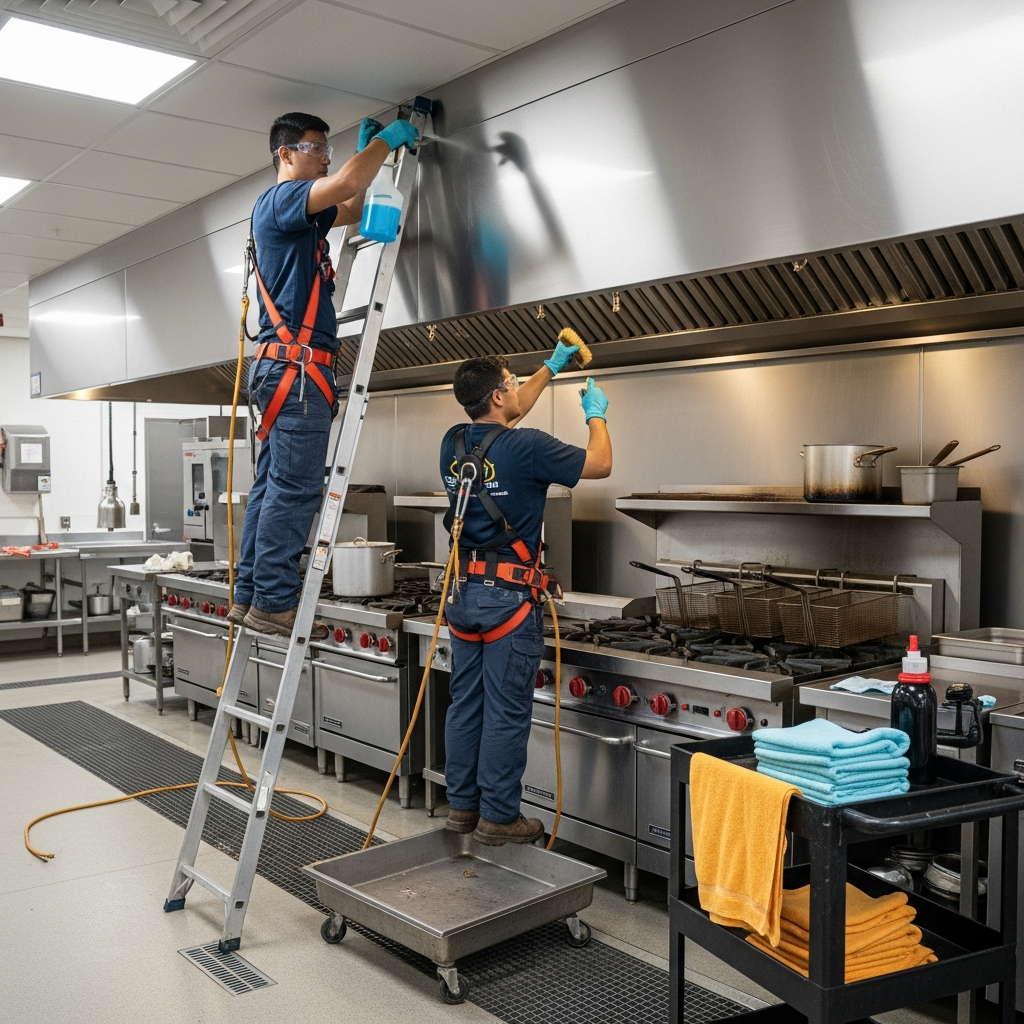
Risk management also includes protecting your staff and customers during cleaning. Cover nearby equipment and floors, use proper PPE, and control chemical use carefully. Choose times that minimize disruption and allow surfaces to cool completely. Build in time to dry and reassemble components so your next service starts clean and safe.
Building a Commercial Cleaning Program
Start with a baseline assessment. Document your current condition with photos of the plenum, interior panels, filters, grease cups, and any accessible duct entry. Note airflow performance during a rush and any odor hotspots. This snapshot helps you measure improvement and justify schedule changes. Establish a logged routine for in-house canopy cleaning and filter cycles, then layer in scheduled comprehensive services for ducts and fans.
Define responsibilities across roles. Assign a lead for canopy cleaning and a coordinator for scheduling external services. Standardize products and tools so teams work with familiar chemistry and equipment. Keep replacement filters in stock for quick swaps when cleaning would take too long during peak seasons. Clear ownership prevents missed cycles and last-minute scrambles.
Canopy and Filter Best Practices
Work top to bottom, back to front. Apply degreaser with the recommended dwell time, agitate gently, and wipe with a damp cloth. Use angled light to find films that overhead lighting conceals. Clean seams, fasteners, the grease trough, and cups. For filters, soak in compatible degreaser, brush along the baffle direction, rinse thoroughly, and dry completely before reinstallation. Properly seated filters restore uniform draw across the hood and reduce noise from vibration.
Exterior presentation matters in commercial spaces where guests can see the cookline. After interior cleaning, polish the hood face, control panels, and nearby stainless or tile to an even finish. Staff and inspectors read these surfaces as a signal of overall control; a pristine exterior suggests the interior received equal attention.
Airflow Verification and Troubleshooting
After reassembly, run the fan and check draw across the cookline. If one zone feels weak, verify filter orientation and seating. If the issue persists, note it for escalation and consider whether residue may be present in duct transitions or at the fan. Uneven airflow also appears when baffle channels hold thin films; those channels must be truly clean to let air pass freely.
Use a simple smoke source or incense during off-hours to visualize airflow patterns under the hood. Smoke should rise and curve smoothly into the canopy along its length. Turbulence or backflow indicates obstructions, cross drafts, or misalignment. Address these early to avoid heat accumulation and staff discomfort during rush periods.
Scheduling That Matches Volume
Align cleaning frequency with menu and hours. High-volume frying often demands weekly filter cleaning and frequent canopy wipe-downs, with comprehensive duct and fan services at intervals based on observed accumulation. Track results in a log that includes photos and notes on odor and performance. When the data shows faster re-greasing, adjust immediately rather than waiting for a problem to force action.
Schedule deeper services ahead of seasonal peaks, menu expansions, or large events. A freshly serviced system cools the line more effectively and handles surges in vapor production with less noise and fewer complaints. Integrating in-house routines with professional services gives you the best of both worlds: day-to-day control and comprehensive risk reduction.
Training and Culture
Train multiple staff members to execute canopy cleaning well. Demonstrate each step, from power-down to final polish, and use angled-light inspections to teach the difference between “looks clean” and “is clean.” Provide a brief, illustrated guide showing acceptable results. Rotate roles so knowledge is shared and your routine does not depend on a single person’s availability.
Create a short debrief culture. After each cycle, ask what delayed the process and what improvement could help next time. Perhaps you relocate the soak station, label spray bottles more clearly, or adjust the order of steps. Continuous, small refinements make the routine faster and more consistent across shifts.
Documentation and Inspection Readiness
Maintain a log that records dates, staff, tasks completed, observations, and next due dates. Add photo documentation of the plenum, filter faces, and grease cups. This record supports internal accountability and helps you demonstrate control during inspections. It also accelerates onboarding for new staff, who can see what results are expected without guesswork.
When you bring in outside specialists, request a completion report with notes and photos of duct and fan conditions. Store those alongside your in-house logs. Over time, these records provide a reliable maintenance history that supports planning and helps justify schedule changes or equipment upgrades.
When to Elevate to Comprehensive Service
Escalate when you see visible duct deposits, recurring odors after proper canopy cleaning, or reduced airflow that does not respond to filter maintenance. Rooftop fans and vertical ducts require specialized access, containment, and safety procedures, including fall protection and controlled wastewater handling. Hand these tasks to trained technicians who focus on kitchen exhaust hood cleaning with the scope and documentation commercial operations require.
Consider comprehensive service before audits, seasonal upticks, or major menu changes that increase vapor production. Doing so reduces stress, keeps your team focused on service, and improves comfort on the line. Well-timed support pays dividends in performance and morale.
Environmental and Facility Stewardship
Commercial facilities must manage wastewater and grease responsibly. Use strainers, collect heavy grease separately, and dispose of it according to local rules. Protect floors and adjacent equipment. Avoid letting concentrated chemicals or oily water reach storm drains. Facility stewardship is part of professional culture in Elizabeth’s food community and signals to staff and guests that you take your responsibilities seriously.
FAQ
Q: How often should a commercial kitchen in Elizabeth clean hood filters? A: Weekly is common for high-volume operations, with adjustments for menu style and observed accumulation rates.
Q: What indicates the need for duct and fan service? A: Visible deposits beyond the canopy, slow or uneven airflow after filter cleaning, or persistent odors point to the need for comprehensive service.
Q: How can I verify quality after canopy cleaning? A: Use angled-light inspection to spot films, perform a fingertip smear test, and run the fan to check for uniform draw across the cookline.
Q: What training helps new staff succeed? A: A short, illustrated guide, hands-on practice with supervision, and a culture of debriefing after each cycle ensure consistent, repeatable results.
Q: Can exterior appearance predict interior cleanliness? A: A polished exterior is a good sign but not a guarantee; always verify the interior under angled light and check filter channels for clarity.
Q: How should I schedule services around busy seasons? A: Plan comprehensive services before peak periods and combine them with a strong in-house routine to keep performance stable when demand spikes.
Q: What should go into my maintenance log? A: Date, staff, tasks completed, observations about airflow and odors, photos, and next due dates form a robust record for accountability and inspections.
Q: How do I minimize downtime? A: Stage tools, assign roles, clean during low-traffic windows, and reassemble only after components are fully dry to prevent rework.
Ready to Strengthen Your Commercial Hood Program?
Align your in-house routine with a predictable calendar, train multiple staff to a shared standard, and verify results with angled light and airflow checks. When you are due for comprehensive work beyond the canopy—or want a reliable benchmark before a busy season—partner with specialists in kitchen exhaust hood cleaning. A balanced program keeps Elizabeth’s commercial kitchens safer, more comfortable, and confidently prepared for inspections and peak service.
