Introduction
In Elizabeth, New Jersey, a clean kitchen exhaust hood is essential for safety, ventilation, and the daily momentum of your cooking routine. Whether you manage a lively commercial line or an ambitious residential setup that turns out meals for a crowd, the hood above your range quietly collects grease, vapor, and particulates that can restrict airflow and increase fire risk. This guide explains how to perform a thorough cleaning from start to finish, how to plan your workflow, and how to keep records that support compliance and peace of mind. If you ever want expert assistance or a reliable benchmark for quality, consider kitchen exhaust hood cleaning performed by trained technicians who understand code compliance and practical efficiency.
Local climate and cooking patterns matter. In Elizabeth, New Jersey, humidity swings, seasonal temperature shifts, and menu styles with frying or sautéing can load your hood filters faster than you expect. A methodical process limits downtime, improves indoor air quality, and preserves equipment longevity. When you repeat that process on a predictable schedule—and keep simple, organized notes—you build a habit that protects your kitchen every single service.
This walkthrough is designed for responsible operators and homeowners who want a deep understanding of the cleaning workflow. You will learn preparation steps, degreasing techniques, rinsing and drying methods, common troubleshooting cues, and documentation that aligns with expectations for kitchens across New Jersey. You do not need exotic tools to do the fundamentals well; you do need patience, a plan, and a respect for safety.
Safety First and Pre-Clean Setup
Start with power and heat control. Switch off any heating elements under or near the hood. Allow hot surfaces to cool fully; even gentle warmth can bake on residue and complicate cleaning. If your hood uses integrated lights, turn them off and, if applicable, disconnect bulbs or covered fixtures according to the manufacturer’s instructions to avoid water intrusion. Place protective coverings over adjacent equipment, electrical outlets, and prep surfaces to shield them from degreaser overspray and rinsewater.
Ventilation during cleaning helps. Open a window or door if possible, or temporarily run a make-up air system to prevent lingering solvent smells. Put on cut-resistant gloves suitable for handling metal filters, along with eye protection. Grease is deceptively slippery, and filter edges may be sharp. Maintain good footing by keeping the floor dry, and set up a dedicated bin for drip capture. Establish a clear pathway from the hood to your sink or soaking container so you do not leave a trail of residue through the kitchen.
Choose your cleaning chemistry wisely. A foodservice-grade degreaser designed for hoods, filters, and ducts will break down heavy accumulations more predictably than household soaps. Always check the label for surface compatibility, dilution ratios, and contact times. Keep microfiber cloths for light films, non-scratch pads for stubborn residues, and dedicated towels for final drying. Have a soft brush to agitate around fasteners and seams where grease likes to hide.
Filter Removal and Handling
Most canopy hoods in Elizabeth kitchens rely on baffle or mesh filters. Before removing them, position a tray or liner below to catch drips. Slide out the filters slowly, supporting their weight with both hands to prevent bending. If the filters are very greasy, tilt them into a vertical position over your catch tray to allow excess grease to drain before moving.
Transport filters to your soak area. If you use a utility sink, confirm that its trap can handle grease runoff and that you have a strainer in place to capture solids before they enter the drain. For outdoor soaking, ensure the space is legal and appropriate; never flush degreaser-laden wastewater into storm drains. Immerse each filter in your diluted cleaning solution according to label directions, ensuring full coverage. Allow the solution the contact time it needs to break down fats without overexposure that could affect aluminum finishes.
Degreasing the Hood Interior
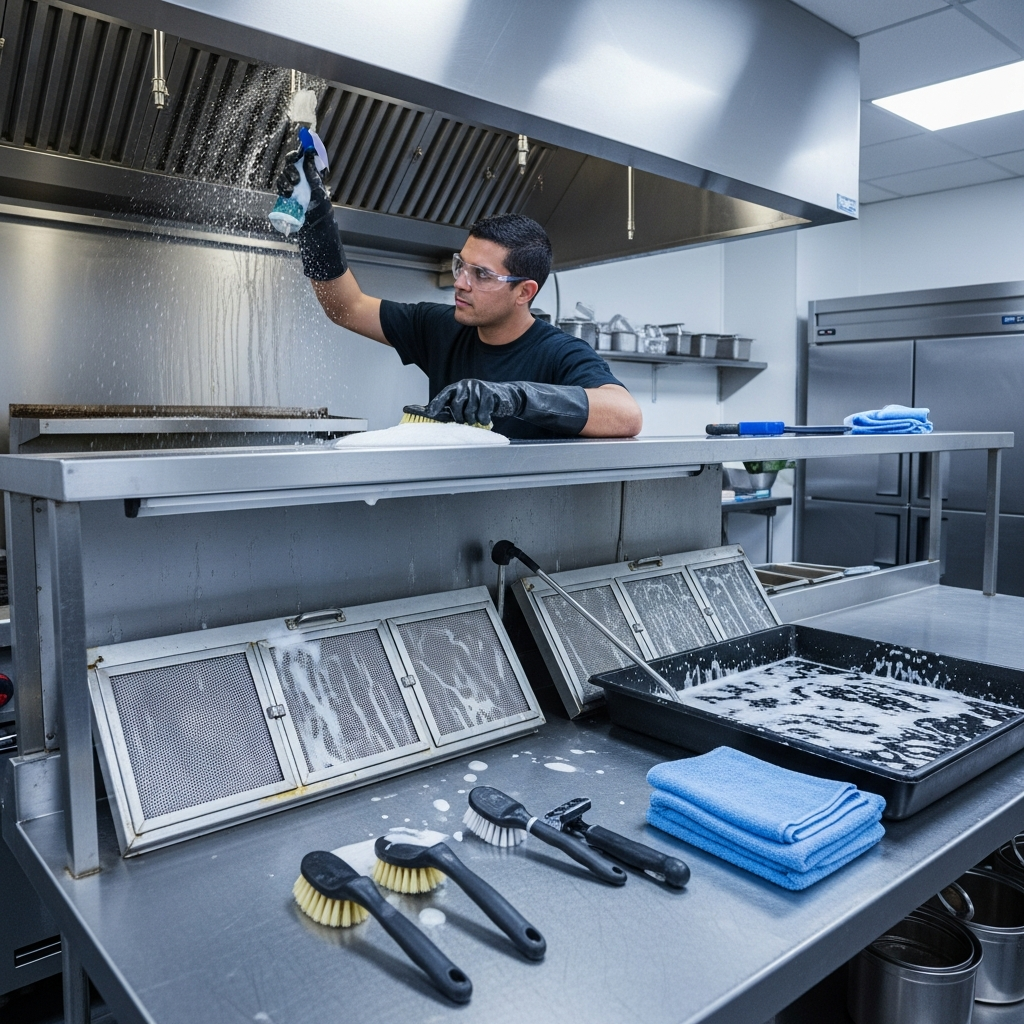
While filters soak, return to the hood plenum and interior panels. Spray degreaser on the interior surfaces, focusing on areas above the cooking line where vapor density is highest. Work from the back of the hood toward the front edge, and from top to bottom, so gravity helps you. Let the solution dwell to loosen buildup. Use a non-scratch pad in small circles to lift the film. Wipe with a damp towel and repeat if you see a hazy sheen that smears under light.
Pay special attention to seams, corners, and fasteners. Grease collects anywhere air slows down, including behind nameplates and around screw heads. Use your soft brush with a touch of degreaser to free the residue, then wipe away with a damp cloth. If your hood has a grease trough and removable cups, empty them carefully into a sealed container, wipe them out, and clean the channel with your brush. This is a good moment to confirm that drip cups are not cracked or overfilled.
Check the fan intake area if it is accessible without removing the fan. You are not aiming to service the motor or blades here; you are visually confirming that the entry zone is not choked with thick deposits. If you notice significant buildup in the duct or fan assembly, that is a sign to schedule a more advanced cleaning beyond the visible hood canopy.
Rinsing, Drying, and Reinstalling Filters
Return to your filters. After the degreaser has loosened the accumulation, agitate gently with your non-scratch pad or a soft brush, following the direction of the baffles. Rinse thoroughly with warm water until the runoff is clear and no suds remain. Shake off excess water and set the filters upright to drain. Avoid high-pressure streams that could deform lighter-gauge filters.
Dry the filters with lint-free towels, then let them air dry fully. Reinstall only when you are confident there is no standing water, which can drip onto hot surfaces during your next cook. Slide each filter back into its track, checking that baffles are oriented correctly for airflow and grease capture. A good test is to run the fan briefly and feel for strong pull at the front of the baffles, confirming the path is clear.
Addressing Stubborn Grease and Odors
Some kitchens accumulate a varnish-like film that laughs at a single pass with degreaser. For this, use a second application with slightly longer dwell time, but avoid prolonged soaking that could dull finishes. Alternate between spraying, agitating, and wiping so you do not simply redistribute the grease. For persistent odors, clean the underside of the hood lip and the surrounding wall or backsplash; residue in those zones can hold onto smells that return as soon as the fan starts.
If the hood exterior is stainless steel, follow the grain with a mild cleaner approved for that finish and buff dry immediately to prevent streaks. Pay attention to handprints around control switches and access latches. These areas can re-grease the hood quickly if overlooked. A clean exterior not only looks professional but also helps you notice new leaks or drips that signal an internal maintenance issue.
Mid-Process Quality Checks
Before calling the job complete, step back and inspect with angled light. A small flashlight at a low angle will reveal streaks and thin films you would miss under bright overheads. Run the fan for a few minutes to confirm smooth airflow and to ensure there are no rattles that might indicate a misseated filter. If you detect a recurring haze in one region, revisit it with a damp towel and minimal degreaser, then dry again.
If you are benchmarking your work or training a team, take quick photos before and after, focusing on the plenum, the back interior panel, and the baffle faces. Organize these images by date so you can track how quickly grease returns. Over a month or two, you will learn your true cleaning interval and can set a realistic schedule. When time or complexity exceeds your comfort level, it is wise to arrange periodic help from specialists who can service ducts and fans as well as the canopy. In those cases, reference-level standards are set by providers who focus on kitchen exhaust hood cleaning with comprehensive methods, documentation, and safety controls.
Frequency and Scheduling in Elizabeth, NJ
Cleaning frequency depends on menu style, cooking volume, and fuel type. High-volume frying demands more frequent attention than light sautéing. In Elizabeth’s diverse dining scene, operators often find that weekly filter cleaning and monthly hood interior touch-ups keep the system stable between deeper services. Seasonal shifts matter, too; winter closures may concentrate indoor humidity, while summer heat can amplify odors when grease films are thinly spread across warm metal.
Integrate cleaning with prep rhythms. Many teams clean filters at the end of a slow shift, while hood interiors are detailed during a scheduled downtime when cooking stations are already covered. The key is consistency: a short, predictable routine prevents the kind of accumulation that later requires aggressive chemicals and extended scrubbing time. Keep a visible, dated log near the hood to prompt the next cycle.
Common Pitfalls and How to Avoid Them
A common mistake is letting degreaser dry on the surface. When that happens, you will see cloudy marks that require re-wetting and extra wiping. Work in smaller sections, and keep a damp towel in one hand as you scrub with the other. Another misstep is reinstalling filters while they are still wet, which can drip onto hot equipment and create sizzling, slippery surprises during service.
Do not forget the surrounding environment. If you leave floors damp or allow rinsewater to run toward busy work zones, slips follow. Build in five minutes at the end for a thorough floor wipe and a quick pass on adjacent stainless or tile. That extra effort maintains the professional look your guests and inspectors notice first.
Recordkeeping and Accountability
Even home cooks benefit from simple notes, but for commercial kitchens in Elizabeth, documentation is a practical necessity. Record the date, the person responsible, what surfaces were cleaned, and any observations about duct or fan conditions. Include a reminder for the next cleaning cycle. If your operation undergoes inspections, these records demonstrate control and help you respond confidently to questions about ventilation and fire prevention practices.
Photographs are particularly helpful. Take close-ups of filter faces, interior panels, and grease troughs immediately after cleaning. Store them by date in a shared folder so managers can verify work. Over time, these images reveal patterns—such as a specific zone that re-greases faster—which you can address by adjusting your cookline layout or fan speed.
When to Escalate to Advanced Service
Not every task belongs on your DIY list. If you notice heavy deposits beyond reach, slow airflow despite clean filters, or recurring odors that do not respond to proper degreasing, escalate. Ductwork and rooftop fans require specialized tools, access procedures, and safety controls that go beyond routine canopy cleaning. Coordinating a deeper service at the right moment protects your kitchen’s safety margin and keeps you aligned with applicable standards.
It is also wise to seek help before major events or menu changes that increase smoke and vapor. A freshly serviced system handles higher loads more quietly and moves heat away from the cookline more effectively. You can stage your in-house cleaning a few days before outside technicians arrive so they can focus on ducts and fans while you maintain the visible canopy.
Training a Team
If you run a commercial kitchen in Elizabeth, share this process with your team so the routine does not depend on one person. Start with a walkthrough of safety, protective coverings, and degreaser handling. Demonstrate filter removal and reinstallation slowly, then have each team member practice with supervision. Assign roles—one person handles soaking and rinsing while another scrubs the plenum—so tasks proceed in parallel without tripping over each other.
Introduce quality checks as part of training. Show how to use angled light to spot films, and how to document results with a quick snapshot. When everyone knows the target finish, consistency improves and rework drops. Build a short debrief at the end: what went well, what took longer than expected, and how to streamline next time. These small process conversations compound into reliable results over a season.
Environmental Stewardship
Respect your drain system and the local environment. Use strainers to catch solids, collect heavy grease in a sealable container, and dispose of it according to local rules. Never send concentrated chemicals or oily water into storm drains. Choose degreasers that are effective yet compatible with your finishes and disposal plan. A thoughtful approach keeps your space compliant, cleaner, and friendlier to everyone sharing Elizabeth’s infrastructure.
FAQ
Q: How often should I clean hood filters in a busy Elizabeth kitchen? A: Many operations benefit from weekly filter cleaning, with additional touch-ups as needed based on frying volume and smoke levels.
Q: What signs indicate I need a deeper service beyond the canopy? A: Persistent odors, visible duct deposits, slow airflow after filter cleaning, or grease weeping from seams suggest you should schedule a comprehensive service.
Q: Can I use household dish soap on heavy grease? A: Mild soaps help with light films, but foodservice-grade degreasers are better at breaking down polymerized fats that build up inside hoods and filters.
Q: Do I have to turn off power to the hood? A: Turn off nearby heat sources and lighting in the hood if practical, and avoid spraying water or chemicals near live electrical components to reduce risk.
Q: Why do streaks keep appearing after I wipe? A: Degreaser may be drying on the surface. Work in smaller sections, wipe promptly with a damp cloth, and dry with a clean towel to finish.
Q: What is the safest way to handle sharp filter edges? A: Wear cut-resistant gloves, support filters with both hands, and keep your pathway dry to prevent slips while carrying them.
Q: Can I clean the fan myself? A: Basic visual checks are fine, but fan cleaning often requires specialized access and safeguards. Escalate to trained technicians for that portion of the system.
Q: How do I keep a simple record of cleanings? A: Maintain a dated log with who cleaned, what was done, and any observations. Supplement with quick before-and-after photos for visual verification.
Ready to Refresh Your Hood in Elizabeth, NJ?
If your kitchen is due for a thorough reset or you are preparing for an inspection, schedule your next cleaning while the steps are fresh in mind, and keep your filters on a dependable rotation. When you want a deeper, code-aligned result that includes ductwork and fans, reach out to professionals who specialize in kitchen exhaust hood cleaning. A clean, efficient hood supports safety, comfort, and consistent quality on every shift.
