Understanding kitchen exhaust hood cleaning requirements is essential for every foodservice operator in Elizabeth, New Jersey. Between national standards, local codes, inspector expectations, and insurance conditions, the obligations can feel complex. Yet the goal is simple: control grease, prevent fire, support healthy indoor air, and maintain documentation proving that you are doing so consistently. Whether you run a single-hood café, a multi-line restaurant, or a high-volume institutional kitchen, aligning your maintenance program with recognized requirements protects your team, your guests, and your business continuity. For many operators, partnering with experts in kitchen exhaust hood cleaning provides clarity and confidence that every box is checked.
NFPA 96: The National Baseline
NFPA 96, the Standard for Ventilation Control and Fire Protection of Commercial Cooking Operations, is the primary reference used across the U.S. It addresses design, installation, operation, inspection, and maintenance of commercial kitchen ventilation systems. Key elements include the requirement for regular inspection and cleaning of hoods, ducts, and fans to remove grease-laden vapors and residues, the installation of adequate access panels for full-duct cleaning, and the documentation necessary to verify compliance. In practice, NFPA 96 offers a framework that local authorities adopt and enforce with their own specific provisions.
Local Adoption and Enforcement in Elizabeth, NJ
Elizabeth’s fire marshals and health departments apply NFPA 96 principles and may specify details such as recordkeeping formats, acceptable service intervals, and the presence of service tags on the hood. Expect inspectors to request proof of recent cleaning, including date-stamped photos and reports. Some buildings, especially mixed-use or historic properties, may have additional constraints like restricted rooftop access or shared shafts; these require careful coordination and may prompt the installation of more access points to ensure full compliance.
Cleaning Frequency Requirements
While NFPA 96 provides general guidance, the exact frequency depends on your operation’s volume and menu. High-grease production—such as heavy frying and grilling—typically calls for monthly or bi-monthly cleanings. Moderate-volume kitchens often require quarterly service. Seasonal or low-volume operations may fit a semiannual or annual schedule. Inspectors may adjust expectations based on your inspection history and the documented condition of your system at each service.
Access Panels and Complete Cleaning
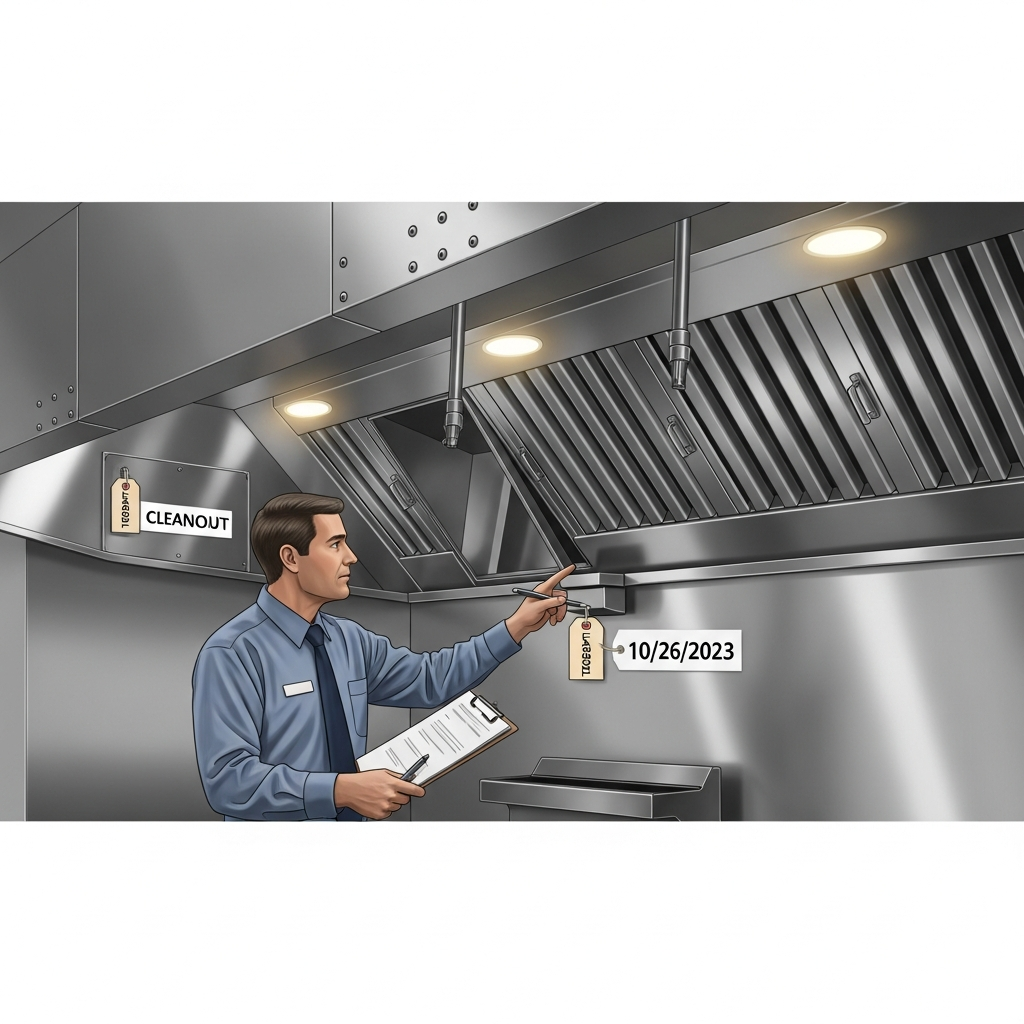
One of the most misunderstood requirements involves access. To comply, ducts must have access panels at specific intervals and at changes in direction to permit mechanical cleaning of the entire interior. Without proper cleanouts, complete removal of grease is impossible. If your system lacks access points, installation is more than a best practice—it is a compliance necessity. Technicians should photograph access locations and note any recommendations to bring the system in line with standards.
Rooftop Fan Requirements
Fans should be hinged to allow safe opening without disconnecting wiring and to prevent damage to ducts and roofing materials. Grease containment is also required to keep runoff from spilling onto roofs, which can cause structural damage and environmental issues. Inspectors pay close attention to hinge kits, electrical safety, belt guards, and the condition of grease trays and absorbent materials. Failing to maintain these components can result in violations even if the interior of the duct is clean.
Documentation and Service Tags
Every cleaning should conclude with a dated service tag placed on the hood and a detailed report that includes before-and-after photos, technician notes, and recommendations for repairs or upgrades. Records must be kept on-site and made available to authorities upon request. Accurate documentation is not just a bureaucratic task; it proves diligence, helps you plan budgets and staffing, and can support insurance requirements.
Chemicals, Rinsing, and Wastewater Handling
Although standards focus primarily on cleanliness and fire safety, environmental and health regulations also apply. Degreasers must be appropriate for kitchen environments, and rinsing must be thorough to avoid residue on food-contact-adjacent surfaces. Wastewater should be captured and disposed of according to local rules. A reputable provider will come prepared with containment, capture, and disposal plans that align with Elizabeth’s expectations.
Coordination With Fire Suppression Systems
During cleaning, technicians should avoid damaging fire suppression nozzles and piping. After service, confirm that nozzles are free of obstructions and that fusible links and detection components remain in proper position. Scheduling hood cleaning near your suppression system’s inspection date can simplify logistics and help ensure both systems are inspection-ready at the same time.
Staff Responsibilities vs. Professional Scope
Staff should wipe down exposed surfaces daily and wash baffle filters regularly. However, duct and fan cleaning require trained professionals with specialized tools. Trying to perform these tasks in-house can be unsafe, ineffective, and noncompliant. Establish clear boundaries: what the team handles each shift, and what licensed professionals address during scheduled service.
Common Violations and How to Avoid Them
- Insufficient access panels preventing full-duct cleaning
- Missing or outdated service tags on the hood
- Excessive grease residue in the plenum and ductwork
- Unhinged rooftop fans or faulty grease containment
- Inadequate documentation or missing photo reports
These issues are preventable with a robust maintenance program and a provider who understands both the letter and spirit of the requirements.
Inspection Day: What Authorities Look For
Inspectors assess visible cleanliness in the hood and plenum, confirm that filters are maintained, review access panels and rooftop conditions, and verify documentation. They may request to see photo reports, prior deficiency notes, and proof of corrective actions. A quick, orderly presentation signals professionalism and typically leads to smoother approvals.
Mid-Cycle Compliance Check
Halfway through your service interval, take fifteen minutes to review your logs, check filter condition, and listen for fan vibration or belt squeal. If anything seems off, schedule an interim evaluation. Recommitting to regular, thorough kitchen exhaust hood cleaning mid-cycle can correct minor issues before they turn into violations or safety risks.
Adapting Requirements to Elizabeth’s Building Stock
Many Elizabeth kitchens occupy older structures where retrofits have produced winding duct paths and shared shafts. Requirements still apply: full access for cleaning, safe rooftop handling, and effective grease containment. Providers familiar with local buildings can recommend hinge kits, additional cleanouts, and improved containment that satisfy codes without extensive downtime.
Insurance Considerations
Insurers often require proof of regular hood cleaning as a condition of coverage. A thorough documentation trail—service tags, frequency schedules, photo reports, and notes on corrective actions—demonstrates risk management. In the event of a claim, clean records can streamline review and help protect your interests.
Training and Culture
Requirements are easier to meet when your team understands why they exist. Provide short trainings on grease as a fuel, the function of filters, and the importance of airflow to kitchen comfort. Make the maintenance schedule visible and assign responsibility for daily and weekly tasks. Empowered staff catch early signs of trouble and reinforce compliance culture.
Frequently Asked Questions
How do I know my system meets access requirements? Ask your provider to inventory access panels and include photos in the service report. If sections are inaccessible, prioritize the installation of cleanouts.
What frequency should I follow? Base it on your menu, volume, and inspection history. High-grease operations may need monthly service; moderate volumes often require quarterly visits.
Are photo reports necessary? While not always explicitly mandated, photo documentation is a widely accepted best practice and often requested by inspectors and insurers.
Can we clean ducts in-house? No. Duct and fan cleaning require specialized tools, safety protocols, and often roof access. Use trained professionals to meet requirements safely.
What about rooftop grease containment? It is essential. Inspectors expect effective containment to prevent roof damage and environmental exposure. Keep materials maintained and replaced as needed.
Put Requirements Into Action
Compliance is not a one-time event; it is a cycle of inspection, cleaning, documentation, and review. By aligning your program with recognized standards, maintaining clear records, and partnering with reliable experts, you protect your operation and simplify inspections. When you are ready to implement or refine a compliant program in Elizabeth, schedule professional kitchen exhaust hood cleaning to anchor your safety strategy, strengthen airflow, and keep your kitchen prepared for every review.
