Homes and businesses in Elizabeth, New Jersey, experience every season to its fullest. Spring pollen rides the Arthur Kill breeze, summer humidity lingers, autumn leaves shed fine particulates, and winter means sealed-up houses running forced-air heating for months. All of this moves through your ductwork, where dust, allergens, and moisture can settle. This comprehensive guide explains how professional air duct cleaning works, what to expect in a Union County home, and how to maintain cleaner indoor air throughout the year. If you are just beginning your research, one quick way to understand the essentials is to explore reputable resources and local service overviews for air duct cleaning, then return here for an in-depth roadmap tailored to Elizabeth.
Why Air Ducts Matter in Elizabeth, NJ
Your HVAC system is the respiratory system of your property. When ducts are clean and clear, air flows efficiently, temperature control improves, and particles are less likely to recirculate. In Elizabeth, that matters because:
- Seasonal pollen and city particulates can accumulate in supply and return ducts, especially after spring and fall peaks.
- Older housing stock and historic buildings near Midtown and North Elizabeth often have legacy ductwork with dust buildup from decades of use.
- Close proximity to transportation corridors can increase fine particulate matter indoors without proper filtration and maintenance.
- Humid summers and tightly sealed winter homes may foster condensation that sticks dust to duct surfaces.
The result can be reduced system efficiency, persistent dusting needs, and irritation for sensitive occupants.
Benefits You Can Expect from a Thorough Cleaning
When done correctly, duct cleaning supports healthier, more comfortable, and more efficient living. Benefits include reduced recirculation of fine dust and allergens, improved air distribution, less debris on coils and blower components, and potentially fewer odors that seem to linger no matter how often you clean. For households coping with asthma, pet dander, or frequent colds, reducing particulate reservoirs can be a helpful component of an overall indoor air quality plan that also includes filtration, humidity control, and source management.
Signs It May Be Time to Schedule a Visit
- A visible puff of dust from supply registers when the system starts.
- Dark dust streaks or clinging lint around vent grilles.
- Unusual or stubborn odors that coincide with HVAC operation.
- Excessive dusting needs even after routine cleaning indoors.
- After major renovations that produced drywall dust, sawdust, or plaster particles.
- Presence of pests or droppings near duct openings, or debris carried through registers.
- Mold concerns, particularly if there was a past roof, basement, or AC condensate leak.
While these signs do not guarantee a serious problem, they are strong indicators that an inspection and possible cleaning could help.
What Professional Air Duct Cleaning Involves
Quality work follows a methodical, source-removal process. Here is a high-level overview of what reputable technicians typically do in Elizabeth homes and small commercial spaces:
- Initial walkthrough and questions about comfort issues, dust, odors, allergies, pets, and any prior duct repairs or modifications.
- Visual inspection of accessible duct sections, supply and return plenums, evaporator coil area, blower cabinet, and registers.
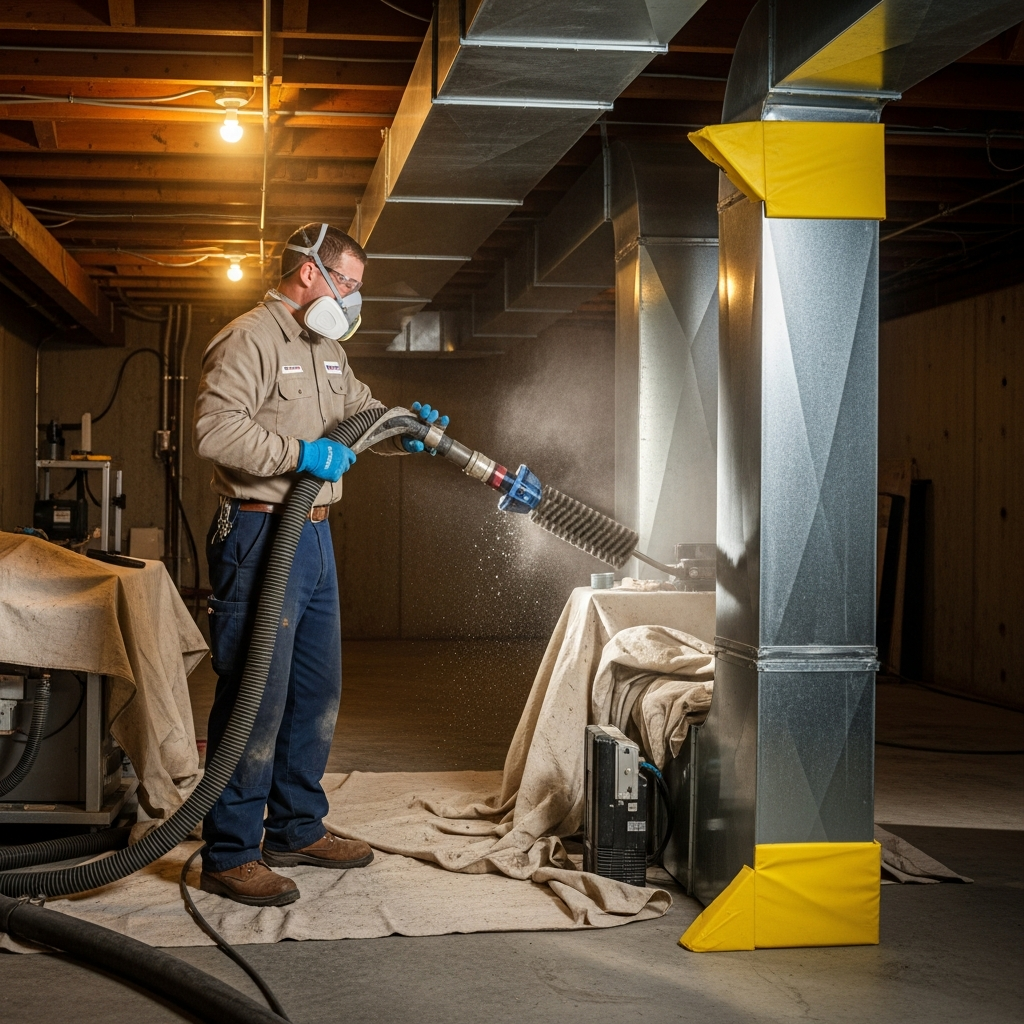
- Protection of floors and furnishings, then setup of negative pressure using a powerful vacuum collection unit connected to the main trunk.
- System zoning to isolate branches, ensuring strong suction at the work area.
- Mechanical agitation with rotary brushes, air whips, and compressed air tools to dislodge adhered debris from duct surfaces.
- Register-by-register cleaning, including removing and washing grills as needed.
- Debris capture at the vacuum’s HEPA or multi-stage filtration unit, preventing reintroduction into the living space.
- Inspection and cleaning of the blower compartment and accessible coil housing surfaces where safe and appropriate.
- Optional application of non-fragrant, HVAC-appropriate sanitizing agents if contamination warrants it.
- Final verification, reassembly, and homeowner debrief with recommendations for filters, humidity control, and maintenance intervals.
Done correctly, the process focuses on containment, agitation, and extraction, rather than simply applying scents or pushing particulates around.
Tools You Might See on Service Day
- Powerful vacuum collection system creating negative pressure at the trunk line.
- Rotary brush and whip systems sized for residential and light commercial ducts.
- Compressed air nozzles, skipper balls, and directional whips for hard-to-reach sections.
- Flexible rods and camera scopes for inspection and documentation.
- Register masks and foam blocks to control airflow and enhance suction at specific branches.
- Drop cloths, corner guards, and protective coverings to keep your home tidy.
A reputable team will explain what each tool does and why it is used for your specific system layout, whether you have sheet metal, flex, or lined ducts.
Understanding Different Duct Materials
Elizabeth properties may have a mix of older sheet metal ducts and newer flex or fiberglass-lined sections. Each requires a tailored approach. Sheet metal tolerates mechanical agitation well when performed correctly. Flex duct must be handled with care to avoid damaging the inner liner or kinks. Lined ducts require agitation techniques that lift debris without scouring the insulation. A competent provider will identify what you have and adjust methods accordingly to protect the ducts while thoroughly removing contaminants.
When to Schedule Cleaning in a Four-Season Climate
Because Elizabeth experiences both heating and cooling seasons, plan timing around usage and accessibility:
- Late winter to early spring helps remove winter dust and prepares for cooling season allergies.
- Late summer to early fall clears summer humidity residue and leaf debris before heating season.
- After renovations or moving into a previously occupied home, cleaning sooner rather than later is wise.
Frequency varies. Many homes consider an inspection every two to three years, with cleaning performed as needed based on findings, filter changes, household shedding from pets, and occupancy patterns.
DIY Versus Professional Work
Homeowners can and should replace filters routinely, vacuum registers, and keep return grills unobstructed. However, deep cleaning of trunks and branch lines requires specialized equipment and containment not feasible with consumer vacuums. Attempting aggressive DIY agitation without proper negative pressure can release more dust into living areas and risk damage to flex duct or mastic seals. Professional service ensures source removal without spreading debris.
Air Filters, MERV Ratings, and Indoor Humidity
Keeping ducts cleaner after service depends on filtration and moisture control. Choose a filter that your blower can handle without excessive pressure drop; higher MERV is not always better if it strains the system. Change filters on a schedule suitable for your home: pet households, smokers, or homes near high-traffic corridors may need more frequent replacement. In summer, aim to manage relative humidity to discourage microbial growth, and in winter, avoid over-humidification that can lead to condensation in cold ducts or on grills.
Elizabeth-Specific Considerations
Local homes may combine basements, crawlspaces, and attics with varying insulation quality. Ducts passing through unconditioned spaces benefit from sealing and insulation to control condensation risk and maintain temperature. Row houses and multifamily buildings often rely on shared chases and tight mechanical closets; technicians must plan access carefully to reduce disruption. Given the city’s proximity to major transportation corridors, fine particulates may be higher than in rural areas, making filtration maintenance particularly important between cleanings.
Questions to Ask Any Provider
- What is your standard cleaning method, and how do you contain and extract debris?
- How will you protect my home and confirm that each branch and trunk has been addressed?
- What types of ducts do I have, and how will your approach differ for each?
- Will you show before-and-after images of representative sections?
- How do you determine whether coil, blower, and plenum areas need attention?
- Do you provide post-service recommendations on filters, humidity, and maintenance intervals?
Clear, detailed answers indicate a provider who prioritizes process and results rather than quick, superficial work.
The Middle of the Journey: Maintenance After Cleaning
Once your system is cleaned, keep it that way. Replace filters on schedule, keep supply registers open and unblocked, vacuum grills periodically, and check for new dust streaks. If you have a home renovation coming up, ask your contractor to isolate work zones and close supply registers in that area so heavy debris does not migrate through the duct system. When life gets busy and you need a refresher on best practices, revisit trustworthy information about air duct cleaning to reset your maintenance habits and plan the right inspection cadence.
Common Myths Debunked
- Myth: Cleaning is only for homes with visible mold. Reality: Dust and particulates accumulate even without visible growth; cleaning is part of a larger indoor air strategy.
- Myth: Once cleaned, ducts stay clean for a decade. Reality: Household activity, pets, and local air quality influence how quickly debris returns; inspection guides timing.
- Myth: A scented spray is enough. Reality: Source removal is the gold standard; fragrance is not cleanliness.
- Myth: Closing vents in unused rooms saves money. Reality: It can increase static pressure, strain the system, and contribute to imbalances that move dust poorly.
What to Expect on Service Day
Before arrival, clear access to mechanical rooms, main returns, and supply registers. Plan for doors opening and closing while equipment is brought in; pets may be more comfortable in a closed room. A thorough visit can take several hours depending on system size and accessibility. You will hear the vacuum unit and occasional bursts of compressed air or rotary brush action. At the end, expect a walkthrough, discussion of findings, and practical steps to keep the system cleaner longer.
After the Cleaning: Verifying Results
Verification can include visual inspection with a flashlight at accessible grills, photo documentation from camera scopes, and a simple dusting test: do surfaces near registers accumulate dust more slowly over the next few weeks? Pay attention to airflow balance and comfort; evenly heated or cooled rooms can signal improved distribution after blockages are removed.
Pet Owners and Allergy Households
Pets contribute dander and hair that saturate filters and cling to duct surfaces. Allergy households benefit from a layered approach: high-quality filtration your system can handle, regular vacuuming with HEPA vacuums, strategic cleaning of textiles, and professional duct service as needed. Consider a schedule tuned to shedding seasons and peak pollen months in Elizabeth, and keep windows closed on high pollen days to reduce loading on your system.
Renovations, Moves, and New Tenancies
Remodeling projects often leave drywall dust and sawdust in returns, especially if contractors used HVAC operation to control temperature during work. A post-renovation cleaning can remove residues that would otherwise cycle for months. Moving into a new-to-you property? Cleaning ducts promptly gives you a fresh baseline and removes remnants from previous occupants, pets, and construction phases.
Moisture Management Inside Ducts
Moisture can enter ducts from poorly insulated runs, gaps near attic penetrations, or high indoor humidity. Signs include rust marks, water stains at grills, or musty odors on startup. Solutions range from sealing and insulating ducts, fixing condensation drains at the air handler, and balancing humidity with dehumidifiers or proper ventilation. Address moisture first; then, if residues remain, cleaning can restore surfaces and air quality.
Safety and Cleanliness Protocols
Expect technicians to use corner guards, wear boot covers when appropriate, and mask registers to control airflow. They should handle access panels carefully, reseal openings with proper materials, and maintain a tidy work area. If sanitizing agents are applied, they should be HVAC-appropriate, used only when indicated, and explained clearly.
FAQ
Q: How often should ducts be cleaned in Elizabeth, NJ? A: Inspection every two to three years is a good starting point, with cleaning performed as needed based on debris levels, pets, renovations, and sensitivity to allergens.
Q: Will cleaning damage my ducts? A: When done properly with the right tools for your duct type, cleaning is safe. Technicians adapt agitation to sheet metal, flex, or lined ducts to avoid harm.
Q: Can cleaning improve energy efficiency? A: Yes, by removing blockages and debris that impede airflow and by reducing dust on coils and blowers, which helps the system operate more smoothly.
Q: Should I clean ducts after a basement flood or roof leak? A: Address the moisture source and dry the structure first. Then evaluate ducts for residues or odors; cleaning may be warranted if contamination is present.
Q: Do I need chemical treatments? A: Not always. Source removal is the priority. Sanitizers are reserved for specific contamination and should be HVAC-appropriate and used judiciously.
Q: Will cleaning eliminate all odors? A: It can help a great deal, but persistent odors may also originate from carpets, wall cavities, or cooking residues. A whole-home strategy gets the best results.
Q: Can I stay home during the service? A: Yes. Expect some noise and movement. Keep pets secure and provide clear access to registers and the air handler.
Moving Forward with Confidence
With a clear understanding of process, timing, and maintenance, you can keep your Elizabeth home more comfortable and healthier through every season. If you are mapping out next steps, review your recent filter changes, note any dust or odor concerns, and schedule an inspection when convenient. For a refresher on key concepts or to compare approaches, reliable overviews of air duct cleaning can help you align expectations before your appointment.
Ready for Cleaner Indoor Air in Elizabeth?
Take control of your home’s comfort and cleanliness by planning a professional evaluation, clearing access to vents and the air handler, and setting a filter replacement routine that fits your household. When you are ready to prioritize cleaner airflow and a more comfortable living space, schedule your service and start fresh with trusted air duct cleaning in Elizabeth, New Jersey.
