Introduction: A Complete Guide to Air Duct Repair and Installation in Elizabeth, NJ
When airflow falters or new spaces need conditioning, effective duct repair and smart installation are the backbone of a comfortable Elizabeth, New Jersey home. Done well, they restore balance, protect indoor air quality, and help your HVAC system reach setpoints efficiently. This guide walks you through when to repair, when to install or reconfigure, and how to collaborate with professionals for durable, documented results. If your initial walkthrough reveals torn flexible runs, loose collars, or underperforming rooms, line up a consultation and consider targeted air duct repair to stabilize performance while you plan more comprehensive improvements.
Elizabeth’s climate puts ducts through humid summers and chilly winters, which test seals, insulation, and supports. Whether you are refreshing an older system or adding capacity for a remodel, careful planning avoids surprises and speeds results.
When Repair Is the Right Move
Repair often makes the most sense when ducts are structurally sound but compromised by specific issues like loose seams, crushed flexible sections, or deteriorated insulation. In these cases, targeted sealing, re-strapping, and re-wrapping return performance quickly without the disruption of full replacement.
Symptoms that point toward repair include whistling at seams, a room that recently lost airflow, visible gaps at collars, or condensation around uninsulated metal ducts in unconditioned spaces. Addressing these issues promptly prevents secondary damage and noise.
When to Consider New Installation or Reconfiguration
Installation or reconfiguration becomes compelling when the existing layout cannot meet comfort needs even after repairs. Long, winding runs with multiple sharp bends, undersized branches to distant rooms, or mixed materials installed without consistent best practices can limit what repairs alone can achieve. In these cases, redesigning branch paths or resizing select sections yields a more balanced system.
Adding new living areas—finished basements, attic conversions, or room additions—also triggers installation planning. Integrating new runs with the existing system requires careful consideration of airflow balance, insulation, and sealing to prevent robbing existing rooms of comfort.
Design Considerations for Elizabeth Homes
Local conditions and building styles shape the best duct strategies. Unconditioned attics and basements demand robust insulation around metal ducts to prevent condensation in humid months, while tight joist bays call for clean transitions that minimize turbulence. For older homes, limited chases may necessitate creative routing that protects structural elements while preserving gentle bends.
Where possible, simplify runs to reduce turns and length. Even small layout refinements can lift airflow in problem rooms. Good design anticipates maintenance, leaving access points for future inspections and repairs.
Materials and Methods That Deliver
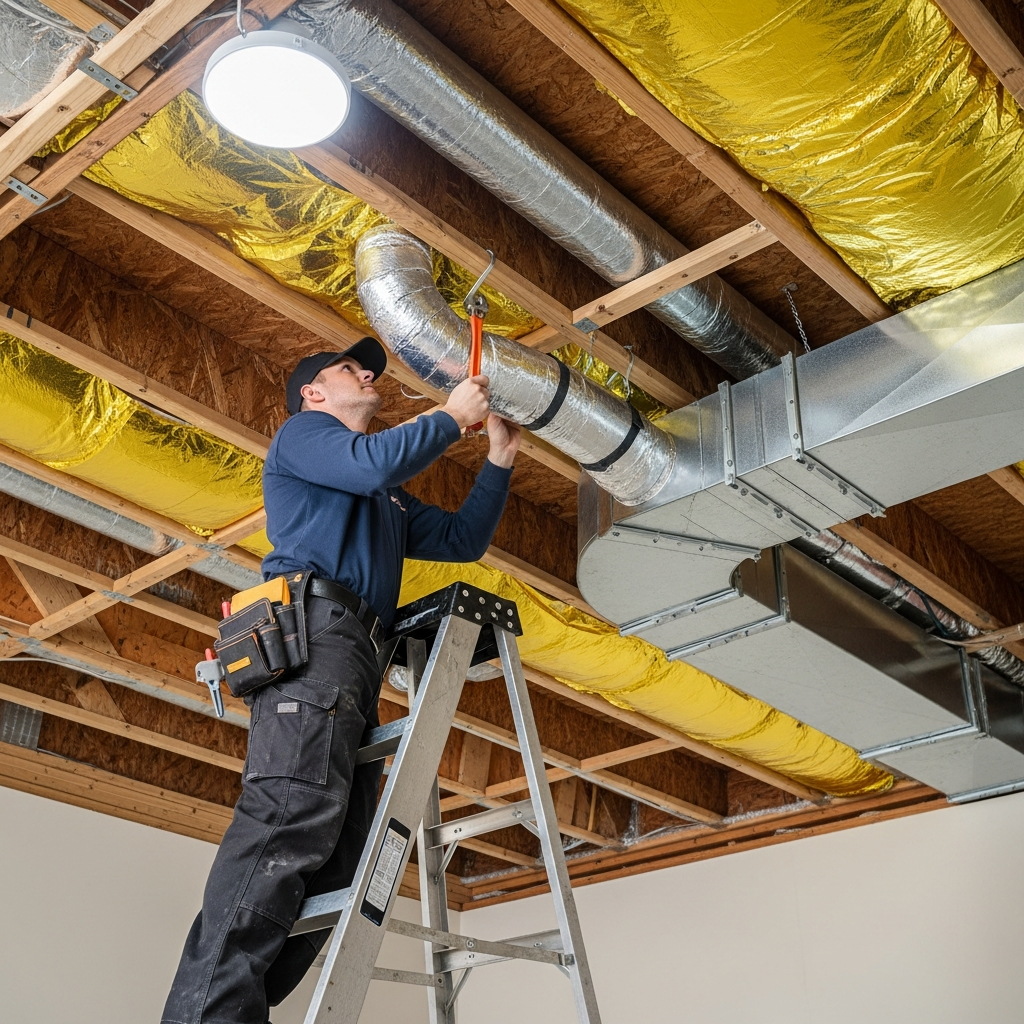
Reliable work relies on the right materials. For metal ducts, use durable sealants and specialized tapes rated for duct systems on seams and collars. For flexible ducts, correct collars, clamps, and careful handling prevent tears and kinks. Insulation should be continuous and secured to protect against humidity and temperature swings common in Elizabeth.
Supports must be spaced to prevent sagging. A sagging run restricts airflow, strains connections, and invites leaks. Proper strapping maintains shape and slope, reducing noise and preserving performance across seasons.
Sequencing Repairs and Installation
When a project includes both repair and installation, address the most impactful issues first. Stabilize glaring leaks or disconnected sections to restore comfort. Next, implement layout changes and add new runs, ensuring that each phase includes verification so gains are locked in before moving on.
Staged work benefits households that need to maintain daily routines. Clear communication about which rooms will be affected and for how long keeps the process smooth and predictable.
Working With Professionals
Quality teams start with a detailed assessment and a conversation about your comfort goals. They document issues with photos, outline repair and installation steps, and describe how they will verify results. They also protect your home with floor coverings, careful grille removal, and tidy cleanup.
Ask about materials, support spacing, and insulation plans for unconditioned spaces. A company that explains choices in plain language signals transparency and confidence in its methods.
Permits, Access, and Building Logistics
Depending on the scope, your project may require coordination with building management or adherence to local guidelines, especially in multifamily properties. Clarify access requirements, elevator reservations, and working hour rules to avoid delays. Experienced teams can navigate these logistics efficiently.
If wall or ceiling openings are required to route new ducts, coordinate with finishing trades so patching and paint follow promptly. Sequencing prevents long disruptions and keeps spaces livable.
Elizabeth Climate and Seasonal Timing
Seasonal timing affects comfort during the work and can influence material handling. In humid months, prioritize insulation continuity to prevent condensation on metal ducts. In colder months, ensure that sealing work is executed in conditions suitable for proper curing and adhesion, especially in unconditioned spaces.
Planning around seasonal peaks also helps secure timely appointments. Schedule proactive work before extreme weather to avoid backlogs when many systems strain simultaneously.
Verification: Proving Performance
Verification should never be an afterthought. Expect visible confirmation of sealed seams, neatly strapped flexible runs, and continuous insulation. Functionally, rooms that once lagged should feel more consistent, with steadier airflow at registers and quieter operation.
Ask your contractor for a summary of repairs and new installations, including photos of key sections. Keep this record with your home documents so future checks have a clear baseline.
Maintenance for Longevity
Protect your investment with simple routines: replace filters on schedule, keep returns unobstructed, and perform seasonal visual checks at accessible seams and supports. After any renovation, request a quick duct review to catch debris and verify that changes did not strain existing runs.
Document observations with photos each season. A consistent record makes it easy to spot changes early and maintain peak comfort.
Mid-Project Adjustments and Optimization
As work unfolds, you may learn that a minor route change or support adjustment can deliver outsized benefit to a stubborn room. An agile team will explain the trade-offs and implement small refinements that keep airflow smooth and balanced. Phasing remains a practical approach when access or scheduling limits what can be done in a single visit.
If early repairs resolve your biggest pain points, consider moving forward with targeted air duct repair in adjacent sections to lock in gains and reduce the chance of future leaks.
Common Pitfalls to Avoid
Rushing through flexible duct handling often leads to new kinks or tears. Insufficient strapping invites sagging that returns after a short period. Inconsistent sealing materials create patchwork results that age at different rates. Avoid these pitfalls by insisting on careful technique, appropriate products, and clear verification.
Another misstep is neglecting insulation in unconditioned spaces. Even a perfectly sealed metal duct can sweat and corrode if left bare during humid months. Continuous, intact insulation is critical for comfort and durability.
FAQ
Q: How do I decide between repair and new installation? A: If the layout is fundamentally sound and problems are localized, repair is usually more efficient. If runs are long, sharply bent, or undersized for the load, targeted installation or reconfiguration can unlock better balance.
Q: What should I expect during a professional visit? A: A structured assessment, photo documentation, clear repair or installation steps, home protection measures, and verification of results before completion.
Q: Will repairs and new runs disrupt my home for long? A: Timelines depend on scope and access. Staging work and clear communication minimize disruption while keeping comfort as high as possible during the process.
Q: How does Elizabeth’s climate influence duct choices? A: Humidity and winter cold demand robust sealing, continuous insulation on metal ducts in unconditioned spaces, and supports that preserve duct shape across temperature swings.
Q: How can I maintain performance after the project? A: Change filters regularly, keep returns clear, perform seasonal visual checks, and schedule quick reviews after renovations to catch early issues.
Make Your Elizabeth Home More Comfortable
With the right plan, careful workmanship, and clear verification, duct repairs and installations transform everyday comfort. If you are ready to stabilize airflow, quiet noisy runs, and protect indoor air quality, schedule expert air duct repair and partner with a team that treats your home with care from the first assessment to the final walkthrough.
