Restaurant Kitchen Exhaust Hood Cleaning Near Elizabeth, New Jersey
Running a successful restaurant in Elizabeth, New Jersey means balancing quality food, reliable staffing, and strict safety compliance every single day. Among the most critical safety practices is routine restaurant kitchen exhaust hood cleaning. When grease accumulates in hoods, ducts, and rooftop fans, it silently raises fire risk, degrades indoor air quality, and reduces equipment efficiency. For owners and managers across Midtown Elizabeth, the Bayway area, North Elizabeth, and nearby Union County communities, investing in professional kitchen exhaust hood cleaning keeps operations safe, inspectors satisfied, and the kitchen team confident that their workplace is protected.
This guide explains what comprehensive hood cleaning entails, how often restaurants near Elizabeth should schedule service, what documentation you should expect after each visit, and the steps you can take to prepare your facility. You will also find practical tips tailored to local code expectations, as well as a detailed FAQ section you can share with your staff to build a consistent in-house maintenance culture.
Why Local Exhaust Hood Cleaning Matters
Elizabeth’s restaurant scene is diverse and active, ranging from high-volume quick service to fine dining and specialized ethnic cuisine. High heat, frequent frying, and long hours translate to heavy grease vapor that is captured by the hood, passes through baffle filters, and then condenses inside ducts and on the exhaust fan. Left unchecked, those layers become a ready fuel source. Local fire marshals commonly reference NFPA 96 fire code guidance, which sets expectations for cleaning frequency and documentation. Regular, professional work minimizes fire risk, stabilizes airflow, protects rooftop equipment, and supports a healthier environment for cooks and guests alike.
Beyond risk reduction, clean hoods help maintain better capture of heat and smoke, resulting in improved comfort on the line. That in turn supports staff retention and consistent food quality. You also gain reliability: fans run cooler, belts and motors face less drag, and filters last longer. Insurance carriers and landlords may require proof of current cleaning as a condition of coverage or lease, so proper documentation is as important as the cleaning itself.
What Professional Hood Cleaning Includes
A reputable provider serving restaurants near Elizabeth will offer a systematic, end-to-end process designed to address every grease-exposed surface. A thorough service typically includes:
- Hood surface degreasing and detailing, including canopies and underside areas that trap vapor and splatter.
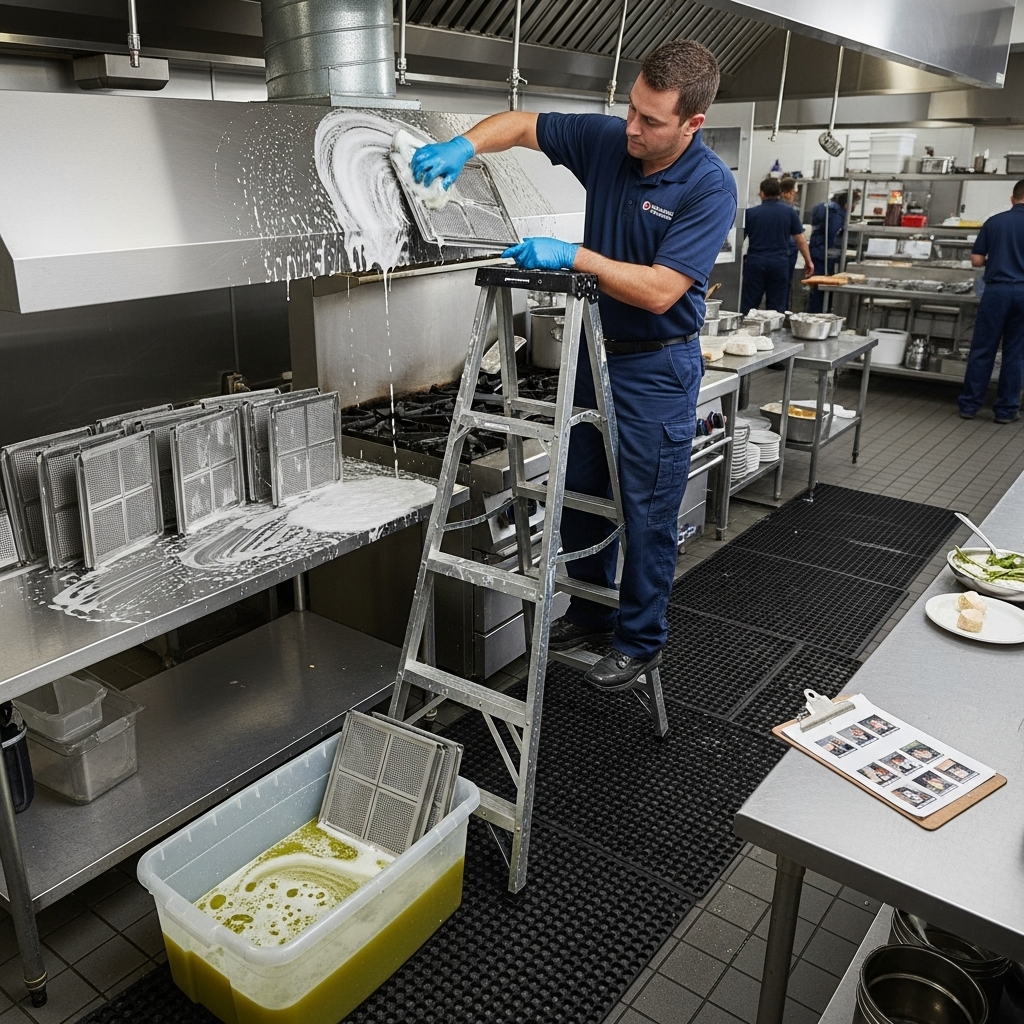
- Removal, soaking, scrubbing, and reinstallation of baffle filters to restore free airflow and compliance.
- Duct cleaning from the hood collar up to the fan, using scraping and food-safe degreasers to reduce combustible deposits.
- Exhaust fan disassembly as needed, with blade, housing, and shaft cleaning to restore efficiency and reduce vibration.
- Rooftop work area protection, including placement of splash guards or absorbent mats to prevent grease discharge.
- Inspection of fan hinges, access panels, drain spouts, and grease containment to ensure safe, code-appropriate operation.
- Polishing of exposed stainless steel to a clean finish that passes visual inspection and meets hospitality standards.
- Post-cleaning run test of fans and verification that airflow is unobstructed and quiet.
- Application of inspection stickers and delivery of a service report with photo documentation for your files.
This complete approach supports code compliance and reduces the likelihood of surprise findings during a health or fire inspection. In kitchens with multiple hoods or complex duct runs, a provider should map each path to guarantee full coverage.
How Often Should Restaurants Near Elizabeth Schedule Service?
Frequency depends on menu, volume, hours of operation, and the type of cooking appliances in use. In general, operations with solid fuel or heavy frying need more frequent cleaning than light-use kitchens. Many Elizabeth-area quick service and casual dining restaurants find that a monthly or quarterly schedule best controls grease. Lower-volume operations might be on a semiannual cadence, while specialty high-heat kitchens could need service more often. The crucial point is to align cleaning intervals with the pace of grease buildup—not a guess. Establishing a documented schedule tailored to your operation shows due diligence and keeps you aligned with NFPA 96 guidance.
To determine the right timing, involve your kitchen leaders. Ask cooks and chefs how often they notice smoke “spillage” from under the hood, hot air lingering on the line, or greasy drip points returning quickly after an in-house wipe-down. If odors intensify or the fan sounds strained, deposits may be restricting flow. A professional technician can also measure and photograph buildup in ducts to set a baseline. From there, you can tighten or relax the interval with confidence.
Compliance Expectations in Elizabeth, New Jersey
Elizabeth’s fire prevention officials typically look for clear evidence that hoods, ducts, and fans have been cleaned to bare metal where practical, with fresh service stickers conspicuously placed and accessible documentation on file. When a provider completes work, you should receive a report showing date of service, the areas covered, any deficiencies found, and corrective actions recommended. Photos add credibility, especially for hard-to-see spaces like risers and rooftop fans. If access is limited due to missing panels or unsafe conditions, that should be noted and scheduled for correction.
Maintaining compliance is an ongoing effort. In addition to your professional schedule, daily and weekly in-house cleaning routines—like wiping the hood exterior, emptying grease cups, and washing filters—will extend the life of your system and help keep you inspection-ready. Remember that the goal isn’t just passing an audit; it’s protecting people and property every day. To reinforce that goal, consider mid-cycle checkups and, when necessary, mid-cycle touch-up service. This is especially useful during holiday surges or peak tourism periods when demand spikes.
Step-by-Step: What Happens During Service
When a crew arrives at your Elizabeth location, they will protect nearby equipment, set safety signage, and perform a lockout/tagout on fans if required. The team removes baffle filters for soaking and scrubbing, then starts degreasing the hood interior and plenum. Access panels along the duct are opened to manually scrape thick deposits. A food-safe degreaser is applied and followed with hot water rinse or steam as appropriate to the material and buildup. On the roof, technicians open the fan housing, clean blades and shrouds, check the hinge kit for stability, and verify that the grease containment system is intact. They collect all residue safely and dispose of it according to environmental best practices.
After cleaning, the team reinstalls filters, wipes all stainless surfaces to a uniform sheen, and runs the fan to confirm proper operation. The area is then dried, floors mopped, and the hood polished. A final walkthrough with a manager ensures transparency. Before they depart, technicians affix a dated service sticker, provide the service report, and confirm the proposed date of your next cleaning—adjusted as needed based on observed conditions.
Mid-Cycle Maintenance and Staff Habits
Daily and weekly routines can substantially slow grease accumulation. Encourage the following habits:
- Run the exhaust fan 10–15 minutes before cooking to establish strong capture, and again after shutdown to clear lingering vapor.
- Wash baffle filters on a set cadence (for example, weekly for heavy fryers) and ensure they are completely dry before reinstallation.
- Wipe the hood canopy and ledges at the end of every shift to prevent sticky layers from hardening.
- Monitor grease cups and rooftop containment; overflow is a red flag and a slip hazard.
- Train new cooks on where smoke should go and how to report unusual smells or fan noises promptly.
These steps do not replace professional service but keep your operation in good stead between visits. They also make professional work more efficient, which reduces downtime and stress on busy nights.
Choosing a Qualified Provider Near Elizabeth
Select a partner that understands Union County permitting norms, communicates clearly, and documents thoroughly. Ask about photo reports, insurance coverage, access panel installation when needed, hinge kit installation for rooftop fans, and grease containment solutions suited to your roof type. A reliable provider will tailor frequency, schedule work during off-hours to minimize disruption, and coordinate with your building management if access to the roof or mechanical spaces is controlled. Mid-contract reviews are helpful to ensure the cleaning interval still fits your current menu and volume.
Technician training and safety practices matter. Confirm that crews follow lockout/tagout where applicable, wear appropriate PPE, and protect floors and adjacent equipment. Ask how they prevent water intrusion or overspray in sensitive areas and how they handle waste. Good answers here indicate a company that respects your facility and reduces operational risk.
Health, Safety, and Performance Benefits
Clean exhaust systems help control airborne grease and smoke particulates, reducing slip hazards and residue on walls, ceilings, and lights. Improved airflow can moderate line temperatures and odors, keeping staff more comfortable and focused. Reduced mechanical strain on fans helps prevent surprise breakdowns and the sudden loss of capture during service. In a market as competitive as Elizabeth and the greater Newark area, these behind-the-scenes advantages support consistent guest experiences and faster recovery after your busiest nights.
From a risk management perspective, the most valuable benefit is fire prevention. Grease-laden ducts are a known ignition pathway when open flames or flare-ups are part of the workflow. Regular, verified cleaning lowers this risk substantially. Insurers notice, and so do inspectors who see well-maintained systems.
Documentation You Should Expect
Demand a clear, comprehensive service report each time work is completed. It should include:
- Service date and time window, with technician names.
- All hoods, ducts, and fans serviced, identified by location.
- Methods used (manual scraping, chemical degreasing, hot rinse) and any access limitations.
- Before-and-after photos of key points, including duct interiors and the fan housing.
- Deficiencies and recommendations such as missing access panels, worn belts, or inadequate grease containment.
- Next suggested service date based on observed buildup and your menu/volume.
Keep reports in a binder near the kitchen office or in a shared digital folder so managers can retrieve them quickly during inspections. Visible service stickers on each hood should match the report entries to avoid confusion.
Costs of Waiting Too Long
While it is tempting to stretch intervals, the downsides are real: baked-on deposits become harder to remove, increasing labor time; fans run hotter and noisier; odors linger; and grease may leak onto the roof, damaging materials and creating environmental hazards. Most importantly, fire risk rises. By catching buildup early, you keep the system healthier and safeguard your staff and guests. Mid-season checkups can prevent surprises during holidays or large events when your kitchen workload surges.
When to Call Immediately
If you notice loud fan vibration, persistent smoke at the hood edges, greasy drips reappearing quickly after cleaning, or a sudden change in odor, do not wait for your next scheduled service. These are signs of restricted airflow, mechanical wear, or excessive deposits. A quick assessment can prevent hood smoke spillage during service and avert fan failure at the worst possible moment. In multi-tenant buildings common around Elizabeth, timely action also reduces the risk of odors migrating into neighboring suites.
Frequently Asked Questions
Q: What codes apply to my restaurant in Elizabeth? A: Local officials commonly reference NFPA 96 for commercial kitchen ventilation and fire protection. Expect requirements around cleaning frequency, documentation, access panels, rooftop hinge kits, and grease containment. Always follow specific guidance issued by your local fire prevention authority.
Q: How long does a typical service take? A: Duration depends on the number of hoods, duct length, grease levels, and rooftop access. Many restaurants schedule work after closing or before opening to minimize disruption. Your provider should estimate time after an initial walkthrough.
Q: Do I need to shut down cooking equipment? A: Yes, equipment under the hood must be cool and off. Crews will also need clear access to the hood, filters, and roof. Coordinate timing with your kitchen schedule to avoid delays.
Q: What should my staff do between professional visits? A: Wash baffle filters on a routine basis, wipe visible hood surfaces daily, empty grease cups, and report changes in fan noise or airflow. These habits extend the life of your system.
Q: How do I know if cleaning was thorough? A: Look for detailed reports with before-and-after photos, clean and polished stainless surfaces, and quiet, steady fan operation. You should also see new service stickers with the date of cleaning.
Q: Can all grease be removed? A: Technicians aim to clean to bare metal where practical. Some stains or inaccessible weld seams may not appear bright but should be free of combustible deposits. Missing access panels should be installed to improve future results.
Q: Are chemicals safe for food environments? A: Professional-grade degreasers are formulated for commercial kitchens and are followed by thorough rinsing. Crews protect surfaces, collect residue, and leave areas clean and dry.
Q: What if my roof has limited access? A: Your provider should coordinate access with building management, carry appropriate fall protection, and use hinge kits to safely service fans. If access is restricted, that must be documented and resolved.
Q: How often should high-volume fryers be cleaned? A: High-volume frying often requires monthly service. However, actual intervals should be set based on observed buildup and performance, then adjusted as needed.
Q: Will cleaning reduce kitchen odors? A: Yes, by restoring airflow and removing grease deposits that trap odors, you typically see noticeable improvements in kitchen air quality and comfort.
Practical Tips for Elizabeth Restaurants
Build a calendar of tasks: daily wipe-downs, weekly filter washes, monthly inspections of grease cups and containment, and the professional schedule that fits your volume. Train new hires on why exhaust capture matters and what good airflow looks like. Keep an eye on weather, too—extreme heat or cold can affect fan performance and grease viscosity, leading to drips or reduced capture. Finally, review your documentation quarterly to ensure stickers and reports align across all hoods and fans.
Mid-contract communication with your provider is invaluable. If your menu changes—say, a new fried item spikes grease output—alert your technician to reassess frequency. Transparent reporting and photo evidence make those adjustments straightforward.
Service in the Heart of Union County
Restaurants in Elizabeth’s downtown corridors, the Port district, and neighborhoods near major roadways face distinct logistical challenges, from late-night schedules to shared rooftops. A local-minded partner understands these realities and plans around them, arriving with the right equipment for tight spaces, securing permits when needed, and coordinating with landlords. That local familiarity speeds service and strengthens compliance—two advantages you can bank on during busy seasons.
Mid-Article Resource
If you are refining your cleaning plan or training new managers, review reputable best practices and make sure your team understands the basics of kitchen exhaust hood cleaning. Clear expectations and a documented schedule will support uninterrupted operations and smoother inspections throughout the year in Elizabeth.
A Culture of Safety and Cleanliness
Establishing a culture where everyone respects the exhaust system pays off. Cooks notice when capture is weak and call it out. Managers double-check roof containment before storms. Owners schedule service proactively rather than reactively. These consistent habits protect your investment and your people. Over time, you will notice fewer last-minute emergencies, steadier energy consumption, and cleaner surfaces across the kitchen.
Ready to Schedule Your Service?
Your restaurant, staff, and guests rely on a safe and reliable exhaust system every day. Take the next step by booking professional kitchen exhaust hood cleaning tailored to Elizabeth, New Jersey operations. Confirm your current frequency, request a photo-documented report, and put a predictable schedule in place so you can focus on food and hospitality with confidence.
