Introduction
When your kitchen exhaust hood stops capturing smoke or starts making unusual noises, cooking becomes frustrating fast. Troubleshooting is the bridge between discomfort and a clear, workable plan. This guide focuses on diagnosing common problems in Elizabeth, New Jersey homes, where varied building ages and duct layouts can complicate airflow. You will learn how to interpret symptoms, test likely causes, and decide whether a DIY fix or professional help is appropriate. If you are weighing whether to reset the system yourself or call for comprehensive support, reviewing the scope of kitchen exhaust hood cleaning can provide useful context for what a thorough service entails.
Good troubleshooting starts with safety. Always switch power off at the breaker before opening panels or touching the fan. Use stable ladders and avoid rooftop work during windy or wet weather. Keep notes as you proceed so you can track what you tested, what changed, and what remains unresolved. With a systematic approach, you can quickly isolate most issues and restore reliable ventilation.
Symptom: Weak Suction at the Hood
Weak draw is the most common complaint. First, remove the baffle filters and test airflow briefly with power on. If suction improves dramatically without filters, they are either saturated with grease, installed backward, or still damp from a recent wash. Clean and dry the filters thoroughly, then reinstall with airflow arrows pointing in the correct direction.
If suction remains poor, inspect the plenum and accessible duct segments for shiny films or ridges of residue. Even a thin layer can slow airflow, particularly around elbows and horizontal runs common in remodels. Check the exterior termination for a stuck damper or lint buildup. If the damper does not swing freely, clean the hinge area and remove debris. Persistent weak suction after these steps suggests a deeper restriction or a failing fan motor.
Symptom: Excessive Noise or Vibration
Loud operation typically indicates imbalance or loose components. With power off, open the fan housing and look for uneven grease on the blades or wheel. Clean evenly around the circumference so you do not shift weight from one side to the other. Verify that set screws are tight and the wheel sits squarely on the motor shaft. Inspect the housing for missing screws or cracked mounts.
If noise persists after cleaning and tightening, bearings may be worn. Many modern motors are sealed and not serviceable; replacement is the reliable cure. Also listen for buzzing near the control panel, which could hint at an electrical issue such as a failing speed controller. Address electrical concerns promptly to avoid further damage.
Symptom: Persistent Odors After Cooking
Lingering smells often trace to saturated filters or a plenum coated with thin, tacky residue. Wash filters in hot water with a suitable degreaser and clean the plenum thoroughly. Run the fan for several minutes after cooking to clear moisture and residual vapors. If odors continue, inspect accessible duct sections and the exterior cap for films that trap scents and reduce flow.
Building pressure balance matters, too. In tight homes, negative pressure can reduce capture and let odors drift. Slightly open a window during high-odor cooking or ensure makeup air is available. When airflow returns to normal, odors typically dissipate faster.
Symptom: Grease Drips from Hood or Filters
Drips indicate saturated filters, improper filter orientation, or heavy deposits inside the plenum. Remove filters and check for pooling grease in the lower channels. Clean thoroughly and allow complete drying before reinstalling. Inspect drip trays and edges of the hood for hardened films that can soften and ooze during high-heat cooking. Correcting these points usually stops the drips and restores neat operation.
In rare cases, condensation combines with residual grease to produce drips after the fan cools. Running the fan a bit longer after cooking helps dry the pathway and minimize this effect.
Symptom: Air Blowing Back into the Kitchen
If air seems to blow outward from the hood instead of being pulled in, check for a blocked or stuck exterior damper. A reversed fan wheel installation can also cause poor flow direction after service. Verify the wheel orientation and ensure nothing obstructs the duct. If your system recirculates through a charcoal filter, remember it will not remove moisture; replace the charcoal element per guidelines to control odors, but consider converting to a ducted setup for better overall performance if feasible.
During winter in Elizabeth, stack effect can influence airflow, especially in multistory homes. Warmer indoor air wants to rise, which can compete with the hood’s pull. Slightly opening a nearby window often improves capture immediately by balancing pressure.
Symptom: Fan Will Not Start
Begin with basics. Confirm the breaker is on and check the hood’s switch or control panel. If lights work but the fan does not, the issue may be a failed speed controller, a loose wire at the motor, or a seized wheel due to heavy grease. With power off, spin the wheel gently by hand; resistance suggests a mechanical problem that cleaning or part replacement can fix. If the wheel spins freely, test the switch and controller continuity if you have the skills and proper tools, or contact a technician.
Burnt smells, visible charring, or melted insulation are signs to stop and call a professional immediately. Electrical faults can escalate quickly and should be handled with care.
Symptom: Smoke Escapes the Capture Zone
When visible smoke curls past the hood, reposition cookware to back burners and raise lids slowly to keep vapors beneath the canopy. Verify that the hood height and setback match the manufacturer’s guidance. If the hood is installed too high, capture suffers. Increase fan speed early, before heavy cooking begins, and run the fan briefly after you finish to clear the space.
If performance was previously good and declined suddenly, revisit filter condition, plenum cleanliness, and exterior damper freedom of movement. Clogged or misoriented filters are a frequent cause of capture loss after routine cleaning when they are reinstalled damp.
Diagnostic Basics: Airflow Tests
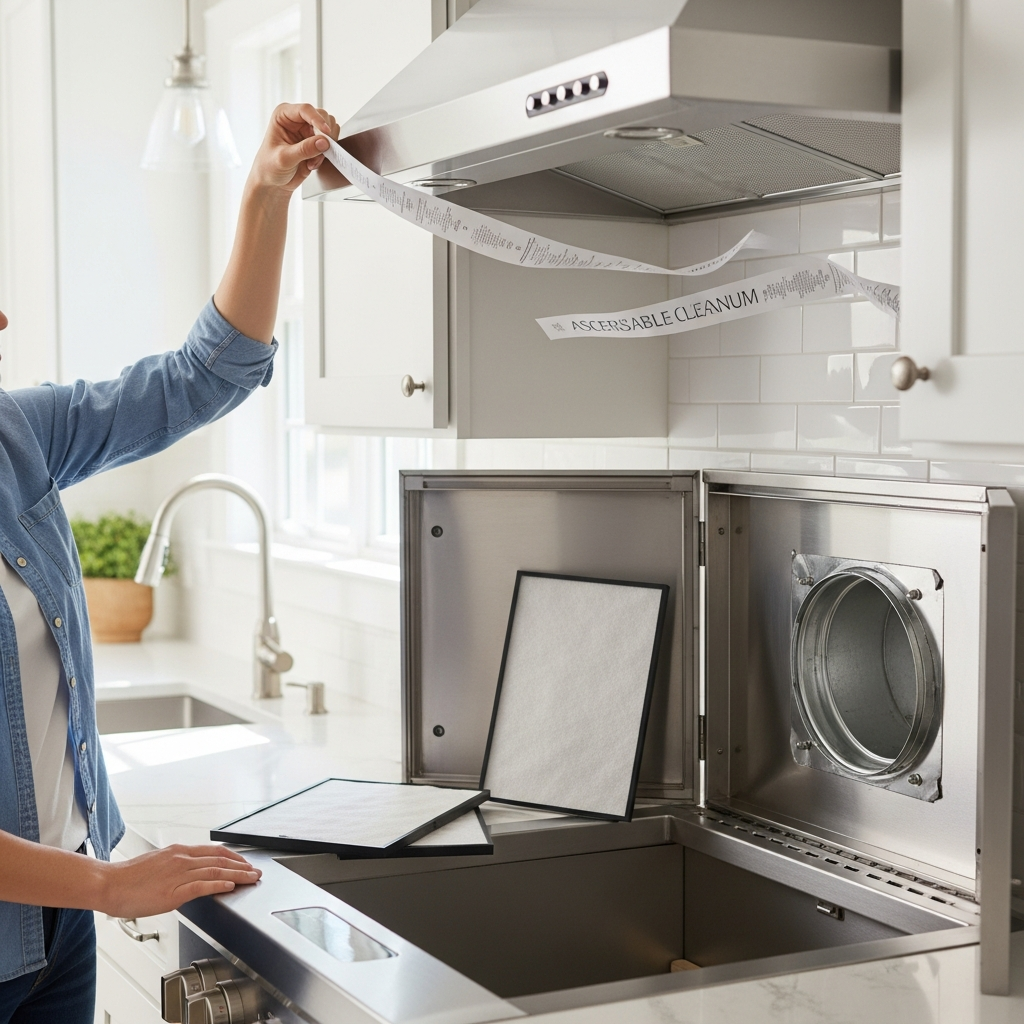
Simple tests provide quick clarity. Hold a thin strip of paper at different points along the hood opening; steady inward pull indicates good airflow. Compare the pull with and without filters installed to isolate restrictions. Listen for changes in pitch as you cover portions of the intake—stable pitch suggests uniform flow, while sudden changes may point to localized blockages or gaps.
At the exterior termination, feel for air movement with the fan on. Weak or pulsing flow implies an obstruction or failing motor. Observe damper movement; it should open smoothly during operation and close when the fan stops.
Cleaning Interventions That Solve Problems
Many symptoms resolve when you remove accumulated grease systematically. Soak and rinse filters until they drain cleanly. Degrease the plenum with adequate dwell time. Wipe accessible duct segments with minimal liquid to avoid pooling. Clean the fan wheel evenly, keeping fluids away from the motor and electrical components. After reassembly, test on each speed and listen for smoother, quieter operation.
Establish a maintenance cadence that matches your cooking style. Frequent frying calls for more frequent filter washing and mid-cycle plenum wipes. Lighter cooking allows longer intervals but still benefits from seasonal checks, particularly after holidays and large gatherings.
When Troubleshooting Reveals Limits
Some issues exceed safe DIY scope. Long or concealed ducts, rooftop fans on steep or weathered surfaces, and electrical faults with speed controllers warrant trained help. If you have repeated symptoms after diligent cleaning, airflow measurements and a full-duct service may be necessary to reset the system. Knowing when to stop saves time and protects your home from accidental damage.
Clear documentation speeds professional diagnosis. Note timelines, sounds, smells, and the steps you already tried. Photos of filters, plenum, duct access points, and the fan wheel provide valuable context and often reduce the duration of a service call.
Elizabeth-Specific Considerations
Homes in Elizabeth vary widely in duct design due to decades of renovations. Expect to encounter extra elbows, shared chases from prior layouts, and mixed materials at terminations. Seasonal humidity thickens films and can intensify odors in summer, while winter’s closed windows can challenge capture unless you provide makeup air. Tailor your troubleshooting to these realities: if a problem recurs seasonally, link your interventions to weather patterns as well as cooking habits.
Exterior caps face salty air and temperature swings that loosen fasteners and stiffen dampers over time. Include a quick seasonal check outside to keep airflow steady and troubleshooting simpler inside.
Frequently Asked Questions
Why does my fan hum but not move air? The wheel may be seized with grease or a set screw may be loose, allowing the motor to spin without turning the wheel. Power down, inspect the wheel, and clean or tighten as needed.
What causes a burnt smell when the fan runs? Electrical issues, overheated motors, or grease contacting a hot surface are common culprits. Switch power off and investigate immediately, or call a professional.
Can I fix vibration with added weights? No. Balance by cleaning evenly and ensuring the wheel is seated correctly. Added weights can make the problem worse and damage the motor.
How do I know if the damper is stuck? With the fan on, you should feel steady airflow at the exterior termination. If it is weak and the flap barely moves, clean the hinge area and remove residue or debris.
Is recirculating mode sufficient for heavy cooking? It helps with odors via charcoal filters but does not remove moisture. For frequent high-heat cooking, a ducted system performs better.
From Diagnosis to Lasting Results
Reliable ventilation returns when you pair accurate diagnosis with targeted cleaning and sensible habits. Start with filters and the plenum, confirm free damper movement, and ensure the fan wheel is clean and secure. Balance airflow with a small source of makeup air during intensive cooking, and keep notes so you can spot patterns. When challenges exceed safe access or tools, schedule comprehensive care to reset the system and simplify future upkeep. For a clear view of what a full reset covers and how it restores airflow, explore professional-grade kitchen exhaust hood cleaning and use that benchmark to plan your next steps.
Restore Quiet, Clear Air in Your Kitchen
If smoke lingers, odors persist, or noise disrupts your cooking, do not wait for the problem to worsen. Book a convenient appointment with a trusted local provider and request thorough kitchen exhaust hood cleaning so your Elizabeth home regains strong capture, lower noise, and a fresher atmosphere for everyday meals and special occasions.
