Kitchen Exhaust Hood Cleaning Services in Elizabeth, New Jersey
Elizabeth, New Jersey restaurants operate in a demanding environment where food quality, speed, and safety all intersect. Among the most important safety measures is routine kitchen exhaust hood cleaning—an essential service that protects staff, guests, and property from grease-fire hazards while preserving indoor air quality and system performance. Whether you manage a quick-service location near the Turnpike, a neighborhood deli in Midtown Elizabeth, or a bustling bistro close to the waterfront, choosing professional kitchen exhaust hood cleaning services is key to staying compliant and inspection-ready at all times.
This comprehensive guide breaks down the scope of professional services available in the Elizabeth area, how providers assess your system, what a thorough job entails, scheduling strategies that fit peak hours, and the documentation you should expect after each visit. You will also find tips for coordinating between tenants and landlords, best practices for in-house maintenance, and a robust FAQ section you can use to train new team members.
What a Complete Hood Cleaning Service Includes
A credible provider will service every grease-laden surface in the exhaust path, from the hood and plenum to the vertical/horizontal ducts and rooftop fan. A standard visit typically includes:
- Site prep and protection of cooking equipment and floors, including plastic sheeting and absorbent mats as needed.
- Removal and deep cleaning of baffle filters; inspection for broken welds or bent frames that can reduce capture efficiency.
- Degreasing the hood interior, plenum, and accessible duct openings with food-safe products, followed by hot water rinsing or steam.
- Scraping and washing duct interiors via existing access panels to remove combustible deposits down to bare metal where practical.
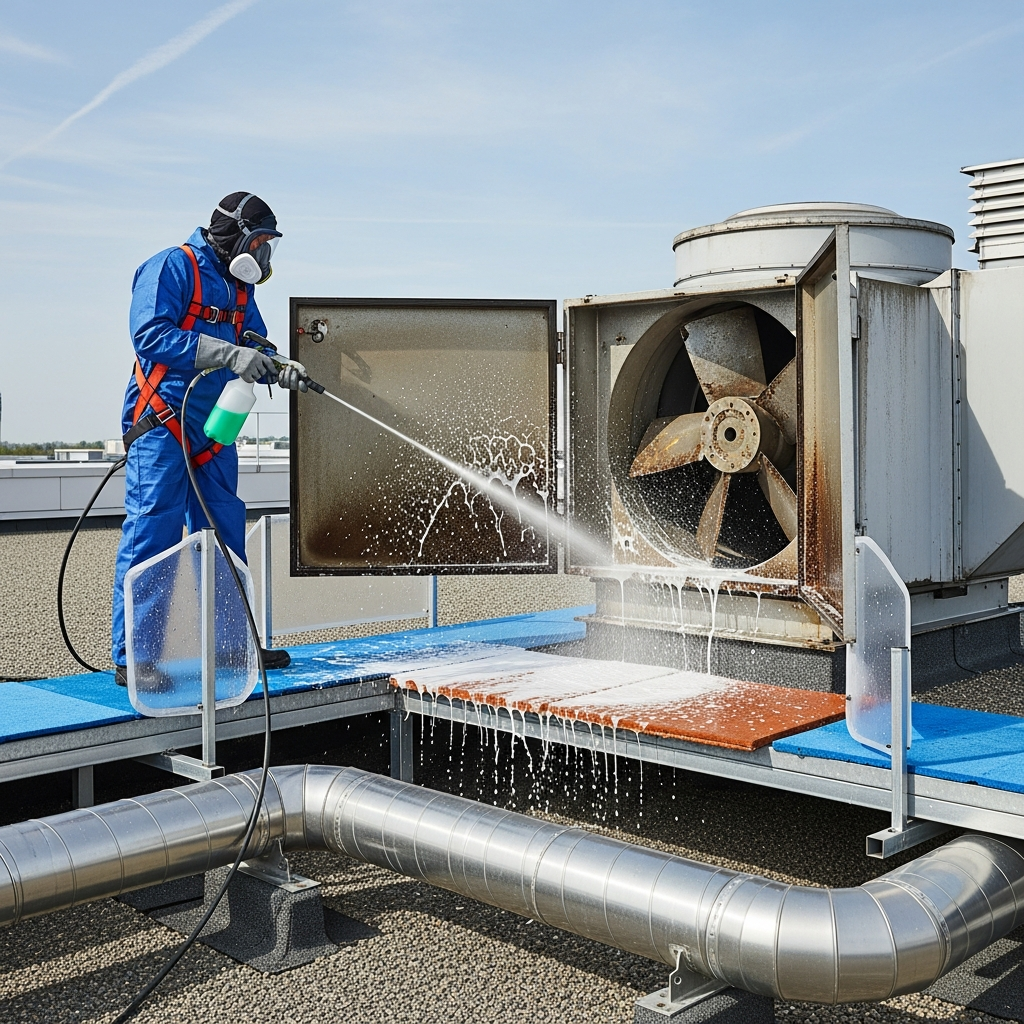
- Rooftop fan disassembly and cleaning of blades, housing, and shroud; verification of hinge kits and grease containment systems.
- Grease disposal in compliance with environmental best practices; protection of roof membranes to prevent staining and deterioration.
- Polishing exposed stainless steel and reinstallation of dry filters for optimal airflow.
- Final run test of exhaust fans and a quality-control walkthrough with a manager.
- Placement of updated service stickers and delivery of a photo-documented report with recommendations.
This level of detail not only reduces fire risk but also improves day-to-day performance. Clean, properly seated baffle filters and unobstructed ducts allow heat and smoke to be captured more efficiently, making the line more comfortable and helping food aromas remain where they belong—out in the dining room rather than trapped over the grill.
Assessment and Planning for Elizabeth Operations
Before setting a maintenance schedule, your provider should survey the kitchen to identify hood types, duct runs, rooftop access, and any existing deficiencies such as missing access panels or worn fan belts. The assessment often includes photos and notes about menu type and volume. Based on these findings and your cooking methods—heavy frying, charbroiling, or light sautéing—the provider recommends an interval aligned with NFPA 96 guidance and local expectations. High-volume or solid-fuel operations usually require more frequent service than low-volume, low-grease kitchens.
Because many Elizabeth restaurants share rooftops or mechanical spaces, providers coordinate with property managers for access. Planning is especially useful in multi-tenant buildings near major corridors, where restricted hours or elevator logistics can affect timing. A thoughtful schedule minimizes disruption while keeping you compliant.
Scheduling Strategies That Fit Your Business
Most restaurants in Elizabeth prefer overnight or early-morning cleanings to avoid impacting service. Providers should accommodate your hours and offer consistent teams who know your layout. Routine night-of tasks—cooling equipment, covering exposed food, and clearing space—help the crew move quickly and safely. If your business experiences seasonal surges, plan interim checks during peaks so that grease never gets ahead of your schedule. For new concepts just opening in Elizabeth, a 60- or 90-day check-in after launch is wise to validate your chosen interval.
Cleaning Outcomes You Can Measure
After proper service, airflow should feel stronger and more even. You may notice cooler temperatures on the line, reduced smoke spillage at hood edges, and quieter fan operation. Rooftop areas should be orderly, with intact hinges and well-positioned grease containment. Indoors, stainless surfaces should be clean and free of obvious residue. Ask technicians to explain any remaining discoloration versus actual grease deposits; the goal is removal of combustible material, not necessarily a mirror-like finish in every weld seam.
Documentation You Should Receive
Every service should end with a clear, organized report that includes:
- Service date, technician names, and time window.
- All components serviced, identified by location (for example, “Grill Line Hood #1,” “Prep Hood,” “Rooftop Fan EF-1”).
- Methods used (scrape, degrease, rinse/steam) and limitations (missing access points, restricted roof access).
- Before-and-after photos throughout the hood, ducts, and fan housing.
- Deficiencies and corrective recommendations such as hinge installation, access panel additions, or belt replacements.
- Next suggested service date customized to your menu and volume.
Keep the report and ensure that the service sticker date matches what is on file. If a fire or health inspection occurs, quick access to this documentation speeds the process and demonstrates ongoing due diligence.
In-House Maintenance Routines That Work
Professional cleaning is only part of the equation. Day-to-day habits keep your kitchen performing between visits:
- Empty grease cups, wipe hood ledges nightly, and schedule weekly filter washing for heavy fry stations.
- Start the exhaust fan early to pre-establish capture, and keep it running after shutdown to clear remaining vapor.
- Train staff to report fan noises, vibration, or noticeable changes in smoke behavior immediately.
- Check rooftop grease containment monthly and after storms. Overflow is both a hazard and a code concern.
These practices do not replace professional service, but they reduce buildup rates and help you avoid mid-shift surprises.
Common Challenges in Elizabeth Kitchens
Older buildings and shared rooftops can complicate access to fans and ductwork. Limited space, long horizontal duct runs, or multiple elbow turns can trap more grease and require additional access panels. Weather can also play a role; extreme cold impacts grease viscosity, increasing drip risks at seams or cups. A capable provider anticipates these issues and arrives with the right tools and materials—access panel kits, hinge assemblies, absorbent barriers, and safe degreasers—to handle the environment effectively.
Health, Safety, and Team Morale
Cleaner air reduces fatigue and eye irritation for cooks. Better heat capture decreases stress during rushes. These improvements are subtle but meaningful for retention and performance. For management, predictable service intervals, documentation, and fewer emergencies free up time to focus on guest experience and staff development. Your guests notice the difference too: less lingering smoke and odor translates to a more inviting dining room.
Mid-Article Resource
If you are building a training module for new shift leads, include a short overview of kitchen exhaust hood cleaning standards and how they relate to NFPA 96. A shared understanding reduces variance, prevents oversights, and prepares the team for inspections.
Selecting a Qualified Partner
When evaluating providers, ask about insurance coverage, technician training, safety protocols, and photo documentation. Confirm they can install access panels and hinge kits where required, and that they provide rooftop grease containment solutions compatible with your roof type. Look for clear communication, transparent reports, and flexible scheduling. Local experience in Elizabeth and Union County is a strong plus because crews familiar with the area’s buildings and fire prevention expectations resolve access issues faster.
Signs You Need Service Sooner
Watch for visible smoke rolling out from under the hood, strong grease odors that persist after close, rattling or humming fans, or grease drips reappearing quickly. If these occur, do not wait for your next scheduled visit. Prompt attention can prevent a mid-service failure or inspection citation. In multi-location operations, consolidate reporting so regional managers can spot trends and adjust intervals quickly.
Frequently Asked Questions
Q: How often should I clean my exhaust system in Elizabeth? A: Frequency depends on menu and volume. Heavy frying and charbroiling may require monthly cleaning, while lighter use may be quarterly or semiannual. Use observed buildup and airflow performance to fine-tune intervals.
Q: What happens if my system lacks access panels? A: Access panels are essential for thorough duct cleaning. Your provider should recommend and install panels at code-appropriate intervals to ensure complete service and acceptable documentation.
Q: Will the crew clean my rooftop fan safely? A: Crews should use hinge kits to service the fan without straining electrical or grease lines and protect roof surfaces with containment measures. Fall protection and weather planning are part of a professional approach.
Q: Do I need to provide water or power? A: Providers typically bring equipment, but confirm site requirements during scheduling. Clear access to water and drains can speed service and cleanup.
Q: Can cleaning be done during business hours? A: It is usually best after close or before opening to reduce disruption and ensure equipment is cool. Some light work can happen during slow periods, but full hood cleaning is generally scheduled off-hours.
Q: How do I verify the work? A: Request photo documentation and a walkthrough with the lead technician. Make sure service stickers are updated and that the report is stored where managers can access it.
Q: What about odor control? A: Removing grease deposits and restoring airflow often reduces odors. Persistent odors may indicate other issues like inadequate makeup air or undersized capture hoods.
Q: Are the chemicals food-safe? A: Professional degreasers used in commercial kitchens are designed for these environments and are followed by thorough rinsing and cleanup.
Practical Prep Checklist Before Service
- Cool all cooking equipment below cleaning thresholds and turn gas/electric off as required.
- Remove or cover food and smallwares; clear shelving near the hood.
- Inform staff and neighboring tenants (if applicable) of rooftop access windows.
- Verify someone with keys and roof permissions will be on site for the crew’s arrival.
Following these steps keeps the job efficient, minimizes downtime, and ensures all parts of the system can be serviced safely.
From Compliance to Confidence
Elizabeth’s dining culture thrives on consistency and trust. When your exhaust system is maintained on a thoughtful schedule, you gain more than compliance: you gain predictability, smoother services, and safer working conditions. Teams perform better; inspections proceed faster; and equipment runs with fewer surprises. A professional partner who documents thoroughly and adapts to your changing menu will be an asset for years to come.
Ready to Improve Your System’s Performance?
Protect your kitchen, staff, and guests by scheduling professional kitchen exhaust hood cleaning services tailored to Elizabeth, New Jersey. Align your maintenance plan with your menu and volume, request photo-documented reports, and keep your operation inspection-ready through every season.
