Introduction
In commercial and institutional kitchens, a clean exhaust system is not only smart risk management—it is a regulatory expectation. Operators in Elizabeth, New Jersey must maintain hoods, ducts, and fans to reduce fire hazards, protect occupants, and support healthy indoor air. Understanding the regulatory landscape, inspection practices, and documentation standards helps your organization stay prepared, avoid disruptions, and prove due diligence. Partnering with experienced professionals for scheduled kitchen exhaust hood cleaning aligns your maintenance program with the expectations of fire officials, health departments, insurers, and corporate stakeholders.
Regulations and standards shape how often systems are cleaned, how thoroughly they are serviced, and how results are documented. While specific enforcement practices can vary, the shared goal is reducing combustible grease accumulation in the pathways that carry heat and smoke away from the cookline. By building a program around these expectations, you protect people and property while demonstrating leadership’s commitment to safety and compliance.
The Purpose of Hood Cleaning Regulations
Grease residues inside hoods and ducts are fuel. If a flare-up or electrical fault ignites deposits, fire can travel rapidly beyond the appliance, threatening the entire building. Regulations aim to remove that fuel on a cadence that matches actual grease production and to verify that service reaches all required surfaces. The result is a safer kitchen, more predictable inspections, and better outcomes if an incident occurs.
Beyond fire risk, regulations support ventilation performance and indoor air quality. Clean systems maintain designed airflow, which stabilizes capture rates, temperature, and odor control. This, in turn, supports staff comfort, productivity, and guest experience.
Scope and Coverage
Hood cleaning requirements cover the entire grease exhaust train: hood interior surfaces, plenum, filters, horizontal and vertical ducts, fan housings, and discharge points. Regulations also expect that access points are sufficient for complete service and that components are reassembled correctly, with fan belts and seals in good condition. Surface wipe-downs alone do not meet the standard; complete system cleaning and documentation are required.
Cleaning Frequency Expectations
Frequency depends on cooking methods and volume, with higher output kitchens requiring more frequent service. The intent is to match cleaning cadence to observed accumulation so that combustible deposits never reach hazardous levels. Establish baseline intervals and then adjust based on photo evidence, inspector input, and changes to menu or hours.
- High-volume frying and charbroiling: monthly to quarterly
- Moderate-volume mixed cooking: quarterly to semiannual
- Low-volume or seasonal operations: semiannual to annual with interim inspections
- Solid-fuel cooking: more frequent inspection and cleaning due to sparks and embers
Keep records that show why your intervals were chosen and when they were adjusted. Documented reasoning demonstrates a proactive approach to safety and compliance.
Documentation and Inspection Readiness
Inspectors and insurers rely on clear records to verify that work is complete and timely. A robust documentation package supports smooth inspections and builds credibility for your maintenance program. It also helps internal stakeholders evaluate risk and plan improvements.
- Service tags: visible indication of last cleaning date and recommended next service
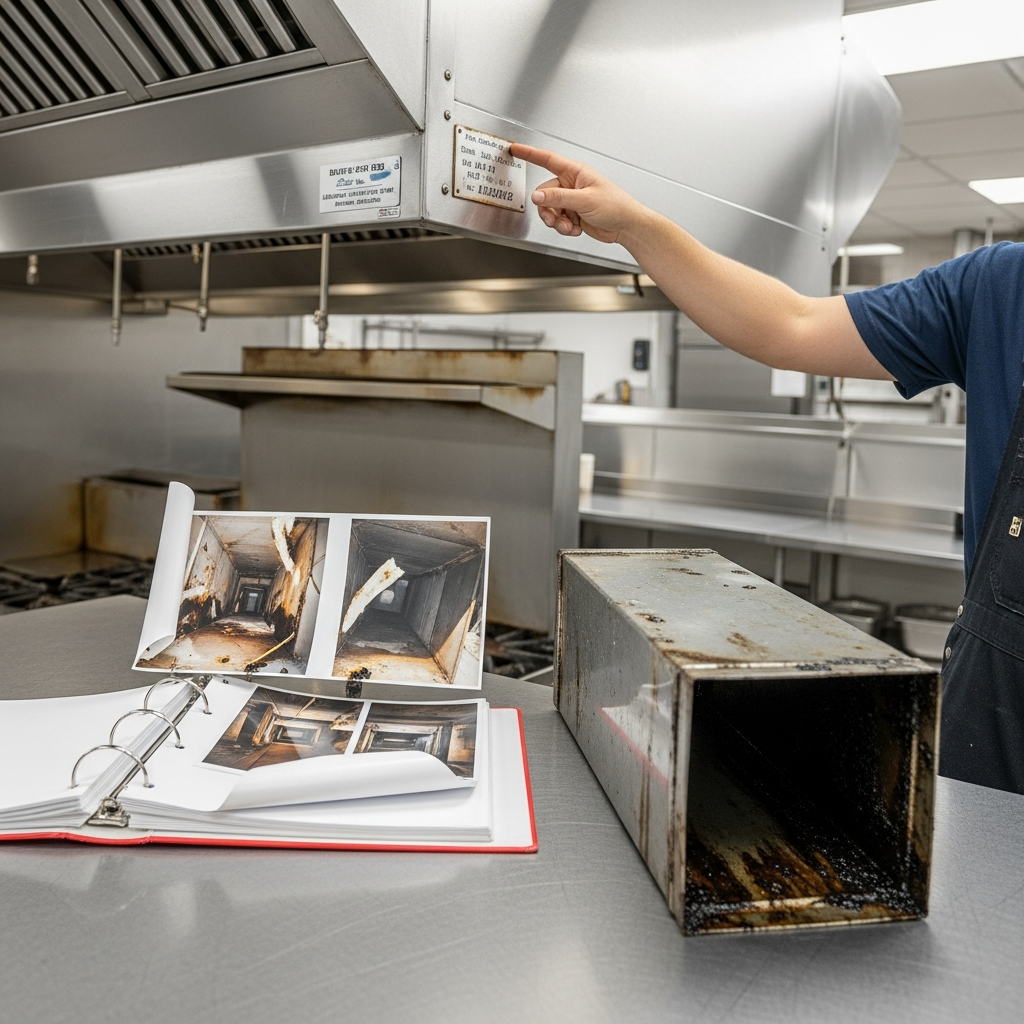
- Photo reports: before-and-after images of hood interiors, duct runs, clean-outs, and fan housings
- Written reports: scope of work, observations, and corrective recommendations
- Corrective action tracking: notes on access panel installation, fan repairs, or filter upgrades
- Training logs: records of staff instruction on daily and weekly routines
Organize documents in a central binder or digital system with dates, locations, and contact details for service providers. During inspections, quick access to this file saves time and reduces the chance of misunderstandings.
Access and Completeness
Regulations emphasize completeness of service. If internal surfaces are not accessible, cleaning cannot be considered thorough. Access panels strategically placed along horizontal and vertical ducts allow technicians to reach and verify all areas. Without them, grease can remain hidden, increasing fire risk and undermining ventilation performance.
Engage your service provider to assess access needs, especially if your building has complex duct routes or if previous renovations altered pathways. Investing in proper access pays dividends through safer, faster, and more verifiable service.
Roles and Responsibilities
Compliance is a shared effort. Operators handle daily and weekly routines and coordinate professional service. Service providers deliver the deep cleaning, documentation, and guidance. Building owners and managers facilitate access, rooftop safety, and alignment with broader facility policies.
- Operators: schedule service, perform surface and filter care, maintain records
- Service providers: clean internal components, document findings, recommend corrections
- Facility management: coordinate access and ensure safe roof and ladder conditions
- Corporate or ownership: review records, set standards, and allocate resources for improvements
Defining these roles upfront prevents gaps and ensures accountability across stakeholders.
Elizabeth, NJ Building and Operational Considerations
Elizabeth’s mix of historic structures and modern developments introduces variation in duct routes, access, and rooftop conditions. Older buildings may have long horizontal ducts concealed in chases, while contemporary designs may use high-efficiency fans and complex make-up air systems. Local weather patterns—hot summers and cold winters—also influence ventilation performance and the urgency of keeping systems clean and balanced.
Work with teams familiar with the city’s building landscape. Their experience helps anticipate challenges, protect interiors, and manage water and grease containment effectively so your site remains clean and safe during service.
Choosing a Compliant Service Provider
Provider selection is central to regulatory success. Look for teams with verifiable training, strong safety programs, and comprehensive reporting. Consistent procedures and transparent communication make it easier to defend your maintenance program to inspectors and insurers.
- Request sample photo reports that show duct interiors and fan assemblies
- Verify insurance, training, and safety practices
- Discuss access solutions for complex duct runs
- Ask about scheduling flexibility for overnight or off-peak service
- Confirm that documentation is delivered promptly and completely
Clarity and completeness are your best allies. When scope, methods, and deliverables are explicit, results are more predictable and defensible.
Adjusting Frequency and Scope
Regulatory expectations allow for adjustments based on observed conditions. If a menu change increases frying volume, shorten intervals proactively. If a location reduces output, maintain interim inspections to ensure longer intervals remain justified. Photo evidence and notes from technicians provide the objective basis for these decisions.
Similarly, scope can evolve to address deficiencies noted during service or inspections. Installing additional access panels, upgrading filters, or repairing fan components improves safety and makes future cleanings more effective.
Mid-Article Guidance
Strong programs balance routine operations with readiness for scrutiny. Keep your documentation centralized, train staff on daily routines, and ensure that your provider’s reports are filed promptly. Most importantly, schedule consistent professional kitchen exhaust hood cleaning that reaches every part of the system and provides the evidence inspectors expect.
Common Findings During Inspections
Understanding typical inspection findings helps you prevent them. Address these issues proactively to keep your kitchen running smoothly and your records strong.
- Grease accumulation at duct turns or long horizontal runs
- Insufficient access panels, hindering complete service
- Worn or slipping fan belts causing poor airflow
- Missing or outdated service tags on hoods
- Inadequate documentation or missing photo evidence
Use the findings from each service as a feedback loop. Incorporate recommendations into your maintenance plan and track completion dates to demonstrate continuous improvement.
Training and Internal Audits
Staff training underpins day-to-day compliance. Short, focused sessions on filter care, surface wipe-downs, and fan operation norms establish a baseline of awareness. Periodic internal audits—quick checks of logs, tags, and visible surfaces—reinforce expectations and identify drift before it becomes a problem.
Leadership attention matters. When managers review records and ask informed questions, teams understand that ventilation safety is a priority alongside food quality and service speed.
Emergency and Near-Miss Response
Even strong programs can face surprises. If you experience a flare-up, smoke event, or equipment malfunction, document the incident, schedule an inspection of the exhaust system, and evaluate whether cleaning intervals or procedures should change. Quick action demonstrates responsibility and may reveal opportunities to strengthen your program.
FAQs
Q: Who enforces hood cleaning expectations?
A: Fire officials, health departments, insurers, and corporate safety teams all have a stake in hood cleanliness. While enforcement may vary, the shared focus is reducing fire risk and maintaining safe operations.
Q: How do I prove compliance during an inspection?
A: Provide service tags, photo reports, and written documentation showing dates, scope, and corrective actions. Organized records and clear access to the system support quick, smooth inspections.
Q: Can I lengthen my cleaning intervals?
A: Only when photo evidence, technician observations, and operational data justify it. Maintain interim inspections to ensure longer intervals remain safe and defensible.
Q: What if access panels are missing?
A: Missing access prevents complete cleaning. Plan to install panels so technicians can reach internal surfaces. This improves safety and inspection outcomes.
Q: Do solid-fuel appliances change expectations?
A: Yes. Wood and charcoal produce sparks and heavier soot loads, increasing fire risk and typically requiring more frequent service and inspection.
Q: Does documentation need to include photos?
A: Photo evidence is a best practice because it objectively shows conditions before and after service. Photos strengthen your compliance narrative and aid in internal reviews.
Q: Will cleaning help with odors and comfort?
A: Clean systems maintain airflow, which supports odor control and temperature stability. This can improve staff comfort and guest experience.
Q: How should multi-unit operators manage records?
A: Standardize reporting formats, centralize files, and compare results across locations. Consistency makes it easier to benchmark performance and identify risk outliers.
Strengthen Your Compliance Program
Build a defensible maintenance strategy that pairs clear documentation with thorough service and practical daily routines. Engage experienced professionals, keep records current, and adjust frequency as your operation evolves. When you are ready to reinforce safety and inspection readiness in Elizabeth, New Jersey, schedule professional kitchen exhaust hood cleaning and keep your ventilation system aligned with best practices throughout the year.
