Introduction
A dependable checklist transforms hood and duct maintenance from a vague chore into a repeatable system that protects people, property, and operations. Whether you manage a restaurant, commissary, school cafeteria, or hospitality venue in Elizabeth, New Jersey, a structured approach ensures nothing gets missed and your ventilation remains inspection-ready. Use this comprehensive checklist to plan, execute, and verify work across daily tasks, weekly routines, and professional service intervals. To anchor your program, incorporate scheduled professional kitchen exhaust hood cleaning that reaches the internal surfaces you cannot safely access.
This guide breaks down responsibilities for in-house staff and professional technicians, clarifies frequency by cooking volume, and outlines preparation and verification steps. With consistent use, your team will save time, avoid rework, and reduce risk while keeping the cookline comfortable and efficient. Adapt the checklists to your menu, equipment mix, and building layout to fit the realities of your Elizabeth operation.
Daily and Close-of-Business Tasks
Simple daily habits deliver outsized returns. By controlling residue on the surfaces you can see, you reduce migration into ducts and maintain capture efficiency between deep cleans. Train your closing crew to complete the following steps without fail.
- Start the exhaust fan before cooking and leave it on for several minutes after shutdown
- Wipe the hood exterior, front edge, and control panels with non-abrasive degreaser
- Clean backsplash and surrounding wall surfaces that collect aerosolized grease
- Ensure light lenses are clear of residue for proper illumination
- Confirm that combustibles and packaging are stored away from the cookline
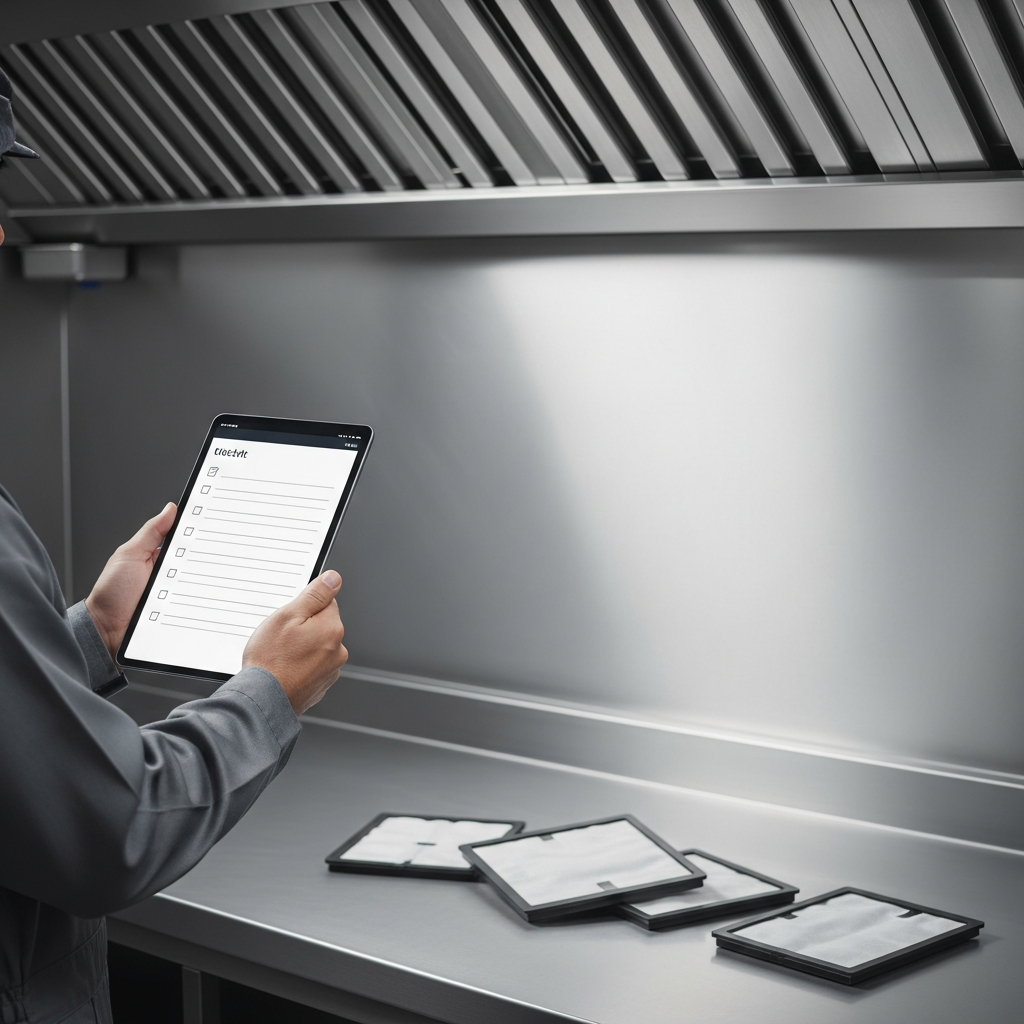
Logging daily tasks helps reinforce consistency. A quick signature or digital check gives supervisors confidence and reveals trends if performance slips.
Weekly Filter and Surface Care
Filters are your first line of defense. Keeping them clean reduces the grease load that reaches internal duct surfaces. Build a weekly routine that fits your volume, and increase frequency during busy seasons or after menu changes that increase frying or charbroiling.
- Remove baffle filters and soak in degreaser, then rinse with hot water
- Inspect filters for dents, warping, or missing rivets and replace as needed
- Check for even airflow at the filter bank during fan operation
- Wipe interior hood surfaces that are safely reachable without disassembly
- Confirm that the fan operates without unusual noise or vibration
Document anomalies for your service provider. Noting a subtle fan rattle today may prevent a breakdown tomorrow.
Monthly Inspection Checklist
Once a month, designate a supervisor to perform a light inspection. This is not a deep clean, but it keeps you informed about how quickly grease is accumulating and whether your professional schedule should change.
- Use a flashlight to inspect plenum edges and visible duct entries for sheen or buildup
- Check the roof or discharge area for signs of grease staining or pooling
- Verify make-up air performance and observe capture during a mock cook
- Review daily and weekly logs for gaps or recurring issues
- Schedule or confirm upcoming professional service based on observed conditions
Professional Service Planning
Professional technicians handle internal ductwork and the fan assembly. Your role is to prepare the site, communicate constraints, and verify results. A well-planned service minimizes downtime and ensures a thorough outcome that holds up to inspection.
- Choose a service window outside meal periods and coordinate with building management
- Ensure access to water, power, and the roof or discharge point
- Shut down and cool cooking equipment per manufacturer guidance
- Cover food and secure smallwares away from the work zone
- Identify alarm zones and plan for temporary bypass if required
Clear communication with your provider about unique building features—such as long horizontal runs or limited rooftop access—prevents surprises and keeps the schedule on track.
Step-by-Step Professional Checklist
Expect your service provider to follow a methodical plan that reaches every grease-exposed surface from hood to fan. Understanding the steps helps your team verify scope and quality during and after the visit.
- Site protection: install sheeting and floor coverings, isolate the work area, and set up safe water containment
- Filter removal: soak and clean filters, leaving the plenum open for access
- Chemical application: apply degreaser to hood interiors, duct entries, and fan housing with adequate dwell time
- Agitation: use scrapers and brushes to dislodge polymerized grease
- Hot-water rinse: flush residues from fan to hood while capturing runoff
- Fan service: open the fan, clean blades and housing, and check belts and bearings
- Reassembly: reinstall filters, polish exposed surfaces, and clear the site
- Documentation: provide before-and-after photos, service tags, and recommendations
After the walkthrough, confirm that observations and recommendations are recorded in your maintenance file so you can reference them during inspections and internal audits.
Frequency by Cooking Volume
Use your menu and throughput to set initial intervals, then adjust based on observations. Remember that short-term events—seasonal menus, promotions, or extended hours—can temporarily increase grease output and may warrant a schedule adjustment.
- High-volume frying and charbroiling: monthly to quarterly professional service
- Mixed-method kitchens: quarterly to semiannual service
- Low-volume or seasonal operations: semiannual to annual service with periodic inspections
Keep photo records from each service. Comparing images over time reveals whether intervals are appropriate and helps justify adjustments if inspectors ask.
Elizabeth, NJ Building Considerations
From historic downtown properties to modern developments, Elizabeth buildings can present unique ventilation routes. Long horizontal ducts, multi-story chases, and roof access limitations require careful planning. Work with providers who understand how to stage equipment, protect interiors, and manage runoff on rooftops to prevent staining and slippery conditions.
Weather swings matter as well. Hot summers and cold winters affect capture and comfort. Clean systems perform better across seasons, keeping your staff safer and more comfortable during peak periods.
Quality Assurance and Documentation
Inspection-readiness is as much about documentation as it is about cleanliness. Make it simple for inspectors to see your diligence by organizing records and tagging your systems consistently.
- Maintain a binder or digital folder with service tags, dates, and photo reports
- File corrective recommendations and note completion dates
- Track filter rotation and replacement intervals
- Log staff training dates and attendance for cleaning routines
- Keep a map of hood, duct, and fan locations with access points identified
When records are easy to produce, inspections are smoother and faster. You also gain insight into trends that inform staffing and capital planning for ventilation improvements.
Mid-Guide Reminder
Checklists pay off when they are realistic, easy to follow, and reinforced by leadership. Review them quarterly and refine as your menu, equipment, or layout changes. Most importantly, pair daily habits with consistent professional kitchen exhaust hood cleaning to address the internal surfaces where risk accumulates.
Common Pitfalls to Avoid
Even well-intentioned programs can stumble. Awareness of common pitfalls helps you build resilience into your maintenance plan and prevent last-minute scrambles before inspections.
- Skipping filter maintenance and relying solely on deep cleaning
- Failing to document services and recommendations thoroughly
- Overlooking long horizontal ducts and fan housings
- Allowing schedules to slip during busy seasons
- Assigning risky internal cleaning tasks to untrained staff
Build safeguards into your calendar with reminders, backups for key roles, and periodic leadership checks to ensure the program stays on track.
FAQs
Q: How do I know if my checklist is working?
A: Track outcomes such as fewer odor complaints, stable fan noise, improved comfort on the line, and clean post-service photo reports. Consistent results signal that your routines and intervals are appropriate.
Q: What should be included in a photo report?
A: Before-and-after images of the hood interior, duct entries, clean-outs, and fan housing, plus any rooftop discharge points. Photos should be labeled with dates and locations for clarity.
Q: Can I combine hood cleaning with other maintenance?
A: Yes. Many operations coordinate filter replacement, make-up air checks, and small repairs with hood service. Bundling tasks can reduce downtime and ensure systems are balanced.
Q: How often should I update the checklist?
A: Review quarterly or whenever you change menu items, cooking methods, or equipment. Update responsibilities after staffing changes to maintain accountability.
Q: What if access panels are missing?
A: Without access, internal surfaces may not be fully serviceable. Work with your provider to install compliant access panels so future cleanings are complete and verifiable.
Q: Does cleaning improve energy efficiency?
A: Clean ducts and fans reduce static pressure, helping fans move air with less effort. This can improve comfort and may reduce energy use associated with ventilation.
Q: How should I train staff on daily tasks?
A: Use brief, hands-on demonstrations, post laminated checklists at the station, and assign responsibility with a simple sign-off process to confirm completion.
Q: Should I change intervals seasonally?
A: If you see faster accumulation during certain times of year—like summer grilling or holiday frying—adjust intervals proactively to maintain safety and performance.
Put Your Checklist to Work
Turn these checklists into daily practice, align professional service with your volume, and keep thorough records to demonstrate diligence. When your team has clear guidance and the right partner, you gain safer operations, better airflow, and smoother inspections. Schedule comprehensive kitchen exhaust hood cleaning in Elizabeth, New Jersey to complete the picture and keep your ventilation dependable through every season.
