Understanding the Real Cost of Professional Dryer Vent Cleaning in Elizabeth New Jersey
When homeowners in Elizabeth New Jersey think about the true cost of maintaining a safe, efficient laundry room, they often focus on the price of appliances and detergents while overlooking the vital role of professional dryer vent cleaning. Yet the real calculation goes far beyond a line item in a budget. It includes the time you spend waiting for loads to finish, the energy your home consumes, the safety of your family, and the lifespan of your dryer. In other words, the most important “costs” are frequently invisible until a problem forces them into the spotlight.
In Elizabeth New Jersey—where homes range from historic properties to newer townhomes—vent paths can be long, kinked, or routed through attics and crawlspaces. These architectural realities change how lint accumulates and how moisture travels, creating variables that affect both performance and safety. Looking closely at these factors shows why the truest measure of value comes from preventing hazards, restoring efficiency, and preserving your appliances.
What Professional Dryer Vent Cleaning Really Involves
It’s easy to imagine that dryer vent cleaning is just running a brush through a tube. In reality, a trained technician evaluates the entire airflow pathway from the dryer lint screen through the transition duct, the in-wall or in-ceiling exhaust run, elbows and joints, booster fans if present, and the exterior termination hood or roof cap. This thorough approach addresses not only lint, but also crushed ducts, improper materials, poorly sealed joints, animal nesting, and obstructions created by renovations.
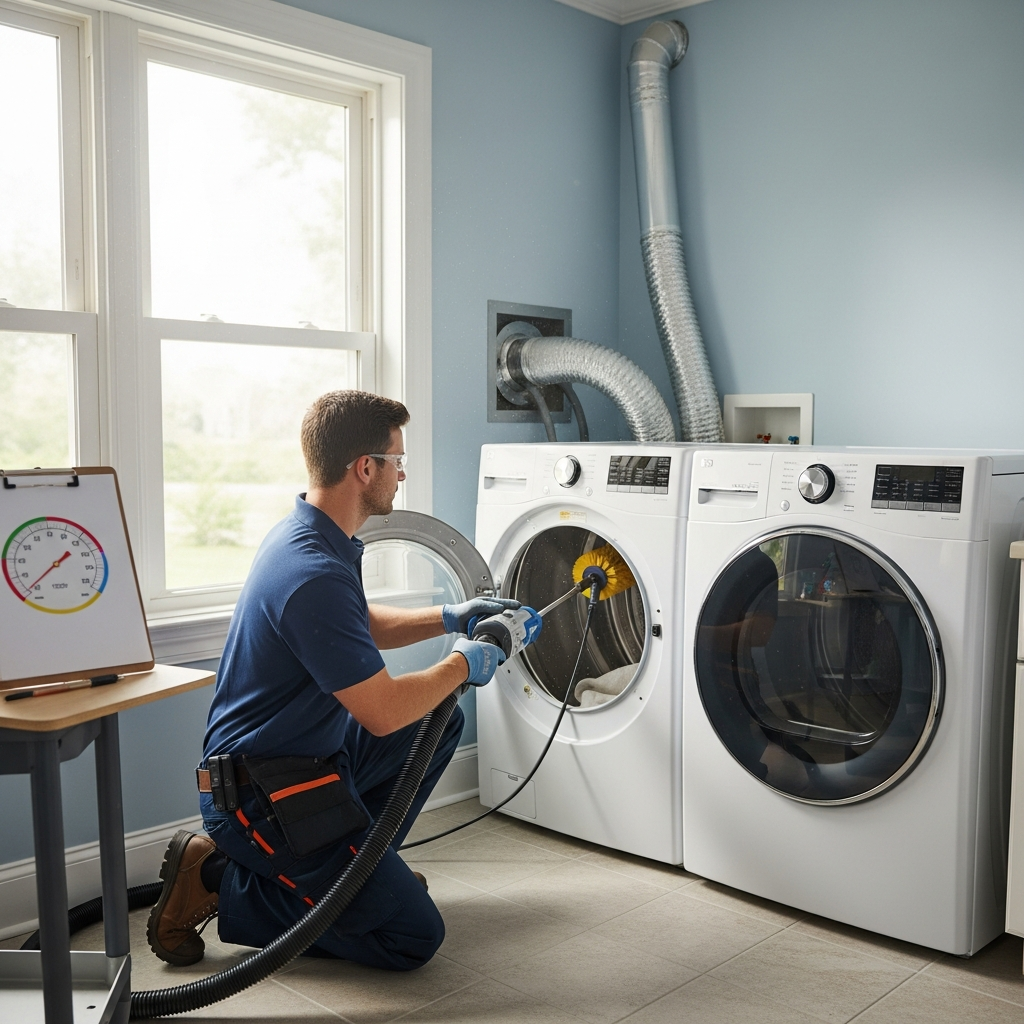
During a comprehensive service, a pro typically disconnects the dryer safely, inspects the transition hose for material quality and length, and verifies that it is not a combustible, accordion-style foil that traps lint. They may use rotary brushes and vacuum capture, air sweeps, or agitation with flexible rods, clearing the vent run end to end. Technicians also look for telltale signs of moisture problems, such as internal corrosion, staining at joints, or clumped lint that indicates condensation within the duct. Any of these issues can undermine airflow, forcing the dryer to work harder and creating elevated temperatures inside the cabinet—conditions that the fire service flags as risky.
The Hidden Costs You Already Pay When Vents Are Neglected
One of the most expensive lines on a homeowner’s invisible ledger is time. When a dryer takes 90 minutes to finish a load that previously took 40, the compound effect over weeks and months is staggering. Delayed cycles also interrupt family routines, create laundry backlogs, and push drying into late-night hours—hardly ideal for multi-family buildings and attached homes where noise carries.
Another hidden expense is wasted energy. Restricted vents force the dryer’s blower to fight back-pressure, reducing heat transfer efficiency. The machine compensates by running longer and cycling heat more frequently. This extra strain translates into more frequent component wear—belts, rollers, thermostats, and heating elements don’t last as long when the machine is repeatedly stressed. Inefficiency may also show up as residual dampness in clothes that invites musty odors and requires re-drying, compounding the waste.
Finally, there is the safety component. Lint is a highly combustible material, and when it accumulates in elbows, around internal heating elements, or at the exterior termination, temperatures can spike. While the likelihood of a home incident is not the same everywhere, older ducts, long runs with multiple bends, and homes with irregular maintenance intervals elevate the risk profile.
Why Elizabeth New Jersey Homes Present Unique Vent Challenges
Elizabeth New Jersey offers a rich mix of home styles—pre-war multifamily buildings, single-family homes with basements, and newer townhome developments. This variety means vent systems can be anything from a short, straight run to a long path routed through floor joists or up to a roof cap. In older homes that have been renovated, it’s common to find legacy duct materials or ad hoc routing that no longer meets modern best practices. Each additional elbow, joint, or transition increases resistance and creates a potential lint trap.
Seasonal conditions also play a role. Colder winters can encourage condensation inside metal ducts when warm, moist air from the dryer meets a chilled pipe in an unconditioned space. That moisture can cause lint to clump, forming denser obstructions than typical fluffy debris. In the warmer months, humidity can amplify musty odors when airflow is compromised, creating persistent laundry smells that even scented detergents don’t cover.
The Value of Prevention Versus the Cost of Recovery
The most compelling argument for professional service is that prevention reduces the chance of disruptive breakdowns or worrisome signs—like scorching smells, very hot dryer cabinets, or repeated automatic shutdowns as safety thermostats trip. Recovery actions after a near-miss or a malfunction usually demand more time, coordination, and stress than a planned maintenance visit. Think of it as choosing proactive stewardship over urgent triage.
Another point that is often overlooked: successful vent cleaning is not just removing lint; it is validating the whole system. A responsible technician confirms that the duct size matches the dryer’s requirements, that the termination flap opens freely and is screened appropriately to discourage pests without blocking airflow, and that the transition duct is the right length and material. These details determine whether your dryer will operate within safe temperature and airflow ranges after the cleaning.
DIY Effort Versus Professional Thoroughness
Many homeowners consider a do-it-yourself approach with a brush kit. This can be helpful for very short, straight runs with easy exterior access. However, DIY attempts can push lint deeper into the line if the brush head detaches or if the rotation direction is inconsistent. In complex vent routes with multiple elbows or concealed joints, blind cleaning can leave behind significant obstructions. Worse, aggressive brushing can puncture thin or deteriorated ducting, creating leaks that vent warm, moist, lint-laden air into wall cavities.
A trained pro brings method, tools, and accountability—the combination that ensures results can be verified. This includes measuring airflow before and after service, checking termination operation, and documenting any needed corrections. In homes where the laundry space is tight and the dryer is difficult to move, pros also mitigate risks like tearing a gas line or damaging a hard duct connection. For many Elizabeth New Jersey homeowners, the predictability of a comprehensive service yields better long-term outcomes than a weekend experiment. In the middle of your decision-making process, it’s helpful to compare the thoroughness of professional dryer vent cleaning with what can realistically be achieved with basic household tools.
How Frequency and Household Habits Affect Vent Condition
Vent condition is partly a function of how often you dry clothes and what you dry. Large family households tend to accumulate lint more quickly than couples or singles. Towels, fleece, and cotton produce more lint than synthetics. If you have pets, their hair compounds the issue and can adhere to duct interiors. The more loads you run, the more frequently the vent should be inspected and cleaned. Seasonal wardrobe changes also matter—winter blankets and heavier fabrics shed differently than lightweight summer clothing.
Another habit-related factor is how you load the machine. Overloading hampers tumbling, extending dry times and leading to incomplete moisture removal, which increases the vent’s internal humidity. Consistently cleaning the lint screen between loads and occasionally washing it to remove fabric softener residue can improve baseline airflow. But even perfect user habits are no substitute for a periodic deep clean of the hidden ductwork.
Signals That It’s Time to Take Action
Several cues suggest your vent needs attention: clothes staying damp after a normal cycle, increasingly hot dryer cabinets or laundry-room air, burning or musty smells during operation, lint accumulation near the exterior hood, or a termination flap that barely opens. Another sign is the need to run extra cycles on back-to-back loads—many homeowners dismiss this as normal, but it usually signals rising back-pressure. If your laundry space is tight and lint appears around the dryer’s base, the transition duct may be crushed or kinked.
Questions to Ask Before You Book
Ask a prospective provider how they verify airflow improvements. Do they measure before and after? Will they evaluate the transition duct and termination? Are they familiar with typical vent routes in Elizabeth New Jersey homes, including roof terminations and long multi-bend runs? What safety precautions do they take when moving a dryer in small closets or stacked laundry setups? Can they identify and correct noncompliant materials? Clear answers indicate a service oriented toward long-term reliability rather than a quick pass with a brush.
Common Myths About Dryer Vent Cleaning
Myth: Cleaning the lint trap is enough. Reality: The lint screen captures only a portion of the fibers, and fine particles travel into the vent, sticking at elbows and joints. Myth: Newer dryers don’t need maintenance. Reality: Even high-efficiency machines rely on unrestricted venting; sensors can reduce heat but cannot overcome mechanical resistance in the duct. Myth: If dry times seem okay, the vent is fine. Reality: Performance declines gradually, so day-to-day perception masks slowdowns until problems escalate. Myth: Screens on exterior hoods are safe. Reality: Screens can trap lint, creating blockages that negate the benefits of cleaning.
Frequently Asked Questions
Q: How does professional service differ from using a store-bought brush? A: A professional addresses the full system, uses capture methods to prevent indoor contamination, validates airflow, and checks for code and material issues that a DIY brush cannot assess.
Q: Will my dryer last longer after a proper cleaning? A: Unrestricted airflow reduces heat cycling and mechanical strain, which supports a longer service life for belts, bearings, and heating components.
Q: How long does the process usually take? A: Duration depends on vent length, number of elbows, accessibility, and the presence of issues like crushed ducts or roof terminations. The goal is thoroughness, not speed.
Q: Can odors in laundry be related to the vent? A: Yes. Lingering moisture from restricted airflow can foster musty smells. Restoring proper exhaust often eliminates these odors.
Q: Is aluminum foil flex duct acceptable? A: Thin foil-style flex is prone to crushing and lint accumulation. Smooth-walled metal or high-quality semi-rigid options are generally preferred for safety and efficiency.
Q: What about birds or pests nesting in the vent? A: Nests block airflow and can create dangerous obstructions. Technicians remove them and recommend appropriate, code-compliant termination designs to discourage re-entry without impeding exhaust.
Q: How often should a busy household schedule maintenance? A: Heavier usage and pet hair warrant more frequent inspections. A baseline annual check is common, with adjustments based on observed lint accumulation and performance.
Q: Can a clogged vent trigger safety shutoffs? A: Yes. Excess heat can cause high-limit thermostats to trip, turning the machine off mid-cycle. Repeated trips signal a need for inspection.
Putting It All Together
When you add up the time saved, the energy conserved, the stress avoided, and the confidence of knowing your home’s exhaust path is clear and code-aware, the true cost of professional service turns out to be about more than dollars and cents. It’s about ensuring a vital home system works as designed and protecting your household from preventable risks.
Ready to Improve Laundry Safety and Efficiency in Elizabeth?
If your dryer is running longer than it used to, if the laundry room feels warmer than normal, or if it has simply been a while since the last inspection, now is the right moment to act. Schedule professional dryer vent cleaning and give your home the efficient airflow it deserves.
