Introduction: Keep Your Dryer Running Smoothly with a Maintenance Mindset
In busy Elizabeth, New Jersey households, laundry is a constant. The quickest path to reliable, efficient cycles is consistent care of the dryer vent system. A well-maintained vent saves time, reduces wear on clothing, and lowers the risk of overheating. This guide focuses on practical, repeatable steps you can complete throughout the year, so you build a routine that sticks. Right from the start, remember that smart homeowners pair DIY upkeep with periodic professional support for best results; if you want to see what comprehensive service looks like, explore trusted resources about dryer vent cleaning and use that to benchmark your home routine.
Elizabeth’s seasons bring fluctuating temperatures and humidity, so vents experience different stressors over the year. A maintenance plan ensures your system stays clear, your exterior vent operates smoothly, and your dryer can do its job without strain.
Know Your System: Components and Their Roles
Before diving into steps, map the path air takes from your dryer to the exterior. Identify the transition hose, the main duct route, elbows, and the exterior termination. Notice how close the dryer sits to the wall, and whether the hose is crushed or kinked. Note access points along the run: an in-line connector behind a wall panel, a basement ceiling section, or the exterior hood. The more familiar you are with these components, the more effectively you can maintain them.
Weekly and Per-Load Habits
- Clean the lint screen before every load. This simple habit preserves airflow and prevents lint migration into the vent.
- Check the drum and seals. Remove stray tissues, paper, or pet hair clusters that could clog the screen.
- Leave the door open briefly after cycles. A few minutes of airing out can reduce humidity and odors.
These quick actions add up, reducing the accumulation that eventually reaches the vent system.
Monthly Maintenance Steps
- Vacuum the lint screen housing. Use a crevice tool to capture lint that bypassed the screen.
- Inspect the transition hose for kinks or crushing. Realign the dryer to prevent pushing the hose into a sharp bend.
- Wipe dust from behind and under the dryer. Lint in these areas can become airborne and migrate toward the vent.
- Check the plug, cord, and outlet for wear or heat discoloration. Address issues promptly for safety.
Performing these steps each month helps prevent airflow restrictions and keeps the machine area tidy and safe.
Seasonal Maintenance for Elizabeth’s Climate
As temperatures and humidity change, the exterior termination experiences different stresses. Wind-driven rain, leaves, or snow can affect the damper’s movement. Establish a simple seasonal checklist that aligns with the weather cycle in Elizabeth.
- Spring: Confirm the damper opens freely after winter. Remove cobwebs or early nest attempts.
- Summer: Humidity can make lint cling; wipe the hood and ensure no sticky residue impedes movement.
- Autumn: Clear leaves and trim vegetation near the termination so airflow is unobstructed.
- Winter: Keep snow and ice away from the vent and monitor for frost that could stiffen hinges.
Deep-Clean Maintenance Steps
At least annually—more often for heavy laundry usage—perform a deeper clean. The following procedure is designed for homeowners comfortable with basic appliance handling.
- Unplug the dryer and, for gas units, verify the gas line has slack and no kinks before gently moving the appliance.
- Pull the dryer forward on sliders or with help to avoid damaging floors.
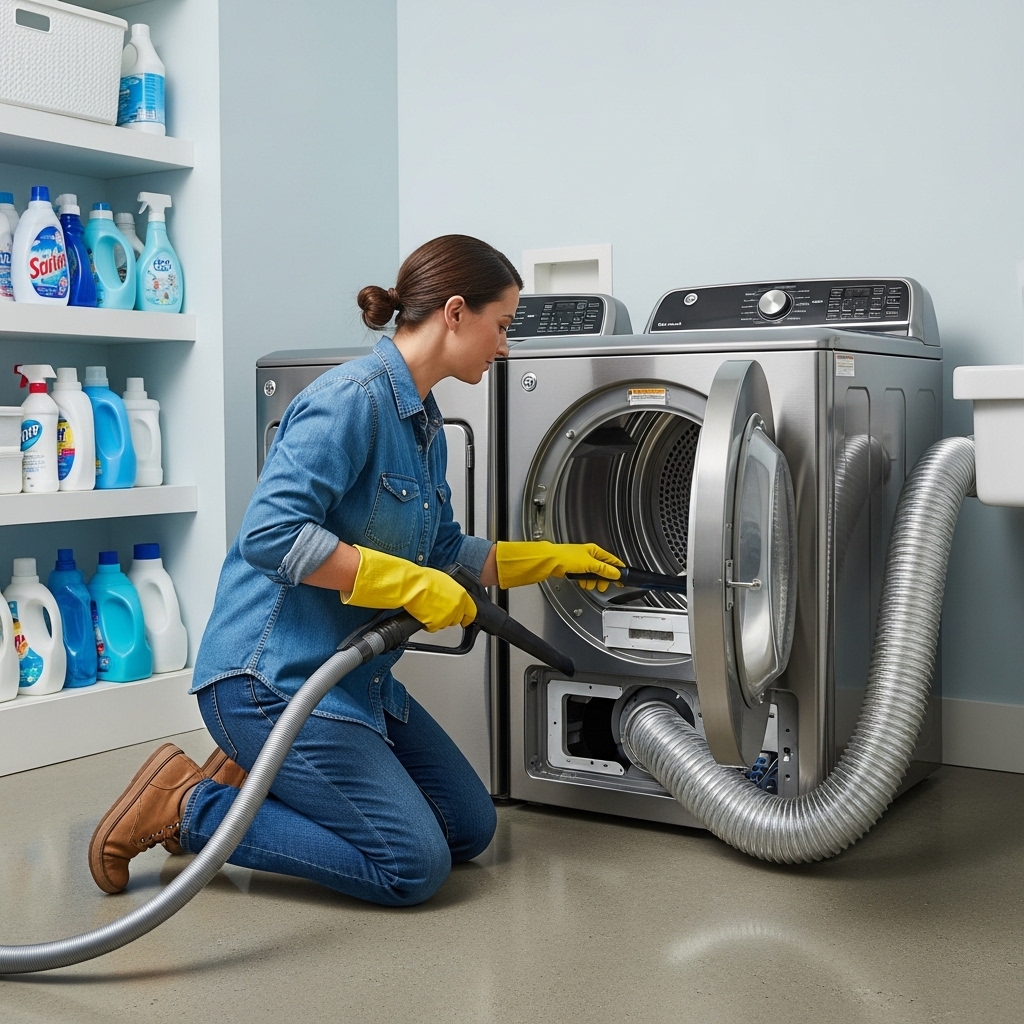
- Detach the transition hose. Inspect for tears, excessive lint, or non-compliant materials. Replace with semi-rigid or rigid metal if needed.
- Vacuum the dryer’s exhaust port and the hose. Use a flexible lint brush to loosen light buildup.
- Locate an accessible section of the main duct (at the wall connection or basement). If safe to do so, use a cleaning rod system to sweep a short distance toward the termination.
- At the exterior vent hood, remove visible lint and confirm the damper opens fully under airflow.
- Reassemble and run a timed cycle with no heat to test airflow. Observe the exterior damper; strong, steady movement is a positive sign.
Stop and seek professional help if you encounter solid obstructions, birds’ nests, dislodged duct sections, or if the duct path is long and convoluted. Specialized tools and techniques are designed for those cases to avoid damage.
Optimizing Layout and Materials
A maintenance plan works best when the system is set up properly. Consider these improvements if you notice recurring issues:
- Shorten the transition hose and eliminate sharp bends behind the dryer.
- Replace foil or plastic ducting with rigid metal where feasible.
- Install a smooth-closing exterior hood with no screen, and ensure it is mounted level.
- Secure joints with foil tape rather than screws that protrude into airflow.
Maintenance for Multifamily and Rental Properties
Property managers in Elizabeth benefit from standardized checklists. Document dates of lint screen cleaning reminders, monthly hose checks, and seasonal termination inspections. Keep photos of the exterior hood before and after cleaning. For shared laundry facilities, adopt quarterly deep-clean cycles and post signage explaining how long cycles should typically take, so residents can report deviations early.
Safety Considerations During Maintenance
Always unplug the dryer before handling the vent. If moving a gas dryer, avoid straining the gas line. Wear gloves and eye protection to guard against sharp edges and debris. If you smell gas, stop and contact a qualified technician immediately. Avoid the use of flammable sprays or solvents; simple mechanical removal of lint is both safe and effective.
Performance Benchmarks You Can Track
Track how long standard loads take to dry after maintenance versus before. Note the temperature in the laundry room and whether the exterior damper opens fully. If cycles return to taking too long within weeks, there may be a hidden issue such as a crushed duct in a wall cavity or an internal dryer problem. Keeping a simple log will help you recognize patterns and decide whether a professional evaluation is due.
Mid-Cycle Evaluation and When to Call a Pro
Midway through the year, revisit your maintenance steps and verify results. If you still notice weak airflow at the exterior hood, hot clothes after drying, or a musty odor, you may need a deeper intervention. Professionals use rotary brushes, air whips, and HEPA vacuums to restore full-bore airflow and remove compacted debris. As you weigh the time and tools required, compare your routine with the scope of professional-grade dryer vent cleaning to decide whether the next step should be a service visit or additional DIY improvements.
Extending Appliance Life and Protecting Fabrics
Clear vents reduce heat stress on the dryer’s heating element and motor, and they shorten overall cycle times. Shorter, gentler cycles are kinder to fabrics, colors, and elastics in clothing. Bedding and towels dry more evenly, and you’ll notice fewer wrinkles and hot spots. This gentle handling translates into real value for your wardrobe and household linens.
Common Pitfalls to Avoid
- Neglecting the exterior vent hood. Even if the interior looks clean, the termination can clog.
- Pushing the dryer tight against the wall. Leave space for a smooth, uncrushed transition hose.
- Using cloth duct tape on ducts. Heat and humidity degrade it; choose foil tape instead.
- Leaving screws protruding inside the duct. These catch lint and lead to blockages.
Creating Your Own Maintenance Calendar
Set reminders: lint screen per load; monthly hose and housing check; seasonal exterior inspection; deep clean every 6–12 months depending on usage. If you manage multiple properties, synchronize schedules to streamline tasks and bulk-purchase replacement parts like clamps and semi-rigid hoses.
Frequently Asked Questions
Q: How do I know if my monthly steps are working?
Drying times should remain steady, the laundry room should not feel unusually hot or humid, and the exterior damper should open fully. Keep notes to compare over time.
Q: What if the damper flap sticks?
Clean the hinge area and remove lint. If it continues to stick, replace the hood with a quality model. A freely moving damper is critical for airflow.
Q: Can I use a shop vacuum to clean the duct?
Yes for accessible sections, but most shop vacuums lack the reach and power for long ducts. They’re helpful for the dryer housing and transition hose.
Q: How often should I replace the transition hose?
Replace immediately if torn or crushed. Otherwise, inspect annually and replace if it shows wear or is made of non-compliant materials.
Q: Should I install a screen over the termination?
Generally no. Screens trap lint quickly. Choose a hood with a built-in damper.
Q: What’s a reasonable drying time?
Most mixed loads should dry in 45–60 minutes when the vent and dryer are functioning properly.
Make Maintenance a Habit
Choose one day each month for your vent check, and pair it with other chores for consistency. If you uncover stubborn clogs, damaged ducts, or inaccessible runs, protect your household with a thorough appointment. Book professional dryer vent cleaning to restore strong airflow and make every laundry day in your Elizabeth home easier and safer.
