Introduction: A Safer, Smarter Home Starts with Your Dryer Vent
Most homeowners in Elizabeth, New Jersey focus on visible parts of home care—fresh paint, clean floors, or updated appliances—yet one of the most important safety and efficiency tasks is hidden in plain sight: the dryer vent. Lint, moisture, and heat move through this duct every time you dry a load of laundry. Over time, debris accumulates and airflow diminishes, which can elevate fire risk, waste energy, and shorten appliance life. In this homeowners guide to dryer vent cleaning, you will learn how your system works, what signs to watch for, how often to clean, which steps you can safely perform yourself, and when to call a professional. With the right knowledge, you can protect your family, preserve your dryer, and keep utility costs in check.
Elizabeth experiences four distinct seasons, with humid summers and cold winters that can affect indoor humidity and the performance of exhaust systems. Understanding how local climate, housing styles, and building codes intersect with dryer vent maintenance empowers you to make informed decisions. This comprehensive guide is tailored to homeowners, renters, landlords, and property managers who want a reliable reference they can trust year-round.
How a Dryer Vent System Works
Your clothes dryer does more than heat and tumble. It draws in air, heats it, pushes it through wet fabrics to pick up moisture, and exhausts the humid air and lint particles through the vent duct to the exterior. The key components are the dryer itself, a transition hose at the back, the rigid or semi-rigid duct that runs through walls or crawl spaces, and the exterior termination (the outlet with a damper). When lint and moisture cannot exit efficiently, the dryer compensates by running longer and hotter, placing stress on heating elements, motors, and delicate electronic controls. Efficient systems move air quickly and smoothly, which keeps cycles shorter, temperatures moderate, and fabrics safer.
Dryer vents are designed with specific limitations: maximum duct lengths, allowable elbows, and approved materials. Rigid metal ducting offers the best performance and safety. Foil or vinyl accordion-style ducting tends to trap lint and should be replaced with UL-listed semi-rigid or rigid metal whenever possible. The fewer bends and the shorter the run, the better the airflow.
Why Lint Buildup Is a Serious Issue
Lint is extremely combustible. It is made of tiny fibers, often with residual oils from clothing, and can ignite under the right conditions. When it collects in a duct, airflow slows, which raises drying temperatures and exacerbates the problem—creating a feedback loop. In addition, the dryer vent removes moisture from the laundry; impeded airflow means dampness lingers longer, sometimes contributing to condensation in ducts, corrosion, or even hidden mold on nearby building materials. Good maintenance interrupts this cycle, preserving safety and indoor air quality while also improving energy efficiency.
Elizabeth, NJ Factors: Climate, Housing, and Code Considerations
Elizabeth’s variety of home styles—single-family houses, duplexes, townhomes, and multifamily buildings—create different venting challenges. Older homes may have longer or more winding duct runs added during renovations. Row houses sometimes vent through sidewalls that are more exposed to wind-driven rain, which can push debris back toward the vent flap. Winter cold can cause dampers to stick, while summer humidity can encourage lint to cling to duct walls. For multifamily buildings, consistent maintenance is especially important because multiple dryers operating in close proximity can elevate heat and humidity in utility rooms and basements.
Local code typically aligns with national standards that discourage the use of screws penetrating duct interiors (they snag lint), require exterior venting (not into attics or crawlspaces), and specify maximum equivalent lengths. Understanding these basics helps you evaluate whether your current setup promotes safe and efficient operation.
Clear Signs Your Dryer Vent Needs Attention
- Drying times increase beyond 45–60 minutes for a normal load.
- Clothes feel very hot after a cycle, or the laundry room is warmer or more humid than usual.
- A burning smell or musty odor appears during operation.
- Lint is visible around the dryer door, on the floor, or at the exterior vent hood.
- The exterior damper flap does not open fully during operation.
- The dryer frequently pauses, overheats, or triggers error codes.
- It has been a year or more since the last comprehensive cleaning.
Tools and Safety Basics for Homeowners
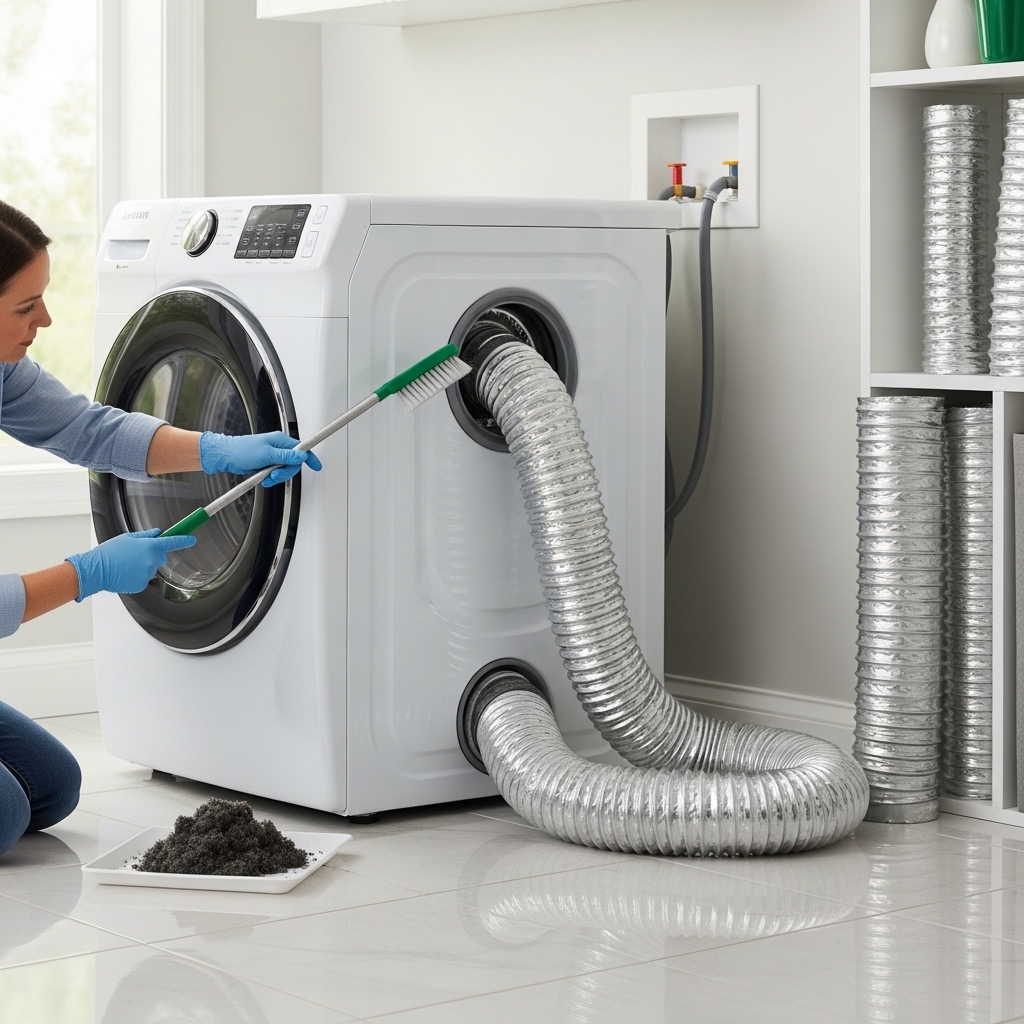
If you plan to perform basic maintenance tasks, assemble essential tools: a vacuum with a narrow crevice tool, a soft brush attachment, a lint brush or flexible cleaning rod, a flashlight, gloves, and safety goggles. Turn off and unplug the dryer before any work. If your dryer is gas-powered, consider shutting the gas valve if you plan to move the appliance; carefully avoid stressing the gas line. Never use sharp screws inside ducts, and avoid solvents or flammable aerosols. If you encounter birds’ nests, heavy blockages, excessive heat, damaged transition hoses, or inaccessible duct runs, pause and consider professional assistance.
A Step-by-Step Overview for Routine Care
- Clean the lint screen before every cycle. This quick action maintains airflow within the dryer drum itself.
- Vacuum around the lint screen housing. Even with diligent screen cleaning, some lint escapes into the housing and should be removed regularly.
- Inspect the transition hose. Replace crushed, torn, or non-compliant hoses with UL-listed semi-rigid or rigid metal. Keep it as short and straight as possible.
- Pull the dryer away from the wall carefully. Use sliders or assistance to avoid damaging floors or connections.
- Vacuum behind and under the dryer. Lint accumulates in these zones and can become a dust hazard.
- Disconnect the transition hose and vacuum the dryer’s exhaust port. Use a lint brush if accessible to dislodge light buildup.
- Check the exterior vent hood. Remove visible lint and ensure the damper moves freely and is not blocked by screens or nests.
- Reassemble and test. Run the dryer on an air-only or timed dry setting. Observe the exterior damper—strong airflow should push it fully open.
These steps are suitable for light maintenance. Deep cleaning of long or complex ducts, navigating multiple elbows, or clearing heavy obstructions typically requires specialized rotary tools and high-powered vacuums.
How Often Should You Clean?
For an average household of two to four people doing several loads per week, an annual deep cleaning is a good baseline. Larger families or homes with pets, bulky textiles, or frequent laundry may need cleaning every six months. If you host short-term rentals or operate a shared laundry, consider quarterly inspections. Always treat warning signs—long cycles, odors, or heat—as indicators to act sooner than your schedule.
Dryer Vent Materials and Configuration Best Practices
- Use rigid metal ducting wherever possible. It has smoother interiors that promote airflow and resist crushing.
- Limit bends and distance. Each 90-degree elbow reduces effective length; plan routes with gentle turns and short runs.
- Avoid interior screws. Use foil tape (not cloth duct tape) on joints. Clamps can secure transition connections without protrusions.
- Terminate outdoors with a proper hood. The damper should open easily under airflow and close to block pests and weather.
- Do not vent into attics, crawlspaces, or garages. Moisture and lint must go outside to protect the building envelope.
DIY Versus Professional Cleaning
DIY efforts can keep lint in check near the dryer and at the exterior termination. However, long ducts running through walls, ceilings, or under floors accumulate debris where brushes and household vacuums struggle to reach. Professionals use rotary brush systems, compressed-air tools, and high-suction HEPA vacuums to thoroughly sweep the entire length of the duct without disassembly. They can also identify unsafe materials, hidden kinks, or code issues and verify airflow after cleaning. If your vent path is complex, if you notice scorching or repeated overheating, or if you have a rooftop termination, scheduling professional support can restore performance and peace of mind. Midway through your maintenance plan, it’s often wise to incorporate a professional-level reset; many Elizabeth homeowners alternate between personal upkeep and a full-service visit to maintain peak airflow. If you want to compare what a pro-grade service entails, explore reputable information on dryer vent cleaning so you can decide the timing that fits your home’s needs.
Energy Efficiency and Appliance Longevity
Unrestricted airflow lets your dryer operate at optimal temperatures and move moisture efficiently. This reduces cycle times and mechanical stress on belts, motors, bearings, and heating elements. In real terms, you’ll notice fewer wrinkles, less heat exposure for fabrics, and lower wear on high-value clothing. Reduced run time also means less humidity in the laundry area, mitigating mold risk and helping your HVAC system maintain comfort more easily.
Fire Safety and Indoor Air Quality
According to fire safety data, clothes dryers are implicated in thousands of residential fires each year, with lint accumulation among the leading factors. In addition, blocked exhaust can cause elevated humidity and lingering odors. Keeping vents clean supports a healthier indoor environment by limiting dust and potential microbial growth around the laundry zone. For gas dryers, clean vents help exhaust combustion byproducts to the outdoors more reliably.
Common Mistakes to Avoid
- Using vinyl or plastic transition hoses that are easily crushed or melted.
- Securing ducts with sheet-metal screws that protrude into airflow and catch lint.
- Venting into an attic or crawlspace, which traps moisture and lint in the building.
- Ignoring the exterior vent hood, where birds, wasps, or wind-blown debris can obstruct the damper.
- Pushing the dryer too close to the wall, crushing the hose and starving the system of airflow.
- Skipping routine lint trap cleaning between loads.
Seasonal Care Tips for Elizabeth Homeowners
In spring, check for winter-related damper issues: ice can warp plastic hoods or stiffen hinges. Summer brings humidity; verify that lint isn’t clumping near the termination. In fall, trim vegetation around the exterior vent and confirm leaf litter isn’t accumulating nearby. During winter, ensure snow, sleet, or wind-blown debris can’t obstruct the outlet. Seasonal attention helps the system perform consistently across Elizabeth’s changing weather patterns.
When to Replace Components
Transition hoses should be replaced if crushed, torn, or non-compliant. Exterior hoods with broken dampers or screens that trap lint should be upgraded to code-compliant models with smooth-opening flappers. If your duct is extremely long and winding, consult a professional about rerouting options. In some cases, installing a properly rated booster fan can help, but only after confirming the duct is clean and that a booster is allowed and configured correctly for your layout.
Creating a Home Maintenance Schedule
Integrate dryer vent tasks into a simple calendar. Clean the lint screen every load, vacuum around the dryer monthly, inspect the exterior vent at the start of each season, and schedule a deep cleaning annually or biannually depending on usage. Keep a log with dates and observations; this makes it easier to recognize patterns like progressively longer cycles, and it is useful if you sell your home or transition property management.
Frequently Asked Questions
Q: How long should a proper drying cycle take?
For a normal load of mixed fabrics, 45–60 minutes is typical when the vent is clear and the dryer is performing well. Bulky items like towels or bedding may take longer, but consistent increases beyond your usual times are a warning sign.
Q: Is it safe to clean the vent myself?
Basic cleaning is safe with the dryer unplugged and careful handling of the transition hose. Deep cleaning of long or complex ducts is best left to trained technicians with specialized tools.
Q: How do I know if the exterior vent is working?
When the dryer runs, the damper should open readily and you should feel a strong, steady stream of warm air. If it barely opens or you feel weak airflow, schedule an inspection.
Q: Are screens over the vent hood recommended?
Screens tend to trap lint quickly and can cause blockages. Most codes recommend against them. Use a hood with a built-in damper that closes when the dryer is off.
Q: What materials are best for the vent?
Rigid metal ducting offers the best airflow and durability. Semi-rigid is acceptable for short transition runs. Avoid vinyl or plastic ducts.
Q: What about rooftop terminations?
Rooftop vents can be safe and effective if properly installed and maintained, but they are harder to access. Consider professional servicing for roof vents due to safety and complexity.
Q: My laundry smells musty after drying. Why?
Restricted airflow can leave moisture in fabrics longer, which encourages musty odors. Clean the vent and verify the exterior damper opens fully.
Q: Does a gas dryer need special attention?
Yes. Obstructed vents can interfere with exhausting combustion byproducts. Keep the vent clear and ensure joints are secure and leak-free.
Make Laundry Day Easier and Safer
Put this guide into action by checking your lint screen, inspecting your transition hose, and taking a look at the exterior vent this week. If you discover heavy buildup, damaged parts, or hard-to-reach duct sections, don’t wait. For a thorough reset and to restore optimal airflow, schedule professional dryer vent cleaning so your home in Elizabeth, New Jersey, stays safe, efficient, and comfortable throughout the year.
