Finding the Best Dryer Vent Cleaning Near You in Elizabeth, New Jersey
Searching for the best dryer vent cleaning near me in Elizabeth, New Jersey can feel overwhelming when every listing promises top-notch results. Yet, dryer safety and indoor air quality are too important to leave to chance. In this comprehensive guide, you will learn what separates exceptional providers from average ones, how local Elizabeth housing types and weather shape your needs, and the clear signs it is time to act. Early in your search, consider trusted experts who offer thorough dryer vent cleaning backed by proven processes and a strong safety record. With the right information, you can feel confident choosing a team that protects your home, your family, and your time.
Dryers move hundreds of cubic feet of warm air per load, and lint—made from fibers, pet dander, and dust—accumulates in the lint trap, duct run, elbows, and exterior hood. When that buildup restricts airflow, your appliance overheats, the heating element strains, and drying times creep up. Over months or years, the vent line can narrow to the point where moisture lingers, metal corrodes, and fine lint becomes tinder for ignition. The best local companies understand these risks and approach each job with a methodical plan tailored to the home’s layout, the vent path, and the occupant’s laundry habits.
Why Dryer Vent Cleaning Matters in Elizabeth, NJ
Elizabeth is a diverse city with multi-family buildings in Midtown and Peterstown, single-family homes in Elmora and North Elizabeth, and mixed commercial corridors around Bayway. Many properties were built before current ventilation best practices, which means longer runs and extra elbows behind stacked or closet-installed laundry units. Atlantic humidity and winter temperature swings exacerbate condensation in ducts, gluing lint to interior walls. These local conditions make regular cleaning and inspection especially important to maintain safe dryer operation and consistent performance in every season.
Residents also contend with salt-tinged coastal air and pollen seasons that contribute to airborne particles. When these settle inside the vent line, they mingle with lint and can accelerate blockages. Birds and small animals sometimes nest in exterior hoods if back-draft dampers fail to close; this is more common in tree-lined blocks and near parks. A top-tier provider in Elizabeth will evaluate the exterior termination, the damper’s movement, and any mesh screens, then verify that the duct material is compliant and free from screws that catch lint.
How to Identify the Best Dryer Vent Cleaning Companies
Not all services deliver the same results. Use the criteria below to choose confidently:
- Transparent Process: The team explains inspection steps, cleaning tools, and how they document results.
- Proper Equipment: Professional rotary brush systems or air-sweep tools connected to high-powered vacuums with adequate filtration.
- Experience with Local Housing: Familiarity with Elizabeth’s mixed housing stock, HOA rules, and older masonry wall penetrations.
- Safety Focus: Verification of vent materials, gas line clearances, and adequate makeup air when dryers are in closets or tight spaces.
- Clear Communication: Before-and-after observations, maintenance intervals, and practical tips tailored to your laundry routine.
Dependable cleaners also confirm the route length, note each elbow, and assess whether semi-rigid transition duct is properly installed behind the dryer. They avoid using screws inside the duct and ensure the exterior hood opens fully when the dryer is on. If they find crushed or foil flex duct within walls—a common problem in older renovations—they explain upgrade options consistent with code and best practices.
Warning Signs Your Dryer Vent Needs Attention
You do not need specialized tools to recognize trouble forming in a vent line. See whether any of these warning signs are present:
- Drying takes longer than one cycle for the same loads that previously finished quickly.
- The laundry room feels hotter or more humid, or you notice a burnt-dust odor.
- Clothes emerge unusually hot, and the dryer cabinet is warm to the touch.
- Visible lint around the exterior hood or a flap that barely opens during operation.
- Frequent automatic shutoffs caused by overheating sensors.
- Excess lint behind or under the dryer and on baseboards nearby.
In multifamily settings common across Elizabeth, neighbors may share exterior walls and vent terminations on balconies or roofs. If you hear your neighbor’s dryer but see minimal movement of your own exterior damper during a cycle, there could be a partial blockage or a routing issue that requires a professional assessment.
What to Expect During a Professional Cleaning
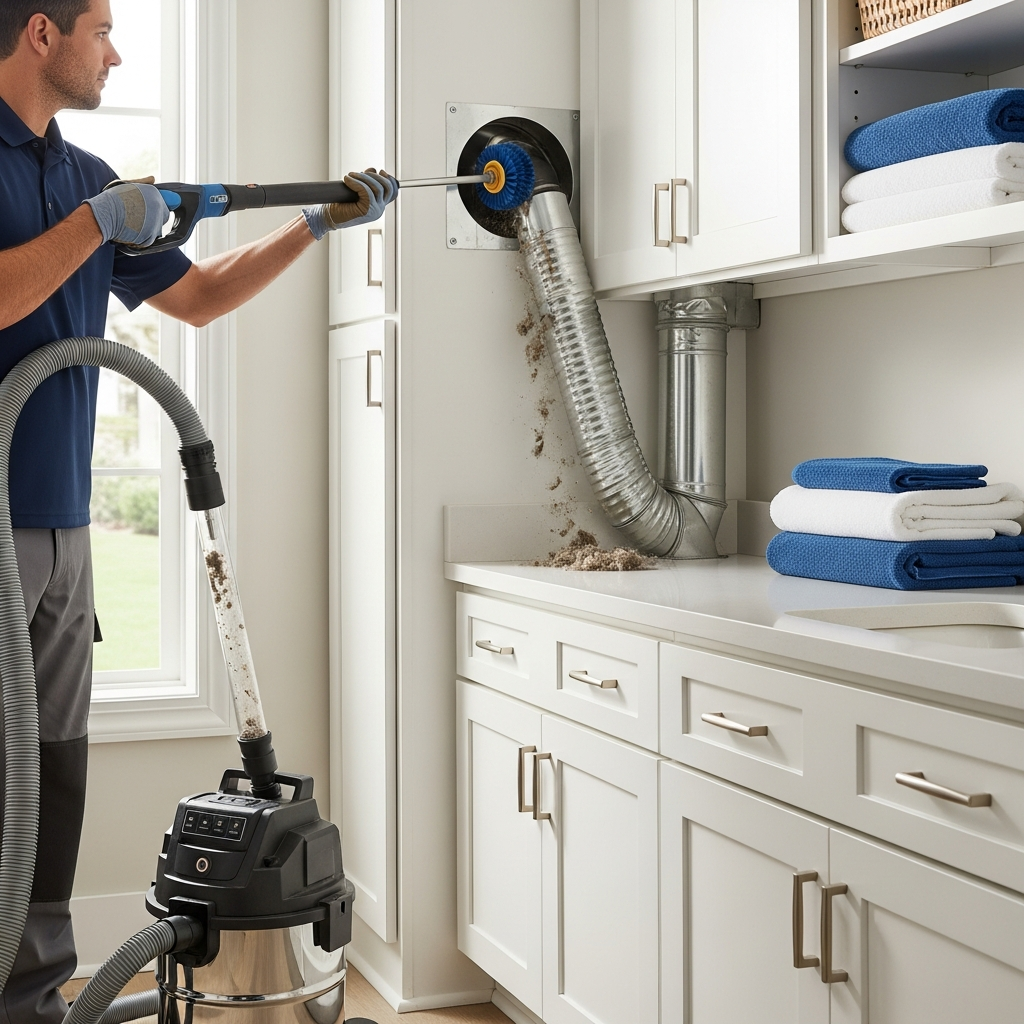
The best teams begin with a visual inspection at the appliance, along the accessible duct path, and at the exterior termination. They confirm the transition duct is short, smooth-walled, and not crushed; note the distance from the wall to the dryer; and locate utility shutoffs. Next, they connect a containment vacuum and run a rotary brush or air-sweep tool from the exterior inward or from the appliance outward, depending on the layout. Thorough providers brush every segment, including elbows and vertical stretches, while capturing debris to prevent indoor mess.
After the core cleaning, they may test airflow with an anemometer at the hood and document improvement. They verify damper movement and ensure the duct is reassembled without leaks. For gas dryers, they check for safe clearances, confirm that exhaust is not recirculating, and listen for burner irregularities that excessive backpressure can worsen. The result is a safe, efficient system that dries faster, uses less energy, and reduces wear on fabrics.
Elizabeth-Specific Considerations for Better Results
In neighborhoods like the North End and Elmora Hills, many homes feature vent runs through crawlspaces or down basements with multiple support straps. Vibration, thermal expansion, and seasonal settling can loosen these supports, creating sags where lint collects. Buildings near high-traffic corridors may also see more dust infiltration. When you hire a company that understands Elizabeth’s housing patterns and climate, you get advice that anticipates these realities: reinforcing straps, adjusting duct pitch to eliminate water traps, and recommending exterior hood upgrades that shed rain more effectively during coastal storms.
For condos and co-ops, coordination with building management is key. The best providers schedule with the super or HOA, confirm access to mechanical rooms if necessary, and follow property rules for equipment transport and staging. They bring protective floor coverings and maintain quiet, respectful workflows—an important consideration in buildings with shared hallways and elevators.
DIY vs. Professional: Making a Smart Choice
A motivated homeowner can clean the lint trap housing and a short, straight duct run with a consumer brush kit. Still, long runs, concealed elbows, rooftop terminations, and rigid metal ducts that pass through finished spaces call for professional tools and experience. If your laundry closet is tight, if the duct exits at a roof or eave, or if you have repeated overheating shutoffs, bring in specialists. In Elizabeth’s older homes where renovations have created complex routes, a pro is often the fastest, safest, and most thorough option—especially when a dryer is stacked or elevated.
If you attempt minor maintenance yourself, unplug the dryer, close the gas valve if applicable, and pull the unit carefully without crushing the transition duct. Vacuum around the lint screen housing and clean the moisture sensors inside the drum with a damp cloth. Reposition the appliance slowly, watching the transition duct to keep it smooth and short. Even with these steps, schedule full-system cleanings at recommended intervals to address the hidden sections you cannot safely reach.
Key Questions to Ask Before You Hire
- What tools do you use, and how do you capture lint to prevent indoor mess?
- How will you document the cleaning and verify airflow improvement?
- Are you experienced with Elizabeth’s housing types and HOA coordination?
- Do you inspect the exterior hood and damper for proper operation?
- Will you advise on upgrades if the vent material or route is unsafe?
When companies answer these questions clearly, you gain insight into their professionalism and commitment to safety. Ask for a proposed maintenance interval based on your laundry volume, vent length, and pet presence. Households with frequent laundry, larger families, or indoor pets often need more frequent service than single-occupant homes.
Midway Check: Performance Improvements You Should Notice
After a high-quality cleaning, you should observe shorter drying times, less heat buildup in the laundry area, and a strong, smooth push of exhaust at the exterior hood during a cycle. Towels and bedding should dry evenly without damp corners. Lint accumulation around the lint screen should reduce, and your dryer’s automatic cycles should finish closer to the expected time. If these changes are not evident, request a walkthrough and airflow reading. In many cases, combining professional dryer vent cleaning with small adjustments—like replacing a crushed transition duct—delivers the full performance gains you expect.
Safety and Maintenance Tips for Elizabeth Households
- Clean the lint screen before every load.
- Avoid overloads that increase lint shedding and raise temperatures.
- Use the shortest, smoothest transition duct possible behind the dryer.
- Do not vent into attics, crawlspaces, or garages; always vent outdoors.
- Check the exterior hood seasonally to confirm free damper movement.
- Keep the dryer area clear of storage that can impede airflow.
- Schedule professional service at intervals suited to your usage and vent length.
These straightforward habits support the work of professionals and help protect homes across Elizabeth—whether along Morris Avenue, near the waterfront, or by the rail stations where compact apartments often feature tight laundry closets.
Frequently Asked Questions
How often should a dryer vent be cleaned in Elizabeth, NJ? Many households benefit from annual service. High-use homes, larger families, and pet owners may need cleaning more frequently. Long vent runs with multiple elbows also warrant shorter intervals.
Is it safe to use a leaf blower to clear my vent? No. Improperly used blowers can dislodge connections, force lint into interior spaces, or damage dampers. Professional tools capture debris while agitating built-up lint throughout the entire run.
Can I clean a rooftop termination myself? Roof work presents fall hazards and risks to roofing materials. Leave rooftop terminations to trained technicians with the right ladders, safety gear, and methods.
What if my dryer is in a closet? Ensure adequate makeup air and keep the door open during operation if advised. A pro can evaluate louvered doors and clearances to keep temperatures within safe limits.
Why does my laundry room get humid? Restricted airflow traps moisture. Cleaning the vent, checking the transition duct, and confirming the exterior hood opens fully usually resolve humidity spikes.
Will cleaning reduce energy use? Yes. Restored airflow shortens cycle times and reduces strain on the heating element, which lowers energy consumption and wear on fabrics.
Choosing With Confidence in Elizabeth
When you evaluate providers by their process, equipment, safety practices, and local experience, the best option becomes clear. You deserve a team that arrives prepared, respects your home, and leaves your dryer vent demonstrably safer and more effective. With an informed approach, you gain not just cleaner ducts but a more reliable laundry routine.
Schedule Your Dryer Vent Service in Elizabeth, NJ Today
If you are ready to reduce drying times, cut down on lint buildup, and protect your home, schedule trusted dryer vent cleaning and enjoy peace of mind. Whether you live in a classic Elizabeth rowhouse, a high-rise condo, or a single-family home, a thorough service tailored to your property will restore airflow, improve safety, and keep laundry day running smoothly.
