Finding the best dryer vent cleaning near Elizabeth, New Jersey is about much more than convenience. It is a decision that protects your home, preserves your appliances, and improves the comfort of your everyday life. In communities like Elizabeth where seasons shift from humid summers to icy winters, airflow through a dryer vent can change dramatically, and lint accumulation can escalate faster than many homeowners expect. By prioritizing expert dryer vent cleaning, you lower the risk of overheating, enhance drying performance, and create a safer environment for your household.
Many homeowners only think about their dryer when clothes are not drying as quickly as they used to, or when a burnt-lint smell appears. Yet the best time to act is before there is an obvious problem. The right team can uncover hidden kinks, crushed sections of duct, missing or stuck exterior hoods, and moisture buildup that goes unnoticed but steadily damages efficiency. A thorough service does more than sweep lint; it pays attention to the entire system from the back of the dryer to the outside termination, ensuring every connection is secure and every turn is clear.
Choosing a local expert ensures your system is evaluated in the context of neighborhood building styles, common vent layouts, typical run lengths, and frequent weather-related challenges. Professionals familiar with Elizabeth’s housing mix can anticipate patterns—like long runs in multifamily buildings, older metal ducts in historic homes, or tricky rooftop terminations in certain blocks—so they arrive prepared and finish with results you can feel on the very next load.
Why local expertise matters in Elizabeth
Local insight helps a technician tailor solutions for your block, your building type, and your daily routine. Elizabeth has a mix of single-family homes, townhouses, and multifamily residences. Each presents unique dryer vent challenges. Townhomes and condos often route vents through shared walls and up through roofs, adding length and bends that trap lint. Single-family homes may have accessible ground-level terminations, but older properties sometimes retain flexible ducting or tight utility closets that strain airflow. Professionals who routinely serve Elizabeth learn these patterns and carry the right adapters, brushes, and protective equipment to navigate each layout safely.
Climate is a key factor, too. Humid summers compress lint into dense mats, while cold winters cause exterior hoods to stick and restrict, and fluctuating temperatures can expand and contract ducts, loosening connections. Good local pros anticipate these seasonal issues, suggesting maintenance schedules and small upgrades—like a better termination hood or a booster fan on unusually long runs—while still respecting your home’s structure and routine.
Clear signs you need service
- Loads take longer to dry, especially towels and heavy fabrics.
- The dryer or laundry room feels unusually hot after a cycle.
- You notice a burning, musty, or lint-like odor.
- The exterior vent hood flap does not open fully during drying, or there is weak airflow outside.
- Lint accumulates rapidly behind the dryer or around the lint trap area.
- Moisture condenses on walls or windows near the laundry zone.
- Visible lint clumps around the outdoor termination or bird guard.
- Multiple cycles are required to fully dry normal loads.
Addressing these symptoms promptly not only speeds up drying but also reduces unnecessary wear on heating elements, rollers, belts, and sensors. In other words, proactive maintenance helps your dryer last longer and run more quietly, which is a major win for busy households.
What the best dryer vent cleaning includes
Top-tier service is systematic, safe, and thorough. When you hire a professional, you should expect a process that checks every portion of the pathway from lint trap to termination. Look for providers who treat cleaning as part of a bigger safety and performance evaluation rather than a quick sweep. That means verifying materials, assessing run length and elbows, and examining the exterior exit for backdraft dampers, screens, and signs of nesting.
- Initial assessment: Confirm vent path, measure run length, and identify materials (rigid metal, semi-rigid, flex). Document elbows and termination location.
- Airflow test: Measure baseline airflow to compare with post-cleaning performance.
- Appliance-side prep: Unplug or disconnect gas safely, pull the dryer out without damaging flooring, and evaluate the transition duct.
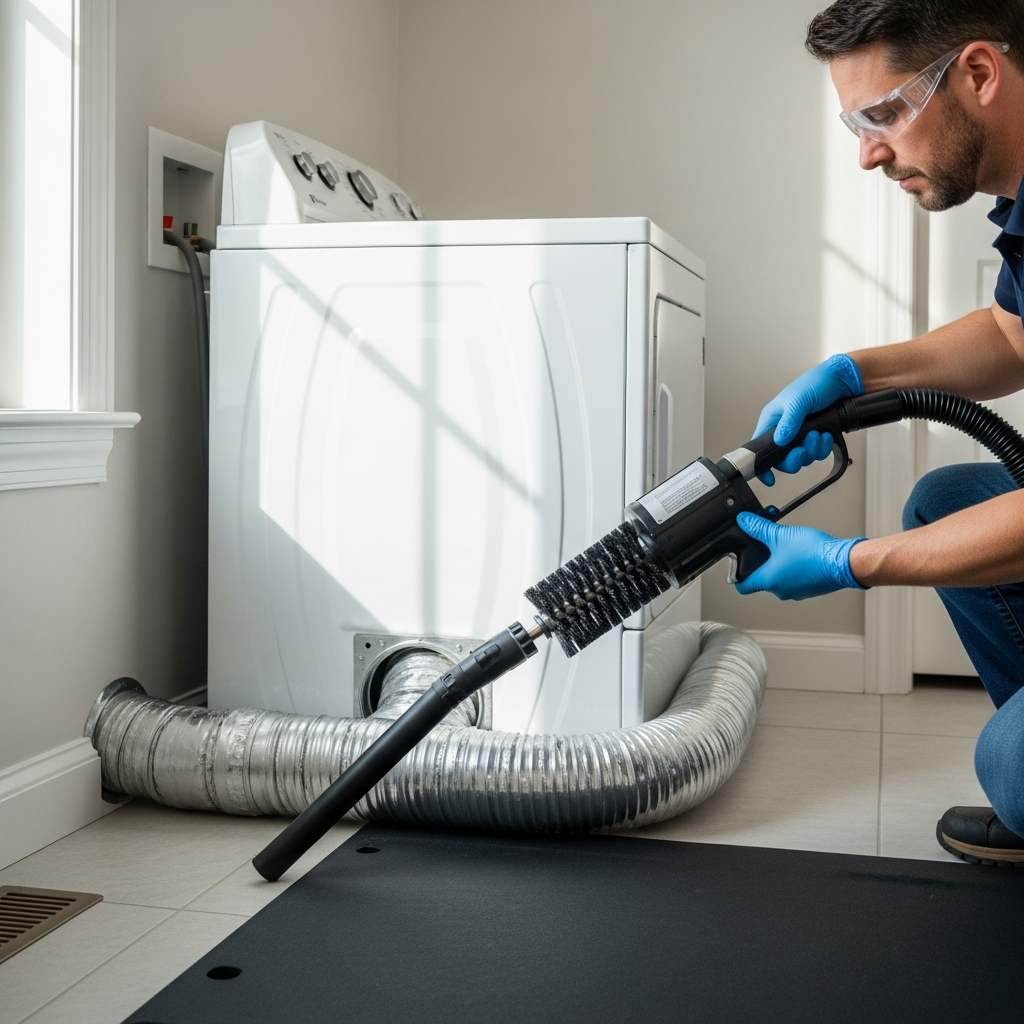
- Mechanical cleaning: Use a rotary brush and high-suction vacuum to move lint and debris toward a capture system, protecting indoor air.
- Exterior termination clearing: Remove clogs, lint mats, stuck hoods, or bird nests (where permitted), ensuring the damper moves freely.
- Camera or visual verification: Confirm the duct interior is clear, joints are intact, and there are no punctures or crushed areas.
- Reassembly and releveling: Reconnect the transition duct correctly, ensure a gentle radius with no crushing, and level the dryer.
- Final airflow test: Compare numbers and verify strong exhaust at the termination.
- Documentation and recommendations: Provide photos or notes and suggest a realistic maintenance interval.
Not every home needs the same tools or timelines, but the best providers bring a range of brushes, whips, vacuums, and containment methods to tailor the job. They respect your space, protect floors and walls, and clean up thoroughly, leaving your laundry area tidier than they found it.
How to choose the best company near you
- Local track record: Look for a team with consistent results in Elizabeth and nearby neighborhoods.
- Clear scope: A written scope describing interior and exterior cleaning, appliance reconnection, and airflow testing builds trust.
- Safety protocols: Pros should handle electric and gas dryers with care, confirm shutoffs, and prevent lint from spreading indoors.
- Right materials: Technicians should recommend proper rigid or semi-rigid metal for transition ducts and discourage flammable plastic or vinyl.
- Education-first approach: Great providers explain findings in plain language and help you understand how to maintain the system.
- Guarantees on workmanship: Confidence in their methods and results signals quality.
When you compare options, pay attention to communication. Do they ask the right questions about run length, dryer model, building type, and the exterior exit? Do they schedule at a time that works for you and arrive prepared? Great service feels thorough and organized from the very first call.
Safety, efficiency, and long-term value
Dryer vent cleaning supports safety by minimizing excessive heat buildup and reducing lint ignition risks. It elevates efficiency by moving hot, moist air out rapidly so clothes release moisture faster. And it supports long-term value by helping the dryer’s sensors perform accurately, preventing unnecessary part failures. In Elizabeth’s dense neighborhoods and multifamily settings, keeping vents clear also respects neighbors by limiting moisture transfer, odors, and potential allergens that can linger in poorly vented spaces.
Beyond lint, technicians look for structural concerns. Crushed ducts behind dryers are common and often overlooked, especially when a dryer is pushed back too tightly. A small change in how the dryer is positioned or a switch to a more appropriate transition connector can significantly improve performance. Similarly, an exterior hood with a stuck damper can act like a closed door: cleaning and a minor repair make a remarkable difference.
Common myths about dryer vent cleaning
- “I clean the lint screen, so I do not need professional service.” The lint screen helps, but fine particles still bypass it and collect deeper in the system.
- “My dryer is new; I can skip maintenance.” New dryers often have stronger blowers, which move lint faster and farther—sometimes packing it deep into long runs.
- “Short runs never clog.” Even short vents can clog, especially with family loads, pet hair, and heavy fabrics.
- “I never see lint outside, so it must be fine.” A blocked termination can keep lint from exiting at all, leaving a hidden blockage indoors.
Understanding these misconceptions helps you set an appropriate maintenance cadence. Households with frequent laundry needs—kids, sports, linens, or pets—should pay closer attention to performance changes and schedule regular cleaning.
Elizabeth-specific considerations
Older homes in Elizabeth may still have sections of outdated ducting or tight utility closets that strain airflow. Multifamily buildings can have extended runs with multiple elbows, requiring specialized brushes and whips to reach the farthest corners. Coastal weather and storms can introduce moisture that mats lint and corrodes terminations. Choosing a provider who knows these realities helps ensure fixes are not just quick but correct for the long haul.
Winter especially puts vents to the test. If the damper sticks or freezes, warm, moist air cannot escape effectively. That leads to slow drying and higher internal temperatures. Before the coldest months arrive, a proactive check can prevent inconvenient delays and keep your laundry routine running smoothly.
Mid-cycle performance boosts
A thorough cleaning is often the single biggest step toward better performance, but small enhancements can keep results strong. Relocating or upgrading the transition duct, ensuring a gentle radius behind the dryer, and verifying the termination hood opens freely all support optimal airflow. In complex runs, a qualified technician might recommend a booster fan with a serviceable location and accessible power. And midway through your maintenance cycle, simply walking outside during a dry cycle to confirm a strong, warm exhaust can help you spot issues early. If you ever notice weak flow mid-year, scheduling professional dryer vent cleaning earlier than planned is a smart move.
What to expect on service day
Expect a friendly walkthrough, careful handling of your appliance, and protective coverings for floors and walls. Technicians will create a clear workspace, pull the dryer out safely, and inspect connections. They will run specialized brushes through the duct while a high-efficiency vacuum captures loosened lint. Exterior cleaning ensures the damper moves easily and screens, if present, are addressed properly. Before they depart, pros relevel the dryer, confirm no kinks remain, and test airflow to demonstrate the improvement.
If any issues require attention—such as an unsafe material or a damaged section—they will explain options clearly. Reliable teams offer straightforward recommendations, focusing on safety and performance rather than upselling. They will also share simple habits you can adopt to keep airflow strong in between visits.
Maintenance timeline for busy households
While every home is different, a common pattern is annual cleaning for average laundry use and semiannual cleaning for larger families, pet-heavy homes, or properties with long or complex vent runs. If you notice any of the warning signs earlier, do not wait. A quick maintenance visit can restore performance and reassure you that the system is operating safely. Consider syncing your schedule with seasonal tasks—like HVAC filter changes or gutter cleanings—so dryer vent care becomes part of your annual home routine.
Frequently asked questions
- How long does a professional visit usually take? The time varies by run length, number of elbows, and termination access, but many single-family homes are completed within a single visit.
- Will my laundry area be messy? Reputable providers protect surrounding areas and vacuum thoroughly, leaving the space clean.
- Do I need to be home? It is best to be present so you can authorize access, review findings, and see the final airflow test.
- Is exterior access required? Yes, technicians typically need to reach the termination to ensure proper damper movement and clear any external obstructions.
- Can I do it myself? Homeowners can clean the lint screen and the space behind the dryer, but full-vent cleaning is safer and more effective with professional tools.
- What materials are safest? Rigid or semi-rigid metal ducts are preferred; avoid plastic or vinyl.
- How often should I schedule service? Many households benefit from annual service, but heavy use or long runs may require more frequent visits.
- Will cleaning reduce energy use? Yes, improved airflow allows clothes to dry faster, often reducing run times per load.
Ready for safer, faster drying in Elizabeth?
Your dryer should make life easier, not add clutter to your to-do list. If you are ready to restore strong airflow, cut down on repeat cycles, and protect your home, choose a trusted local team that specializes in vents across Elizabeth’s varied housing stock. Schedule your next dryer vent cleaning with a provider that values safety, transparency, and lasting performance. One well-planned visit can deliver smoother laundry days and peace of mind for the seasons ahead.
