Introduction
Understanding what happens during a professional air duct repair visit can remove stress and help you prepare your home for the best results. In Elizabeth, New Jersey—where winter chills and summer humidity demand a lot from HVAC systems—well-executed duct repairs can transform comfort, airflow balance, and indoor air quality. This guide walks you through the full journey, from your first phone call to post-repair verification, so you know exactly what to expect and how to collaborate with your technician team. To set the stage, it helps to review a comprehensive overview of reliable air duct repair practices and services so you can align your expectations with industry standards.
Whether your home is a classic Elizabeth colonial, a multifamily unit, or a newer build, technicians should tailor the plan to your duct materials and layout. With clear communication and a structured process, most repairs can be completed efficiently and safely, with minimal disruption to your daily routine.
Before the Visit: Consultation and Planning
Your experience begins with an initial consultation. Quality providers ask detailed questions about symptoms: uneven temperatures, unusual noises, visible gaps at vents, or persistent dust. They may request photos or videos of problem areas to make the on-site inspection more focused. Reputable teams also explain their inspection process, outline safety steps, and provide guidance on preparing your space—clearing access to supply registers and returns, moving fragile items, and securing pets.
Good planning includes scheduling during a window that fits your routine and confirming who will be on site, how long the inspection is expected to take, and how findings will be presented. You should receive a clear point of contact and a summary of what to expect.
Arrival and Home Protection
On the day of the visit, technicians should arrive on time, introduce themselves, and walk you through the plan before setting up protective measures. Expect shoe covers, drop cloths, and careful handling of household items near work zones. Cleanliness is part of professionalism, and it is crucial when dealing with duct systems that can carry dust into living spaces if not managed properly.
The team will typically start in the mechanical room to understand your air handler or furnace and filter setup, then trace major trunks, branches, and returns through basements, attics, or crawlspaces. They will look for disconnected joints, crushed flexible duct, poor strapping, failed tape, or other signs of air leakage.
Diagnostics You Can See and Understand
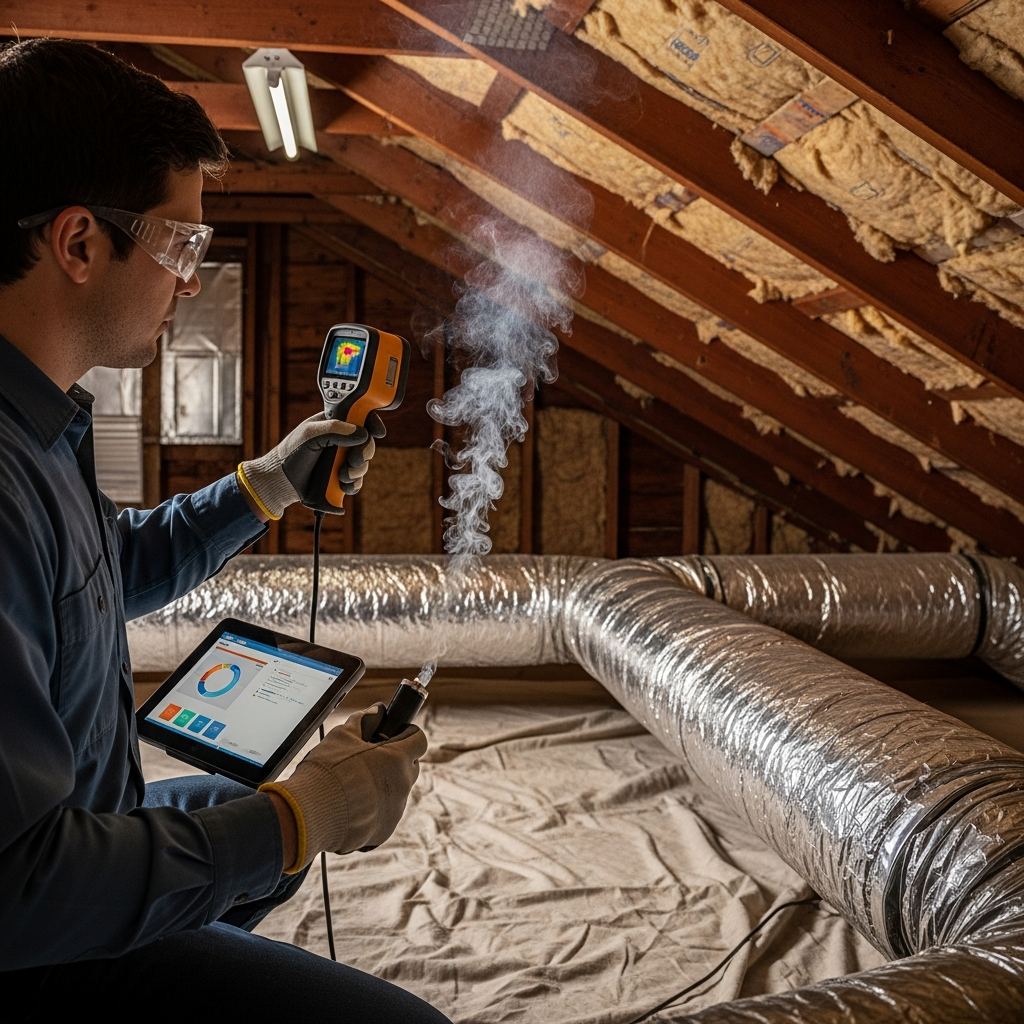
Reliable providers use tools, not guesses. They may perform static pressure readings to identify restrictions, run a smoke pencil to detect leaks at seams, or send a small camera into ducts to inspect from the inside. Thermal imaging can reveal temperature differences that point to hidden leakage or insufficient insulation. The goal is to build a data-backed picture of what is causing your symptoms so that repairs are targeted and effective.
As the inspection proceeds, expect clear explanations in plain language. When a tech shows you a failing connection, they should describe how it affects airflow and comfort, what it takes to fix, and how they will verify the result after the repair.
Scope of Work and Options
Following diagnostics, you will review a scope of work. It should include photographs, a list of identified problems, and recommended solutions. In many homes, the plan combines sealing leaky seams with mastic, reattaching or re-supporting flexible runs, replacing damaged sections, and checking balancing dampers. When multiple options exist, you should receive a transparent explanation of pros and cons, timelines, and expected outcomes for each path. You are part of the decision-making process.
A strong provider also discusses contingencies—what happens if they find hidden damage once a section is opened—and confirms how approval will be obtained before any changes to the plan.
The Repair Phase: What Happens
Once you authorize work, technicians will isolate the HVAC system and gather necessary materials. They will focus on the return side first if it shows signs of drawing dirty air from basements or wall cavities. Mastic sealant may be applied to seams, collars, and joints; mechanical fasteners secure connections; and flexible duct runs are re-strapped to prevent sagging. Where damage is severe, a section may be replaced to restore proper diameter and airflow.
During this phase, you can expect periodic updates. The team will explain progress, share any surprises, and keep work areas tidy. If they need to pause to verify results, they will communicate why and what they are checking.
Verification and Balancing
Quality repair work ends with proof. After sealing and reconfiguration, technicians should remeasure static pressure and, when appropriate, verify room-by-room airflow. They will confirm that previously starved rooms are now receiving sufficient air and that returns are no longer pulling contaminants from unintended spaces. If balancing dampers are present, they will be adjusted to even out distribution across the home.
This verification is also your chance to ask final questions. If there is lingering noise or a room still feeling off, now is the time to mention it so the team can fine-tune before leaving.
Communication, Documentation, and Follow-Up
At the end of the visit, expect a walkthrough and a written summary. You should receive photos of repairs, descriptions of materials used, and a plain-language explanation of how the work addresses your symptoms. If the company offers a workmanship guarantee, they will provide documentation and instructions for follow-up. This packet becomes part of your home’s mechanical history and can help with future maintenance or upgrades.
Many reputable teams schedule a check-in after a few weeks to confirm performance under different weather conditions. This proactive follow-up reflects pride in workmanship and helps ensure long-lasting results.
Health and Safety Protocols
Responsible providers maintain strict safety and cleanliness standards. Expect technicians to use appropriate PPE when handling insulation or entering dusty spaces, and to isolate work areas to prevent debris from entering living spaces. If microbial growth is suspected, they will discuss containment and remediation steps consistent with guidelines, and they will avoid cross-contamination by protecting the air handler during work.
Ask how the team handles disposal of damaged duct sections or contaminated materials. The answer should reflect care and regulatory awareness.
Timelines and Home Disruption
Most air duct repairs can be completed within a day or two, depending on complexity and access. In Elizabeth’s mix of older homes and updated spaces, access can be the biggest variable. Skilled teams work efficiently while keeping disruption low. You may be asked to avoid running the HVAC during some parts of the repair; technicians will coordinate these windows to minimize discomfort.
Clear scheduling and punctuality reduce stress. Expect courtesy calls or messages confirming arrival times and any necessary adjustments due to weather or building access rules.
What Results Should You Notice?
After successful repairs, you can expect more even temperatures across rooms, reduced noise from whistling or vibrating ducts, and potentially lower dust movement. If returns were leaking, you may notice fresher smelling air and cleaner registers. The system may cycle more predictably and reach set points without creating drafts. These improvements combine to make your home feel more comfortable and controlled.
Because every house is unique, results vary. What matters is that the team ties their work to measurable changes—pressure readings, airflow checks, or temperature differentials—so you know the improvements are real.
How to Be a Great Partner in the Process
Homeowners who prepare spaces, ask thoughtful questions, and share detailed observations help technicians deliver the best outcomes. Note which rooms feel uncomfortable, when symptoms occur, and any history of prior work. Photographs of problem areas or utility chases can be invaluable. During the visit, feel empowered to ask why each step is being taken and how success will be checked. Collaboration builds confidence.
Midway through the project, you might revisit your goals and compare them against the plan. If you want a benchmark for quality, look into reputable providers’ approaches to air duct repair services, and ask your team to explain how their process aligns. Most professionals welcome informed customers.
Frequently Asked Questions
Q: How do I know if I need duct repair versus duct cleaning? A: Cleaning addresses debris and dust inside ducts; repair targets structural and connection issues that affect airflow and leakage. If you have uneven temperatures, whistling noises, or visible gaps, repairs are likely part of the solution.
Q: Will repairs improve indoor air quality? A: Yes, particularly if return leaks are sealed and ducts are reconnected or re-supported properly. This reduces the chance of drawing dusty or musty air from basements, attics, or wall cavities.
Q: Do repairs require cutting into walls or ceilings? A: Sometimes, but experienced technicians minimize invasiveness. They may use cameras and pressure tests to localize issues before opening access points, and they repair access neatly when finished.
Q: How long will my system be offline? A: Portions of the work require the system to be off, but teams schedule those periods strategically. Many homes experience only short downtime windows during the day.
Q: What maintenance supports long-lasting results? A: Replace or clean filters on schedule, keep registers unblocked, and schedule periodic inspections—especially after renovations or major weather events.
Setting Realistic Expectations
Even excellent duct repairs cannot compensate for poorly sized equipment or extreme architectural constraints. A responsible provider will explain these limits and, if necessary, suggest incremental improvements—like adding returns or adjusting register locations—to pursue as future projects. Realistic expectations paired with high-quality repair work can deliver a substantial comfort upgrade.
Ready for Better Comfort and Airflow?
When you know what to expect, the entire process becomes simpler and less stressful. If you are ready to enjoy steadier temperatures, less noise, and cleaner airflow in your Elizabeth, NJ home, schedule a professional visit. Start by reviewing trusted air duct repair solutions and book a convenient appointment to restore reliable performance throughout your space.
