Homeowners in Elizabeth, New Jersey often ask how to plan for air duct repairs, what influences the overall scope of work, and how to make confident decisions that protect comfort and efficiency. While no two homes are identical, there are consistent factors that shape timelines, materials, and the level of effort required to restore a reliable, healthy duct system. This guide explains those drivers in plain language and shows how to think through the entire process from inspection to verification, without focusing on specific numbers. If you are at the point where you want a reliable professional to assess your system, consider speaking with a specialist in air duct repair who understands Elizabeth’s housing stock and seasonal climate demands.
Why Elizabeth, New Jersey Homes Need Strong Duct Performance
Elizabeth’s mix of pre-war homes, post-war single-family houses, and multi-unit buildings means duct systems vary widely in age, configuration, and material. Seasonal humidity swings, coastal storms, winter cold snaps, and summer heat can test every connection, seam, and support. Older properties may have legacy metal duct trunks with added flex branches, while newer construction might rely more heavily on modern insulated flex or ductboard. No matter the vintage, air leakage, kinks, poor insulation, and inadequate sealing can undermine comfort, strain equipment, and compromise indoor air quality.
Residents also contend with basements, crawlspaces, and attics that can be tight, dusty, or hard to access. Those conditions influence how quickly a technician can work and what methods are practical. A well-executed repair not only restores airflow but also wards off future problems by strengthening the entire distribution network, ensuring the HVAC system can deliver the right amount of conditioned air to each room.
Key Factors That Influence the Scope of Air Duct Repairs
Because every duct system is unique, the level of effort required can vary. Understanding these drivers helps you plan and communicate clearly with a contractor.
- System size and layout: Larger homes with multiple stories, long trunk lines, and many branches require more inspection and sealing. Complex layouts with numerous turns or transitions need additional attention to detail.
- Material type and condition: Galvanized steel, ductboard, and flexible duct each have different best practices. Existing condition—rust, biological contamination, deterioration, or damaged insulation—shapes the work.
- Accessibility: Tight crawlspaces, low attic clearances, or ducts buried under insulation increase labor and slow verification testing. Clear access can shorten project duration.
- Extent of leakage: Small seam leaks and disconnected joints call for different methods than widespread breaches, crushed runs, or collapsed returns.
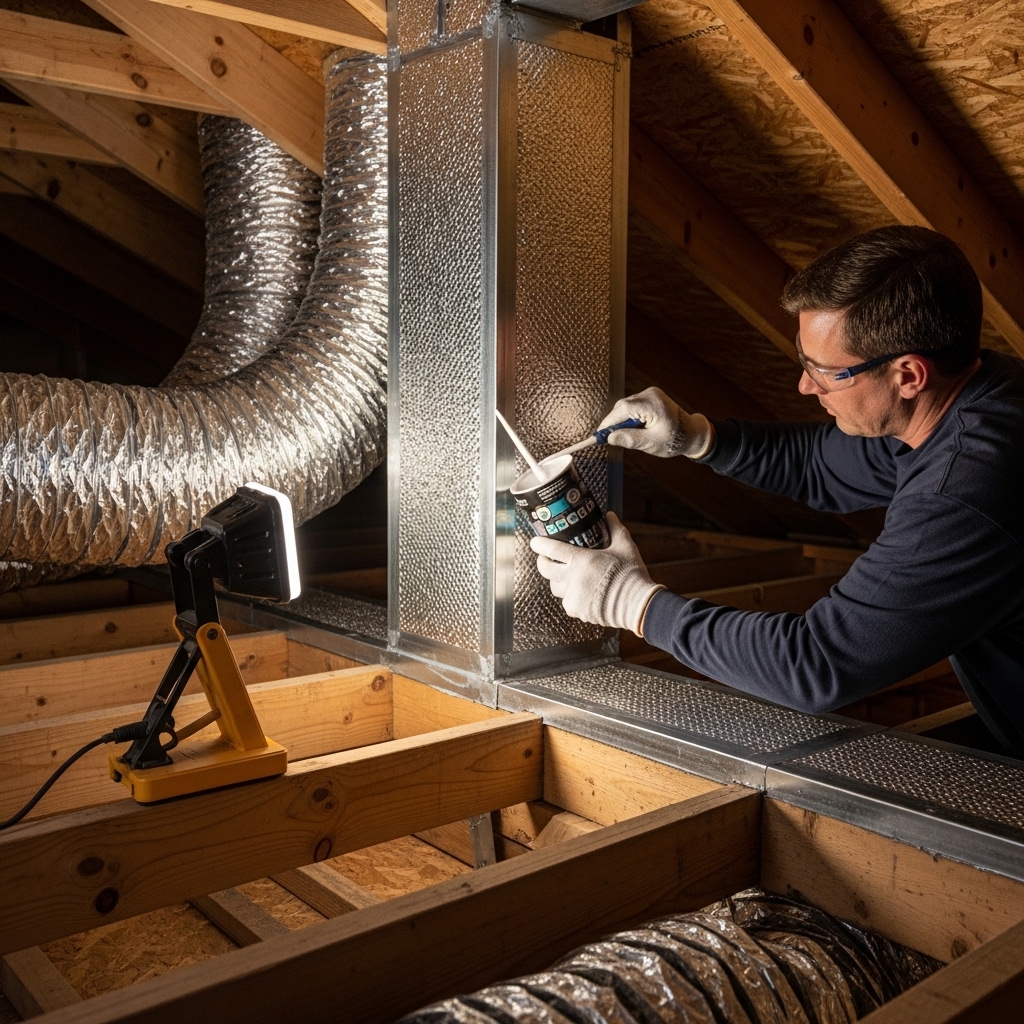
- Sealing products and methods: Mastic, UL 181 foil tape, metal fasteners, and hangers may be used in combination to create durable, code-compliant seals.
- Insulation and vapor barriers: Correct R-values and intact vapor barriers are essential in unconditioned spaces to prevent condensation and energy loss.
- Cleanliness and debris: Dust, construction residue, or pest activity can complicate sealing and may require cleaning before repair.
- Testing and balancing needs: Duct pressurization, airflow readings, and room-to-room balancing add steps that improve performance.
Signs Your Elizabeth Home’s Ducts Need Attention
Before any planning, look for symptoms that suggest air distribution issues. Uneven temperatures between rooms, long run times, a noisy return, excessive dust, or musty odors often indicate leakage, blockages, or undersized returns. If your system struggles more during peak season, that may signal that losses are magnified under higher airflow. Visual checks around accessible trunks, boots, and returns can reveal loose tape, gaps, or insulation tears.
Pay special attention to areas near the air handler, transitions, and takeoffs. Kinks in flexible runs, missing screws at connections, or dried, cracking tape are common. If you see condensation on metal ducts in summer, the vapor barrier or insulation may be compromised. These observations will help a qualified technician plan an effective scope of work.
How Professionals Evaluate Duct Repair Needs
A reputable contractor will begin with a structured diagnostic routine. That often includes a visual survey of trunks and branches, verification of filter fitment, inspection of return paths, and identification of obvious disconnections. For a deeper look, technicians may perform duct pressurization to quantify leakage, smoke tracing to pinpoint problem joints, and airflow measurements at supply registers.
The evaluation also covers the air handler, blower cleanliness, coil condition, and proper sealing at the plenum. In Elizabeth, where basements and attics are common installation locations, the inspection includes supports and hangers, clearance from combustible materials, and how ducts pass through framing. The outcome is a prioritized list of actions, starting with repairs that deliver the greatest improvement in comfort and efficiency.
Common Repair Methods and What Shapes Their Complexity
Repair strategies depend on the type and location of defects. Sealing joints with mastic, reinforcing with mesh where gaps are larger, and securing with screws are staples for metal trunks. For flexible duct, repairs may include replacing crushed sections, correcting excessive sagging with proper support spacing, or reattaching loose inner liners to collars using clamps and mastic. Ductboard may require patching with compatible material and careful sealing of all seams.
Where returns are undersized, solutions might involve adding an additional return pathway or improving transfer grilles. If certain rooms chronically underperform, a technician may recommend adjusting run lengths, takeoff sizes, or balancing dampers. In tight spaces, staging materials and sequencing tasks to minimize disruptions takes planning.
Elizabeth-Specific Considerations
Homes in Elizabeth must contend with moisture and temperature swings, plus occasional wind-driven rain. Condensation potential and attic heat loads influence insulation decisions. In basements, ducts near walls or floors may experience colder surfaces in winter, requiring continuous insulation and clean, sealed vapor barriers. Historic homes with plaster walls and limited chases often need creative solutions to improve return pathways without altering architectural character.
Additionally, the presence of shared walls in multi-family buildings can restrict access to certain runs. Coordination with building management or neighboring units may be necessary to schedule inspection windows. Knowing these dynamics up front helps set expectations about the sequence and timing of work.
Project Planning: From First Look to Final Verification
- Initial conversation: Describe your concerns, observed symptoms, and the age of your system.
- On-site assessment: A thorough inspection identifies priority repairs, access limitations, and safety considerations.
- Scope definition: The contractor outlines steps, materials, and testing methods to confirm improvements.
- Preparation: Clearing access, safeguarding belongings, and staging tools reduce time on site.
- Repair execution: Sealing, fastening, supporting, and insulating each connection build a durable system.
- Testing: Pressurization, airflow checks, and temperature splits verify results.
- Balancing and user guidance: Adjust dampers and review filter maintenance, thermostat settings, and return pathways.
- Follow-up: A good partner will explain findings and offer maintenance suggestions tailored to your home.
Practical Ways to Manage Your Project Without Guesswork
Even without referencing exact figures, you can plan effectively. Start by documenting room-by-room comfort issues over a week. Note when problems appear, such as late afternoon heat buildup or overnight chilly corners. Share this log during the assessment so your technician can link symptoms to specific branches or returns. Clear a path to the air handler and visible trunks to accelerate the evaluation.
Ask about which repairs will deliver the biggest performance gains first. Sealing major return leaks near the air handler often has an outsized impact on airflow and cleanliness. Replacing a crushed run serving a frequently used room can transform day-to-day comfort. Understanding this hierarchy ensures your project tackles the most important items in a logical order.
What Makes a Durable Repair
Durability comes from correct materials and methodical execution. For metal ducts, that means properly cleaned surfaces, tight mechanical connections with screws, mastic over seams, and foil tape where specified. For flexible duct, correct stretch (not overly taut or sagging), smooth inner liner attachment, and adequate support spacing prevent future kinks. For ducts in unconditioned spaces, continuous insulation, sealed vapor barriers, and protected penetrations reduce thermal losses and condensation risks.
Documentation also matters. Photos of before-and-after connections, a list of sealed joints, and airflow readings provide transparency and ensure that the most significant issues were addressed. If future improvements are recommended—such as adding a return or optimizing branch sizing—record those suggestions for later phases.
Health and Indoor Air Quality Considerations
Leaky returns can draw air from dusty attics, damp basements, or wall cavities, circulating particles throughout the home. Proper sealing and filtration reduce this burden. If a musty odor persists, a technician may inspect for trapped moisture or microbial growth in insulation. While cleaning is a separate service from repair, the two are related; a clean, sealed system is more likely to maintain healthy airflow and reduce recirculated dust.
In households with allergies or respiratory concerns, attention to filter fitment, return integrity, and balanced airflow is especially important. Make sure return grilles are unobstructed and filters are replaced on a schedule appropriate for your home’s activity level and occupancy.
Energy and Comfort Outcomes
Well-executed duct repairs reduce unwanted losses, making it easier for your system to reach and maintain set temperatures. Registers deliver air more evenly, and equipment cycles become more stable. In Elizabeth’s climate, these improvements help during both winter heating and summer cooling. The combined effect is better comfort, less noise from whistling leaks, and a more predictable indoor environment.
Homeowners often report that rooms farthest from the air handler feel more consistent once major leaks are sealed and supports corrected. By treating the duct network as a system and verifying results through testing, you gain confidence that the improvements are real and durable.
Mid-Project Checkpoints
During the work, periodic checkpoints keep everyone aligned. After sealing a section, a quick smoke test can confirm that previously visible leaks are closed. When replacing a crushed run, ensure the new path avoids old pinch points. If insulation is being upgraded, confirm it remains continuous around fittings and boots and that the vapor barrier is intact.
It is also a good time to revisit any rooms with persistent hot or cold spots. A combination of repaired runs and minor balancing can often resolve these frustrations. If you’re coordinating with other home improvements—such as attic air sealing or insulation—verify sequencing so that new materials do not cover ducts that still need attention. When you are ready to explore comprehensive solutions, work with a provider experienced in professional air duct repair who can integrate diagnostics, repair, and verification into one plan.
Common Misconceptions About Duct Repair
- Myth: Only old homes need duct sealing. Reality: Even newer flex systems can have installation defects, loose collars, or insufficient supports.
- Myth: One visible patch fixes everything. Reality: Multiple small leaks add up; a system-wide approach delivers better results.
- Myth: Returns do not matter as much as supplies. Reality: Return integrity significantly affects airflow, cleanliness, and equipment strain.
- Myth: Foil tape alone is enough. Reality: Long-lasting seals often require mastic and mechanical fastening, used correctly for the material.
- Myth: If the thermostat is satisfied, the ducts are fine. Reality: Uneven rooms and short cycling can mask inefficiencies and losses.
Working With a Professional
Successful outcomes come from clear communication. Share your comfort goals, allergy concerns, renovation plans, and any access constraints. Ask your contractor to explain testing procedures, repair materials, and how they will document improvements. Seek a timeline that sequences tasks logically and minimizes disruption to your schedule.
In Elizabeth, it is helpful to choose a team that understands local construction styles and the realities of basements, crawlspaces, and attics common to the area. Familiarity with these environments allows for better planning and fewer surprises.
Frequently Asked Questions
Q: How do I know whether I need sealing or partial replacement? A: An inspection reveals whether joints and seams are the primary issue or whether crushed or deteriorated sections must be replaced. Often, a mix of sealing and selective component replacement delivers the best result.
Q: What materials are used to create durable seals? A: Technicians commonly use mastic, UL 181 foil tape, metal screws, mesh reinforcement for larger gaps, and appropriate clamps for flexible ducts. The combination depends on the duct type and location.
Q: Will repairs make my system quieter? A: Reducing return leaks and whistling joints, correcting kinks, and balancing airflow can lower noise and create smoother operation.
Q: Can repairs improve air quality? A: Yes. By preventing unconditioned air from being pulled from attics or basements, sealing reduces dust and potential pollutants entering the system.
Q: How long does a typical project take? A: Timelines depend on access, system size, and the number of issues found during inspection. Your contractor can outline the sequence after the assessment.
Q: Do I need to be home during the work? A: It is helpful during the initial walkthrough and final verification, so you can review findings, airflow improvements, and any maintenance tips.
Q: What about insulation upgrades? A: In unconditioned spaces, continuous insulation with sealed vapor barriers complements sealing work and enhances results.
Q: How often should I revisit duct performance? A: After significant repairs, a check-in during the next season is wise. Keep filters fresh and watch for any recurring symptoms.
Take the Next Step for Your Elizabeth Home
If uneven rooms, dust, or weak airflow are undermining comfort, a well-planned repair can transform the way your home feels in every season. Start with a thorough inspection, prioritize the biggest improvements, and verify the results. When you are ready to move forward, schedule time with a trusted local team that focuses on lasting workmanship and clear communication. To explore your options and plan a comprehensive solution, reach out and schedule air duct repair with a technician who understands Elizabeth homes and the demands of our climate.
