Elizabeth, New Jersey, is a city where history, industry, and neighborhood life meet—in classic colonials along tree-lined blocks, multifamily buildings near bustling corridors, and newer homes tucked into growing communities. No matter the style or age of your home, the air you breathe inside it matters. Household dust, pet dander, renovation debris, and everyday life can all migrate into the supply and return ductwork that feeds your heating and cooling system. A comprehensive, homeowner-focused guide to residential air duct cleaning helps you understand why this service is beneficial, what to expect, and how to choose a qualified provider in Elizabeth and throughout Union County. If you’re just beginning your research, start by learning how professional air duct cleaning supports a healthier, more efficient home environment from season to season.
Many Elizabeth homeowners notice a recurring film of dust on furniture, uneven airflow from room to room, or persistent odors that linger when the HVAC system cycles on. These are common signals that contaminants may be accumulating in the ductwork. While the filter in your air handler captures a portion of airborne particles, finer debris, skin flakes, and fibers often bypass or outlast that filter, gradually settling inside supply runs, returns, and trunk lines. A professional cleaning addresses those hidden areas and complements your routine filter changes and system maintenance.
What residential air duct cleaning includes
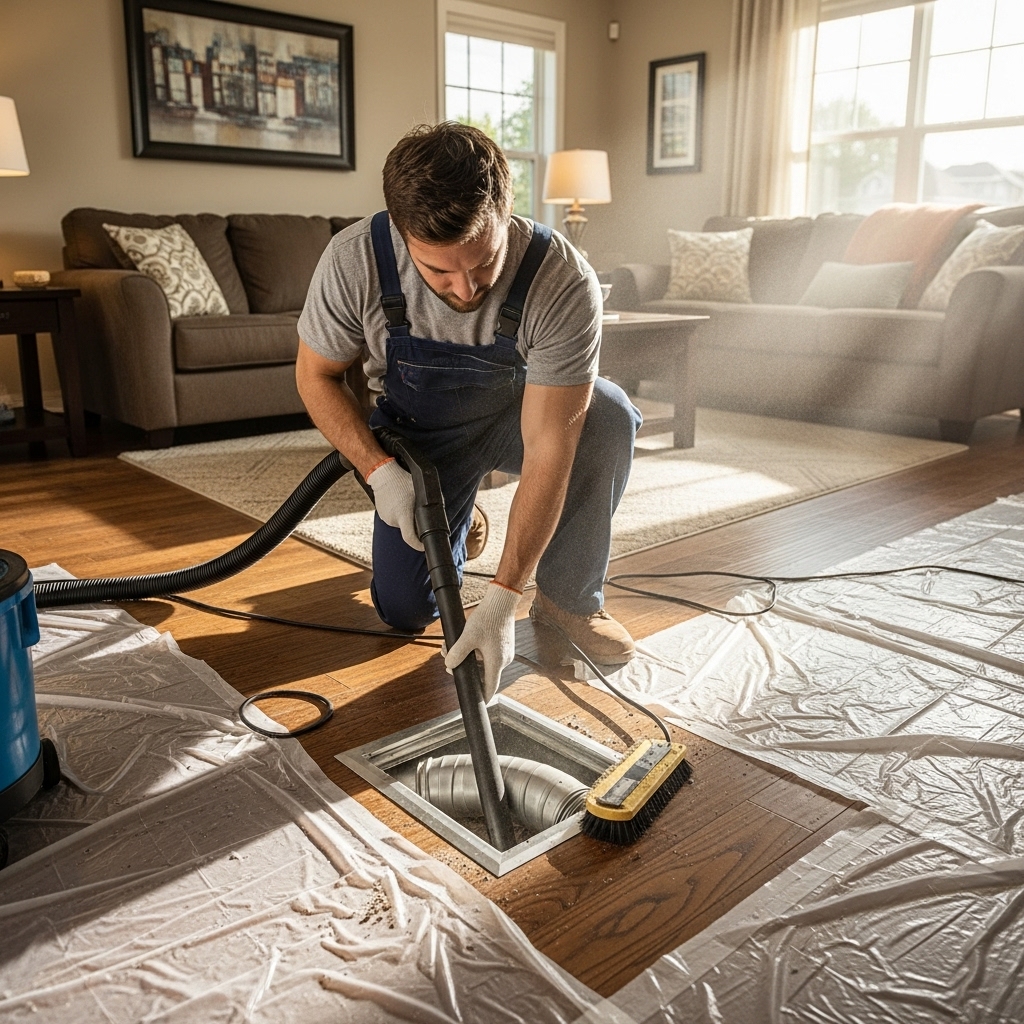
Residential air duct cleaning is more than a quick vacuum at the registers. A thorough, standards-aligned process targets the entire distribution pathway that delivers conditioned air to living spaces. The process typically includes:
- System assessment: A walk-through to identify the number of supply vents and returns, the location of the air handler and evaporator coil, and any visible issues such as damaged flex duct or disconnected boots.
- Containment and protection: Floor coverings, corner guards, and protective barriers to keep workspaces tidy and to prevent dust migration into clean areas of the home.
- Access creation: Opening panels or installing service ports in trunk lines and plenums so technicians can reach interior surfaces without dismantling the entire system.
- Agitation: Using whips, brushes, and air-driven tools to dislodge adhered dust, lint, and particulates from duct walls.
- Negative pressure collection: Connecting a high-powered vacuum to pull loosened debris out of the system and through HEPA filtration, preventing reintroduction into the home.
- Component cleaning: Wiping or vacuuming registers and grilles, cleaning the blower compartment, and addressing the return drop where heavier debris often accumulates.
- Post-clean verification: Visual inspection, photos, or video to validate that interior surfaces are free of debris and that access points are properly resealed.
When performed thoroughly, this sequence restores clean airflow pathways without introducing chemicals you do not want inside your home. If antimicrobial or deodorizing applications are recommended, they should be discussed in advance with details about product safety, labeling, and whether they are truly necessary for your situation.
Why clean ductwork matters in Elizabeth homes
Elizabeth’s climate brings humid summers and chilly winters. That seasonal swing means your HVAC system works year-round, moving large volumes of air through ducts located in basements, attics, crawl spaces, or inside wall cavities. Over time, ducts can collect dust and moisture-laden particles that cling to interior surfaces. In older homes, long return runs and sheet-metal trunks are common; in newer construction, flex duct may be used extensively. Both can harbor debris if not maintained.
Clean ductwork supports several important outcomes for households:
- Cleaner indoor environment: Reducing the debris reservoir inside your ducts helps minimize how much dust is recirculated onto furniture and floors.
- HVAC efficiency: Air moves more freely through clean pathways, potentially helping the system deliver even temperatures to distant rooms.
- Odor reduction: Musty, stale smells that appear when the fan starts are often linked to built-up contaminants. Cleaning can help diminish those odors.
- Allergen management: While no cleaning can eliminate allergens altogether, reducing the particulate load in the system supports better IAQ strategies, especially when combined with appropriate filtration.
For families managing allergies, asthma, or sensitivities, a multi-pronged approach—duct cleaning, upgraded filtration, humidity control, and regular maintenance—offers the best results. Discuss your goals so the service aligns with your home’s specific needs.
Common signs it may be time to schedule
It’s not always obvious when ductwork needs attention, but these clues often prompt Elizabeth homeowners to act:
- Every time the HVAC fan turns on, you notice a puff of dust from one or more vents.
- Registers show visible dust streaks or gray buildup around the edges.
- Rooms furthest from the air handler receive weak airflow compared to nearby rooms.
- There are recurring, unexplained odors associated with the system cycling.
- Your household includes shedding pets, or you’ve completed a remodeling project that created fine dust.
- It has been several years since your last inspection or cleaning.
Another motivator is moving into a new-to-you home. Even if the HVAC equipment is newer, the ductwork may contain debris from prior occupants, construction, or previous renovations. A cleaning early in your ownership helps you start fresh and learn about the system’s layout and condition.
What the day of service looks like
Good preparation makes for a smooth appointment. Technicians will want clear access to the air handler, basement or attic spaces, and each vent. You may be asked to move small furnishings, secure pets, and point out any areas that are particularly dusty or hard to reach. On arrival, the crew walks through the home, protects floors and corners, and confirms the scope. Mild noise is expected during agitation and vacuum operation, and doors may be propped open briefly to route hoses.
Throughout the visit, communication is key. If the team discovers disconnected duct sections, crushed flex, or gaps around boots, they should explain findings and discuss options for corrections. Even small air leaks at joints can draw unconditioned air and dust from basements, attics, or wall cavities. Addressing those issues along with cleaning helps keep ducts clean longer.
Methods, standards, and quality assurance
Professional cleaning follows established industry methods designed to remove debris safely and effectively. The combination of mechanical agitation and powerful negative pressure collection is central to these methods. Quality assurance may include photographic documentation of trunk lines before and after, ensuring service ports are sealed tightly, and validating that all registers are reinstalled and open to the correct setting.
Ask about the filters used on collection equipment and the containment measures the team employs. High-efficiency filtration on vacuums helps capture fine particles instead of releasing them back into living areas. Technicians should also take care to protect coil fins and sensitive components in the air handler, as well as to avoid damaging flex duct or loosened internal insulation.
How often should ducts be cleaned?
There is no universal interval that fits every household. Factors include household size, pets, smoking, regional dust levels, and how well your system is sealed and filtered. Many homes benefit from periodic inspection, with cleaning performed when a visible accumulation is present or when symptoms—dust plumes, odors, or airflow issues—appear. Renovation projects are a common trigger for service, as drywall dust and sawdust can travel far through returns during construction activity.
Between cleanings, consistent filter changes, sealing of obvious duct leaks, and attention to humidity control can help preserve a cleaner system. A well-sealed, balanced HVAC setup tends to remain cleaner longer than one drawing air from dusty spaces.
Mid-project scheduling and planning
For homeowners juggling work, school, and activities, scheduling matters. Many providers offer weekday appointments and limited Saturday availability. Plan for someone to be home to grant access and review findings. If you run air cleaners in bedrooms or living areas, you may wish to switch them off during the appointment and back on afterward. When you contact a provider about timing, ask how long typical homes of your size take and whether multiple systems can be handled in one visit. This is also a good point to confirm any special concerns—nursery naptimes, remote work calls, or rooms that should be addressed first. If your planning has reached the midpoint of research and you’re ready to move forward, consider booking professional air duct cleaning to align with your family’s schedule and minimize disruption.
How to choose a provider in Elizabeth
Choosing the right company is as important as the decision to clean. Look for:
- Experience with single-family homes, townhouses, and multifamily residences typical in Elizabeth.
- Clear explanations of the process, including how access ports are installed and sealed.
- Proper insurance and a willingness to provide references from local customers.
- Technicians who take time to assess your system rather than offering a one-size-fits-all approach.
- Respect for your home—protective coverings, tidy setup, and cleanup at the end of the job.
Discuss what is included and what is considered an additional service, such as coil cleaning, minor duct repairs, or sealing of obvious gaps. Transparency helps you understand what will be accomplished and how the work supports your goals.
Addressing moisture and odor concerns
While dust is the most common issue, moisture can complicate matters. Basements and crawl spaces in the region can experience dampness during rainy periods, and poorly insulated ducts may sweat in summer when cold air courses through warm spaces. If technicians notice signs of moisture or microbial growth, they should explain what they see and suggest steps to address the source. Insulation, vapor barriers, dehumidification, and system adjustments can all contribute to drier, cleaner conditions.
Odor concerns often improve with cleaning, but lasting solutions sometimes require a combination of measures: upgrading to a higher MERV filter that your system can handle, sealing return leaks that draw air from musty areas, and managing humidity. Scented products that mask odors are not a long-term fix; the goal is to remove the underlying debris and improve the quality of air entering and circulating through the home.
Maintenance habits that keep ducts cleaner longer
Good habits deliver ongoing benefits. Consider these practices:
- Change filters on schedule and match the MERV rating to your system’s capacity and household needs.
- Vacuum and dust registers regularly to prevent debris from being drawn into the system.
- Keep supply vents open and unblocked to maintain proper airflow balance.
- Reduce dust at the source with regular housekeeping and by capturing particles at entry points (entry mats, shoe storage).
- Seal gaps at duct joints accessible in basements or utility rooms to reduce infiltration of unconditioned air and dust.
These steps complement the deep cleaning performed by professionals and may extend the interval between cleanings, depending on your home’s activity and environment.
Frequently Asked Questions
How long does a typical residential appointment take?
For many single-system homes, several hours is common, with timing influenced by home size, number of registers, accessibility of the air handler, and how much debris is present. Larger homes or houses with multiple systems will take longer, especially if access is limited or additional components, such as return drops in tight basements, require more time.
Will cleaning damage my ductwork?
When performed correctly, cleaning is designed to be gentle on materials while still dislodging debris. Good technicians adjust agitation tools and pressure to fit metal, lined, or flex duct and take care around coil fins and other sensitive components. If sections are already compromised, the team should point this out and suggest repairs.
Do I need antimicrobial treatments?
Antimicrobial products are not automatically necessary. They may be recommended if there is a specific concern identified during inspection, and any product used should be appropriate for HVAC applications with clear safety information. Many homes achieve excellent results through mechanical cleaning alone.
Is it safe for pets and children to be home?
Yes, with simple precautions. Because doors may open and hoses will be routed, pets should be secured. Expect some noise from vacuum and agitation tools. After the job, technicians tidy the workspace and remove protective coverings, and you can return the home to normal use.
Will cleaning help with allergies?
Reducing the particulate load in ductwork can be part of a broader strategy to manage allergens. Improvements are most noticeable when cleaning is paired with appropriate filtration, humidity control, and regular housekeeping. No single step eliminates allergens, but together these measures can support better indoor air quality.
What about dryer ducts?
Dryer exhaust lines are separate from HVAC ductwork and require their own maintenance. Lint buildup in dryer ducts is a fire hazard and impacts dryer performance. Ask whether the company offers this service as part of a home maintenance plan.
Getting started in Elizabeth
Elizabeth’s mix of housing types means each home benefits from a tailored approach. Whether you live near the waterfront, along tree-lined streets, or in a newly renovated townhouse, the essentials remain the same: a clear process, careful protection of your home, and validation that the system is clean when the team is finished. Prioritize providers who are transparent, communicative, and respectful of your household’s routines.
Breathe easier at home
If you are ready to create a cleaner, healthier living space, schedule professional service with a team that understands the needs of Elizabeth homeowners. Take the next step by booking trusted air duct cleaning so your system can deliver cleaner airflow, your rooms can stay fresher longer, and your family can enjoy comfort through every season.
