Choosing the best air duct cleaning company in Elizabeth, New Jersey, is about more than finding a name online. It’s about partnering with professionals who protect your property, communicate clearly, and deliver verifiable results. With a mix of historic buildings, busy multifamily complexes, and single-family homes across neighborhoods, Elizabeth’s housing and commercial stock demands a careful, tailored approach. This guide lays out the criteria that matter, the red flags to avoid, and the questions that separate reliable providers from the rest. As you begin your search, ground yourself in what comprehensive air duct cleaning should look like so you can evaluate companies against a consistent standard.
Good companies build their process around your property’s realities. They ask about system layout, access, and constraints rather than pushing a one-size-fits-all script. They also respect your time—arriving when promised, protecting floors and corners, and leaving spaces tidy. Beyond those basics, your best choice will excel in documentation, safety practices, and clear communication.
Define your goals and scope first
Clarity about your goals helps you select a company that can meet them. Are you responding to visible dust plumes, addressing persistent odors, or preparing a newly purchased home for move-in? Do you need a detailed report for a property manager or HOA? Are you combining duct cleaning with coil cleaning or minor sealing of accessible joints? Outlining these objectives lets you evaluate whether a provider can deliver what matters most to you.
What a thorough process includes
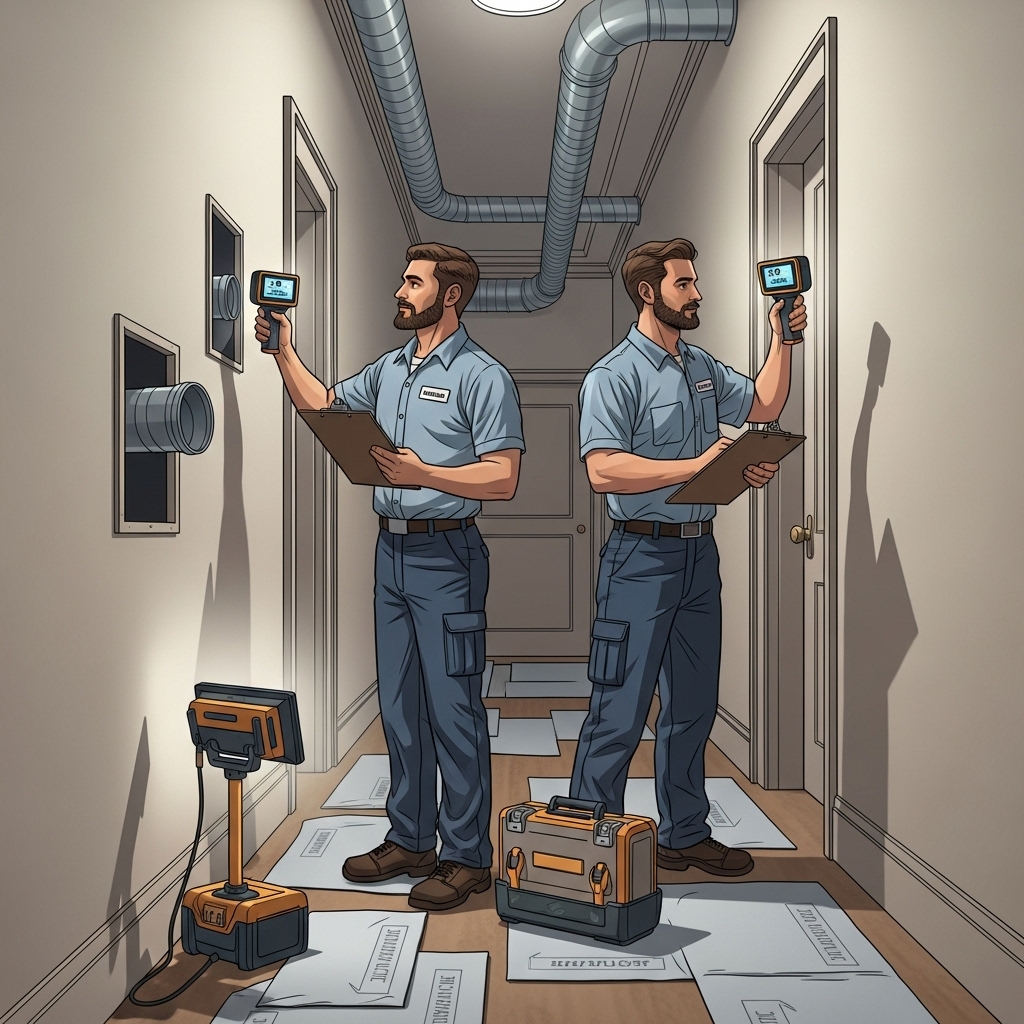
While methods vary, a reliable process typically contains these elements:
- Assessment and planning: Counting supply and return registers, locating the air handler, identifying access points, and noting special conditions like high ceilings or tight basements.
- Protection and containment: Floor coverings, corner guards, and isolation measures to keep dust out of clean areas.
- Access creation: Installing service ports and panels that allow tools and vacuum hoses to reach interior surfaces safely.
- Agitation and collection: Using brushes, whips, and compressed air tools to dislodge debris while a high-powered vacuum captures particles under negative pressure.
- Component cleaning: Addressing the blower compartment and return drops where debris commonly accumulates; coil and drain pan attention when included in scope.
- Verification: Visual or photographic confirmation that surfaces are clean and ports are resealed.
Your evaluation should focus on how confidently a company can describe and execute these steps in your specific property type.
Credentials and professionalism
Look for proof of industry engagement and professionalism: experience with Elizabeth-area homes and buildings, proper insurance, and a safety-first culture. Ask how technicians are trained, how they protect lined or flex ducts, and how they avoid damaging coil fins or control devices. A company that welcomes informed questions and provides clear answers signals reliability.
Equipment and technique
Effective cleaning depends on the right tools used in the right way. High-powered, filtered collection equipment captures dislodged debris; agitation tools must be matched to the duct materials in your home. The team should be prepared to work carefully around obstacles, avoid over-agitation in fragile sections, and protect finishes at registers and grilles. Equally important is their plan for sealing access ports and verifying that registers are reinstalled and open to desired positions.
Local knowledge matters
Elizabeth’s housing includes older homes with sheet-metal trunks and long returns, as well as newer townhouses with flex duct branches and attic air handlers. Multifamily buildings and small commercial spaces are common, too. A company familiar with these variations brings a practical eye to access and setup. They’ll anticipate tight basements, plenum returns, or long horizontal runs and adapt accordingly, which helps maintain quality while staying efficient.
Comparing proposals the right way
When proposals arrive, evaluate more than the headline. Look at what’s included, how access will be created and resealed, and whether component cleaning is part of the plan. Ask how the team will handle lined duct sections, whether before-and-after photos are provided, and how long the visit typically takes for your home size. A thorough, transparent proposal demonstrates that the company is thinking through your project rather than offering generic promises.
Red flags to watch for
Be cautious of companies that make big promises with little detail. Vague descriptions of process, reluctance to discuss access port installation, or dismissive answers about protecting flex duct are warning signs. So are claims that chemical treatments are always necessary without specific reasons. You deserve clear, specific explanations that match your property.
Questions to ask before you book
- How will you access and clean trunk lines, returns, and branches in my home?
- What steps do you take to protect floors, corners, and finishes?
- How do you adjust agitation for flex or lined duct sections?
- Will you clean the blower compartment and return drop as part of the visit?
- How do you verify results and document the work?
- What should I do to prepare, and how long will the appointment take?
The answers should be specific, confident, and adapted to your home or building.
Safety and cleanliness on the job
A safety-conscious provider is careful about tool setup, ladder use, and routing hoses through living spaces. They prevent tripping hazards, keep pathways tidy, and provide crew members with appropriate protective gear. Cleanliness extends beyond containment: the team should remove debris, reinstall registers, and leave surfaces as they found them.
What happens during the appointment
Expect a walkthrough, protection of floors and corners, installation of service ports, and systematic cleaning of each branch and trunk under negative pressure. Registers are cleaned individually. If the blower compartment and return drop are in scope, those areas are addressed to reduce sources of debris and odors. Before departure, the team reseals ports and verifies that vents are open and aligned.
Mid-search check-in: are you seeing the right signals?
Halfway through your search, pause to evaluate the conversations you’ve had. Are providers answering questions clearly? Are they tailoring their plans to your home’s layout and your priorities—whether that’s controlling dust, addressing odors, or preparing for move-in? If you’re gaining confidence and ready to proceed, schedule professional air duct cleaning with a company that demonstrates respect for your time and transparency in its process.
Integrating duct cleaning with broader IAQ steps
Cleaning ductwork is one part of a well-rounded indoor air quality plan. Consider filter selection, humidity management, and sealing accessible leaks to protect the gains from cleaning. If renovations are planned, time the cleaning after major dust-generating activities but before new filters are installed. A provider who discusses sequencing and complementary steps shows a holistic understanding of your goals.
Frequently Asked Questions
How often should I have my ducts cleaned?
Intervals vary. Homes with pets, recent renovations, or visible dust plumes may benefit from more frequent attention. Others can go longer when filters are changed regularly and ducts are well sealed. Inspection and performance symptoms—odors, dust, or uneven airflow—are better guides than a fixed schedule.
Will cleaning reduce my house dust?
Many homeowners notice less dust on surfaces near vents once debris is removed from the system. Proper filtration and regular housekeeping contribute to sustained improvement over time.
Do I need antimicrobial products?
Not by default. These are considered when specific conditions are present. Your provider should explain what they see, why a product is appropriate, and how it will be applied safely if needed.
Can you work around my schedule?
Yes. Most providers offer weekday windows and some weekend flexibility. Share your priorities—children’s naps, work calls, or room access needs—so the crew can sequence the job to fit your day.
Will you document the work?
Reliable companies provide visual verification and a summary of what was serviced. Request this in advance if documentation is important for your records.
Make the right choice for cleaner indoor air
Elizabeth homeowners deserve a service experience grounded in professionalism and clear results. Select a provider that explains its plan, protects your home, and verifies outcomes. When you’re ready to partner with a team that checks those boxes, book trusted air duct cleaning and take the next step toward cleaner air and comfort throughout the seasons.
