The Ultimate Air Duct Cleaning Steps Checklist for Elizabeth, New Jersey Homes
A clear, actionable checklist turns a complex service into a predictable experience. Whether you live in a historic single-family home near the waterfront or a condo closer to downtown, a structured approach to air duct cleaning helps protect your property and achieve better results. This guide breaks the process into three phases—Before, During, and After—so you can prepare effectively, understand what technicians should do, and confirm that the job was completed thoroughly. In the introduction to your planning, remember that professional air duct cleaning is most effective when paired with smart filtration and thoughtful home maintenance.
Before the Appointment: Homeowner Preparation
- Confirm the scope. Count supply and return vents and note any that are hard to reach.
- Discuss parking or unloading needs with the company, especially in busy areas.
- Clear pathways to vents, the air handler, and mechanical closets.
- Secure pets and plan for children’s safety during open access panels.
- Share concerns: rooms with dust, odor, or poor airflow help guide technician focus.
- Note recent renovations that may have introduced construction dust into ducts.
- Gather maintenance records and filter details for a quick review with the crew.
Arrival and Protection
- Expect courteous introductions and a walkthrough to verify the plan.
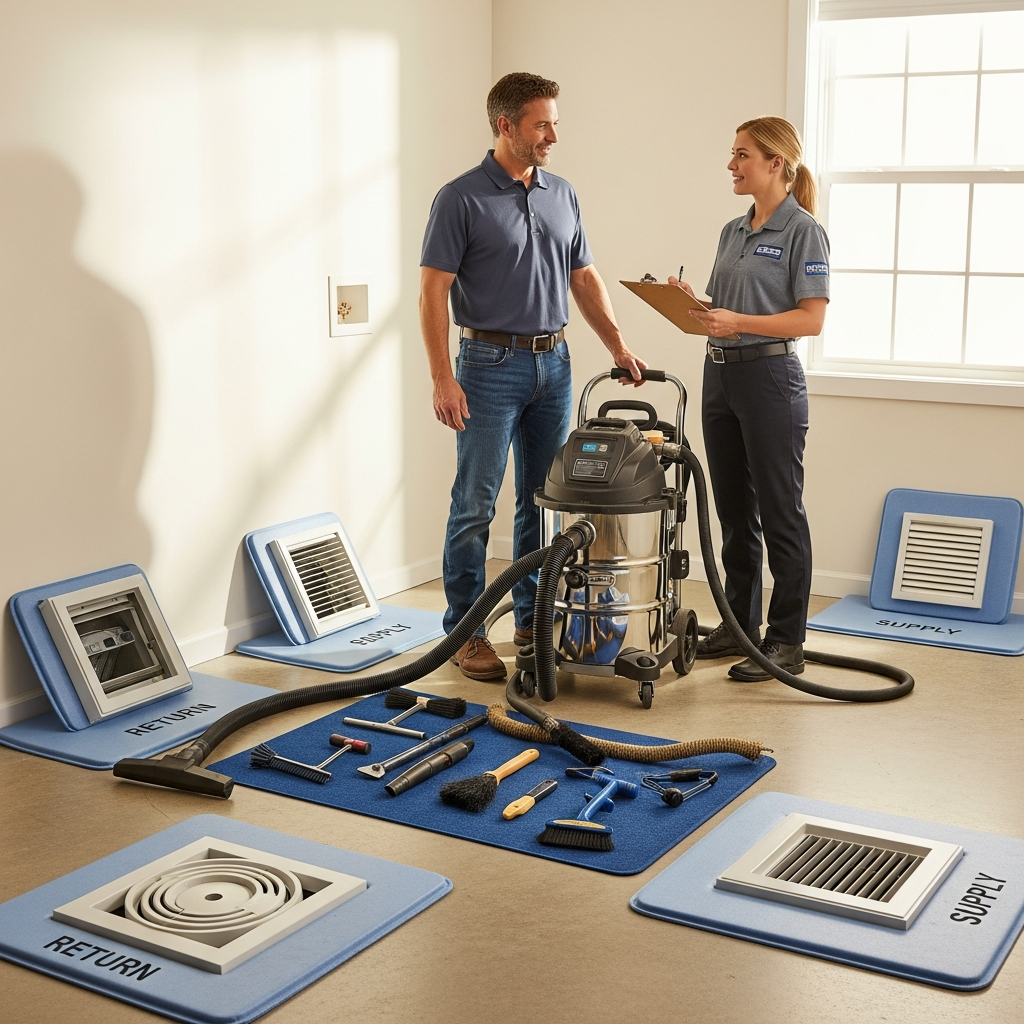
- Protective coverings should be placed in work paths and near returns.
- Registers and returns should be identified and, where helpful, labeled.
- Technicians should explain where equipment will be set up and how vents will be sealed.
System Assessment Checklist
- Air handler, blower compartment, and accessible coil housings inspected.
- Filter housing checked for bypass gaps or misfits.
- Duct material and condition noted (flex, metal, or a mix) to match tool choice.
- Any visible moisture or disconnections reported before proceeding.
Negative Pressure and Containment
- High-powered vacuum connected to trunks or returns to create negative pressure.
- Vents sealed to concentrate suction and prevent dust escape.
- Doors managed to balance ventilation and security during service.
Agitation and Source Removal
- Rotary brushes or air whips used carefully in each branch.
- Flexible ducts handled gently to avoid damage.
- Agitation proceeds methodically, not skipping tight or awkward runs.
- Debris captured continuously through strong filtration.
Component Cleaning
- Blower compartment addressed where safely accessible.
- Plenum areas and filter housing cleaned to reduce recontamination.
- Registers and return grilles cleaned and reattached properly.
Quality Verification
- Before-and-after photos captured where visibility allows.
- Technicians perform a brief system run to listen for unusual noises.
- Final walkthrough to review results and answer questions.
Post-Service Guidance
- Recommendations for filter type and change intervals based on findings.
- Notes on any duct leaks, gaps, or insulation issues observed.
- Suggested timing for future maintenance aligned with your household’s activity.
Why Checklists Work for Elizabeth Homes
Local conditions—from coastal particulates to seasonal pollen and winter heating—introduce a variety of debris into ductwork. A detailed checklist ensures that the approach stays consistent even as technicians adapt to different layouts. It also provides homeowners with a transparent way to confirm that the essentials were completed.
Room-by-Room Tips
- Living areas: Move small furniture away from vents and lift area rugs if possible.
- Kitchens: Note any vents near cooking areas where grease particles may collect.
- Bedrooms: Pay attention to return grilles that gather dust from fabric fibers.
- Basements: Identify utility rooms or open areas where returns draw in heavier dust.
- Attics: If ducts run overhead, ask how access will be managed safely.
Common Mistakes to Avoid
- Skipping return ducts, which often accumulate debris faster than supplies.
- Neglecting the blower compartment, allowing dust to recirculate.
- Rushing agitation, leaving pockets of buildup in longer branches.
- Failing to seal vents during cleaning, which can spread dust indoors.
- Overlooking simple fixes like filter bypass gaps that undo good work.
Midpoint Reminder: Documentation is Your Friend
Photos and a concise summary of what was cleaned provide peace of mind and a baseline for future maintenance. When results are documented and explained, it is easier to plan filter changes and address minor issues before they become larger concerns. Many Elizabeth homeowners keep a simple binder with photos, dates, and notes, adding each service record alongside periodic air duct cleaning and HVAC inspections.
Seasonal Considerations
- Winter: Increased runtime means more airflow through ducts; plan cleaning before peak heating.
- Spring: Pollen can settle inside returns; combine cleaning with a fresh filter.
- Summer: Humidity can influence condensation in unconditioned spaces; watch for musty odors.
- Fall: Prepare before heating season and after any late-summer renovation projects.
Frequently Asked Questions
Q: How long should the checklist-based process take? A: It depends on system size and contamination. The goal is completeness, not speed, and thorough documentation at the finish.
Q: Do I need to leave my home during service? A: Typically no. Noise is expected, but with proper containment, dust should not spread. Sensitive individuals may prefer to step out briefly.
Q: Are chemicals or sealants necessary? A: Mechanical source removal is the foundation. Any additional treatments should be explained and only used with your consent.
Q: Will the process damage flexible ducts? A: Not when performed with compatible tools and a gentle approach. Ask how the team adapts to different materials.
Q: How often should the checklist be repeated? A: Interval depends on pets, renovations, and household activity. Use findings to set a practical schedule.
Q: What if technicians find disconnected ducts or heavy debris? A: Expect clear communication about options. Some issues may require separate repair services.
After the Appointment: Keep Results Longer
- Replace or clean filters on schedule to reduce buildup.
- Vacuum registers periodically and keep returns free of obstructions.
- Seal visible gaps around register boots and utility penetrations.
- Coordinate future cleanings after major projects that create dust.
- Track airflow room by room and note improvements or changes.
Peace of Mind Through Process
A checklist gives you a transparent way to confirm that your system received careful, comprehensive attention. It also empowers you to ask the right questions and to maintain gains with good filtration and simple upkeep.
Make Your Next Step Count
Choose a provider that follows a clear checklist, respects your home, and explains results in plain language. With preparation, documentation, and follow-through, you can protect your investment and breathe easier in every season.
When you are ready to move forward, schedule professional air duct cleaning with a qualified local team so your home stays comfortable and your HVAC runs smoothly.
