Step-by-Step Air Duct Cleaning in Elizabeth, New Jersey
Understanding how the process works helps you set expectations, prepare your home, and evaluate results. In Elizabeth, where homes range from historic properties to modern townhouses, the approach to thorough air duct cleaning follows consistent fundamentals while adapting to unique layouts. From the initial walkthrough to final verification, a well-executed service protects your home, clears debris from supply and return paths, and helps your HVAC system breathe easier. In this guide, you will find a detailed sequence of each phase so you can confidently book air duct cleaning and know what to look for on service day.
Phase 1: Pre-Visit Planning
The process begins before technicians arrive. During scheduling, the team should ask about your home’s size, number of vents, recent renovations, pets, and any airflow imbalances or odors. They will also discuss parking, elevator access in multi-unit buildings, and protective measures for floors and furnishings. These details allow the crew to bring the right tools and allocate adequate time.
Phase 2: Arrival and Home Protection
On service day, technicians introduce themselves, confirm the scope, and walk through the areas to be cleaned. Expect protective coverings to be placed where needed, such as high-traffic paths, near return grilles, and around the air handler. Registers and returns are identified and, when appropriate, labeled. Doors may be gently closed to manage airflow and contain any incidental dust.
Phase 3: System Assessment
Before starting, the team evaluates the air handler, blower compartment, accessible coils, and filter housing. They look for signs of disconnected ducts, heavy debris, or moisture. If unusual issues are found, they explain options and, when necessary, adjust the scope.
Phase 4: Establishing Negative Pressure
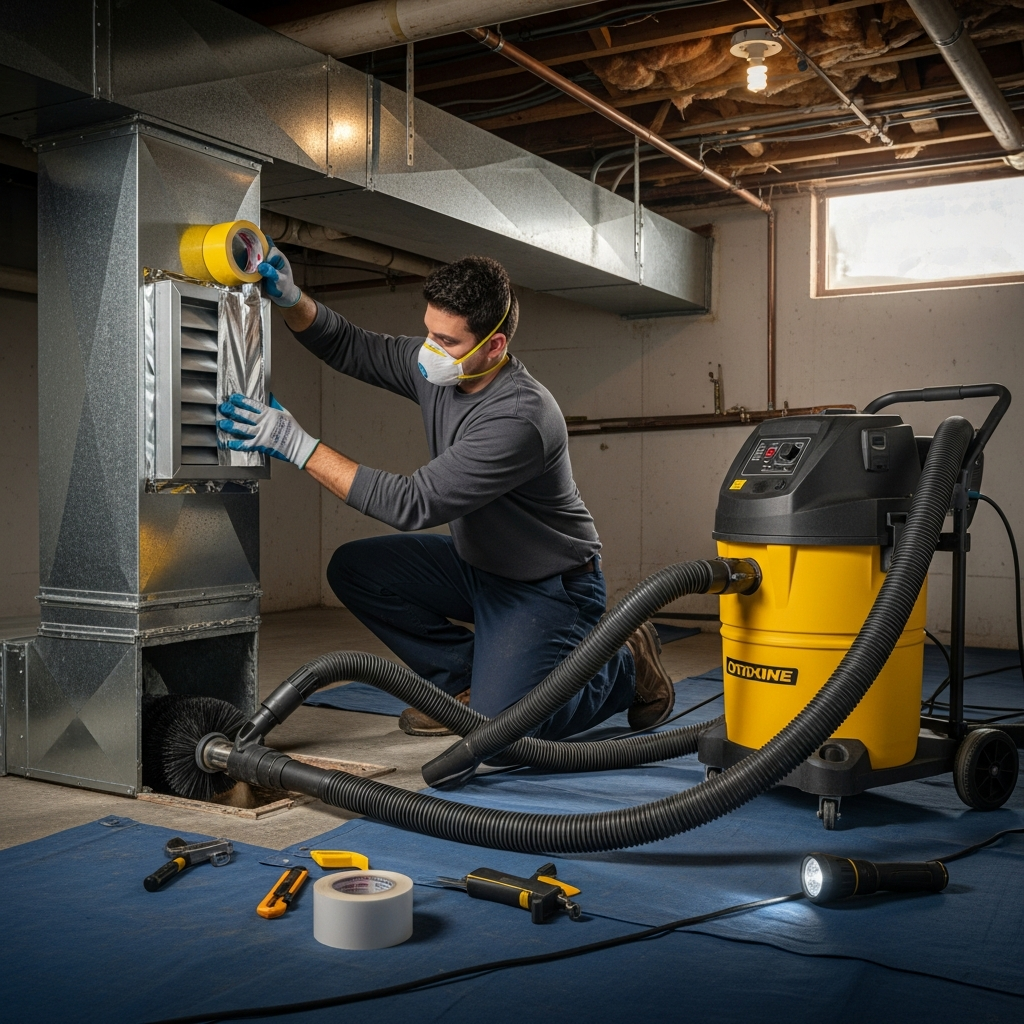
High-powered vacuum equipment is attached to the main trunk lines or returns to create negative pressure, pulling loosened debris toward filtration rather than into living spaces. Vents are sealed as needed to maintain strong suction and prevent dust from escaping during agitation.
Phase 5: Mechanical Agitation
Inside each branch and trunk, technicians use rotary brushes, air whips, or similar tools to dislodge buildup. This step is methodical, moving from one run to the next. Care is taken with flexible ducts to avoid damage, and specialized tools are used for metal ducts with heavy deposits. The goal is to free debris without scratching or tearing interior surfaces.
Phase 6: Source Removal and Capture
As debris is loosened, the vacuum’s filtration captures particulates. HEPA filtration is used in many residential settings, especially where sensitive occupants are present. This continuous capture ensures that dust leaves the duct system rather than entering rooms.
Phase 7: Blower Compartment and Plenum Areas
Where safely accessible, the blower compartment is cleaned to remove dust that could quickly re-enter ducts. Plenum areas and filter housings are addressed to complete the circuit and minimize recontamination. Any removable panels are reinstalled and sealed properly.
Phase 8: Registers, Returns, and Finishes
Registers and return grilles are cleaned and reattached with care. Technicians confirm that each vent is secure and that the surrounding wall or floor area is tidy. This attention to detail contributes to both performance and appearance.
Phase 9: System Check and Photos
To verify results, the team documents before-and-after conditions where visibility allows. They may briefly run the system to confirm airflow and ensure no unusual sounds indicate loose components. You should receive a summary of findings with images for your records.
Phase 10: Post-Cleaning Guidance
Before leaving, technicians review maintenance tips, such as filter selection and change intervals. They may also suggest sealing or insulating obvious problem areas to reduce future dust intrusion and improve efficiency.
How the Elizabeth Climate Shapes the Process
Local weather patterns influence both debris type and access strategy. Winter heating drives more airflow through ducts, while summer humidity can promote condensation in unconditioned spaces. Technicians who work regularly in Elizabeth understand how these conditions affect returns in basements, utility rooms, or attics and plan containment accordingly.
Timeframes and Variables
Service duration depends on the number of supply and return runs, the complexity of trunk lines, contamination level, and access. Homes with extensive renovations or heavy pet dander may require additional agitation time. Clear communication up front helps set realistic expectations for start and finish times.
Homeowner Preparation Checklist
- Clear pathways to vents and the air handler.
- Identify parking or loading areas.
- Secure pets and discuss any noise sensitivities.
- Note rooms with dust or odor concerns.
- Gather recent HVAC service records and filter types used.
Quality Indicators During Service
- Protective coverings placed before equipment is brought inside.
- Vents sealed during agitation to maintain strong suction.
- Methodical progression through each run, not skipping hard-to-reach areas.
- Careful handling of flexible ducts and access panels.
- Final cleanup and a walkthrough with photos.
Midpoint Reminder: What You Should Hear and See
Throughout the visit, you should hear clear explanations, see careful handling of components, and notice that dust is being captured rather than spread. A provider that emphasizes negative pressure, containment, and documentation is prioritizing your home’s health. If you decide to schedule recurring maintenance, align it with filter changes and seasonal HVAC checkups so that air duct cleaning remains a strategic, not reactive, part of your plan.
Common Questions from Elizabeth Homeowners
Q: Will cleaning help with specific room hot or cold spots? A: It may improve balance if debris was restricting airflow, though duct design and damper settings also play roles. Technicians can point out adjustments to consider.
Q: Do I need special filters after cleaning? A: Use filters that match your system’s recommended MERV rating. Too high a rating can strain some equipment; the right choice captures particulates without impeding airflow.
Q: Is chemical treatment necessary? A: Mechanical source removal is the foundation. Additional treatments are situational and should only be used with clear justification and consent.
Q: How often should I schedule service? A: Frequency varies. Homes with pets, renovations, or sensitive occupants may benefit from more frequent attention. Use documented findings to set intervals.
Q: Can townhomes or condos be done without truck access? A: Yes. Portable HEPA systems and creative access strategies allow effective cleaning in multi-unit settings. Coordination with building management helps.
Q: Will the process damage my ducts? A: When performed correctly with compatible tools and techniques, it should not. The team should explain how they handle different duct materials.
After the Cleaning: What to Expect
Homeowners often notice less dust on surfaces between cleanings, a fresher smell when the system starts, and more consistent airflow. Keep track of filter changes and note any rooms that improve markedly; this information helps refine your maintenance plan.
Elizabeth-Specific Tips for Lasting Results
- Check basement and attic access doors for gaps that draw in dust.
- Use door sweeps and weatherstripping to reduce infiltration in older homes.
- Coordinate cleaning after major renovations to capture drywall or sawdust.
- Consider humidity control to limit condensation in shoulder seasons.
- Vacuum registers periodically to maintain a tidy appearance between visits.
From Start to Finish, A Predictable, Professional Experience
With a clear process, you can anticipate each step and feel comfortable asking questions along the way. The best outcomes come from a partnership—technicians who respect your home and homeowners who prepare thoughtfully and maintain good filtration practices.
Take the Next Step
If you are planning a home refresh, moving into a new space, or simply want to reduce dust and improve airflow, choose a reputable local provider. Book a date when you can be present for the walkthrough and final photos, and keep your notes for future reference.
To help your HVAC operate smoothly and to support cleaner indoor air, schedule professional air duct cleaning and enjoy the peace of mind that comes with a detailed, documented process from start to finish.
