Understanding Air Duct Cleaning in Elizabeth, New Jersey: A Value-Focused Guide
When Elizabeth homeowners and property managers research air duct cleaning, the first thought often centers on budget and value. While the topic of dollars naturally comes to mind, the smartest way to plan is to understand what drives a thorough job and how to compare service quality. This guide explains the factors that shape a complete, professional result without focusing on numbers. If your goal is a healthier home, steady airflow, and a reliable HVAC, a reputable team that specializes in air duct cleaning can help you achieve those outcomes with clarity and confidence.
Elizabeth’s homes range from historic properties to newer townhomes and multi-unit buildings. That diversity means no two duct systems are alike, and the work involved can vary significantly. By learning which elements affect the scope—such as accessibility, contamination levels, and system layout—you can evaluate proposals on more than a headline offer and choose the approach that delivers lasting results.
What Shapes the Scope of a Complete Cleaning
A methodical cleaning addresses every pathway that moves air. The more comprehensive the scope, the more meaningful the results for indoor air quality and HVAC performance.
- System Layout: Long or complex runs, multiple trunks, or split systems add steps and time.
- Accessibility: Tighter attics, crawlspaces, or concealed returns require careful setup and protection.
- Contamination Level: Dust, renovation debris, pet dander, or signs of moisture can expand the work plan.
- Component Attention: Responsible teams inspect blower compartments, accessible coil housings, and registers.
- Documentation: Before-and-after photos or video confirm the full system was addressed.
Comparing Proposals Without Getting Lost in Details
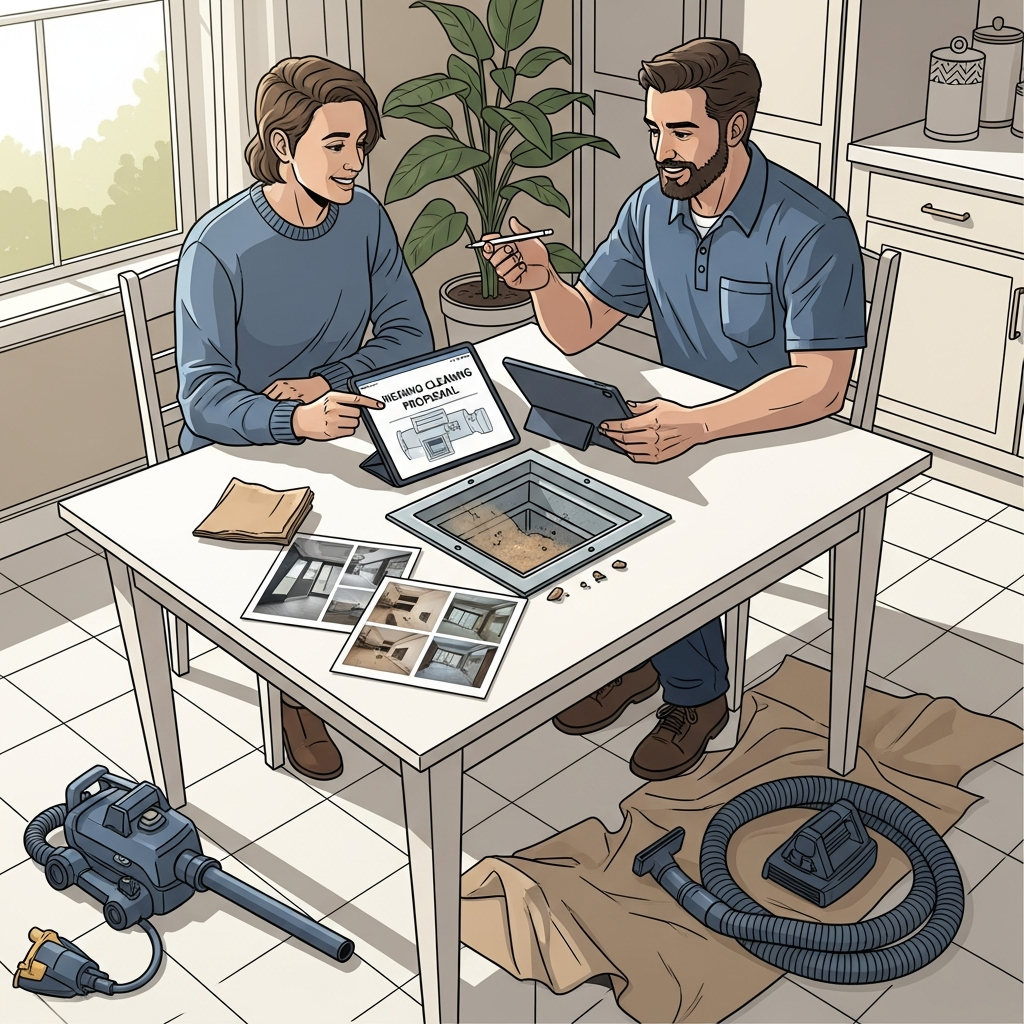
Instead of fixating on a single line item, compare proposals on clarity and completeness. Look for an outline of every ducted section included, the cleaning method, and the protective steps taken inside your home. The best proposals are transparent and teach you something about your system.
- Ask which supply and return lines will be cleaned and whether main trunks and plenums are included.
- Confirm whether registers are removed and reinstalled and how they will be cleaned.
- Review the tools and techniques used for agitation and debris collection.
- Discuss how containment protects furnishings and how dust is prevented from re-entering the living space.
- Request a post-cleaning summary with photos or video to verify results.
Quality Indicators to Prioritize
Quality does not rely on a single promise; it is a pattern of professional habits and safeguards. When you interview providers, evaluate how they handle the following:
- Preparation: Floor coverings, register protection, and thoughtful equipment placement.
- Communication: A clear explanation of what will be cleaned and how.
- Thoroughness: Attention to all accessible ductwork and main components linked to airflow.
- Respect for Your Home: Care with walls, trim, furniture, and personal items.
- Evidence: Visual proof of completed work and useful recommendations for maintenance.
Elizabeth-Specific Considerations
The local environment influences how quickly ducts accumulate debris. Ports, highways, and seasonality mean more particulates and pollen at different times of year. For homes near high-traffic areas, a stronger filter strategy and regular housekeeping around returns can help preserve results between cleanings. For older properties, technicians may recommend sealing joints or insulating runs in basements or attics to reduce dust infiltration.
Mid-Process Insight: Balancing Thoroughness and Convenience
When you are midway through your research, weigh convenience against thoroughness. A well-planned visit minimizes disruption and still addresses the full system. If you are unsure, ask a prospective provider to walk you through their process for air duct cleaning in a home like yours. Their explanation will tell you a lot about their experience and approach.
How to Read the Fine Print Without Guesswork
Clarity is your best protection against confusion. Ensure the scope is written down in plain language. If a provider uses unfamiliar terms, ask them to define those terms and show where each component sits in your system. Your goal is to leave the conversation understanding how every section will be accessed, agitated, and cleaned, and what proof you will receive afterward.
Preparing for the Appointment
- Clear 3–5 feet around registers and returns.
- Secure pets and move fragile items from work areas.
- Share any known problem areas such as rooms with weak airflow or persistent dust.
- Identify any recent remodeling or drywall work that might have introduced debris.
- Have your current filters on hand so technicians can advise on the right replacement schedule.
What a Complete Visit Looks Like
On arrival, technicians should map your system and set protective coverings. They will remove registers, connect collection equipment, and methodically work through each run with mechanical agitation tools. Debris is drawn to a sealed collection device, keeping your living spaces clean. Once finished, they will reinstall registers and provide documentation that highlights the improvements made.
Maintaining Results After Cleaning
- Use well-fitted filters suited to your system and lifestyle.
- Vacuum registers and returns as part of regular cleaning routines.
- Keep supply registers unblocked to maintain balanced airflow.
- Monitor humidity, especially in basements and attics, to discourage microbial growth.
- Schedule periodic HVAC checkups to keep components clean and running efficiently.
Frequently Asked Questions
How do I know my ducts need attention? Signs include persistent dust, seasonal odors, visible buildup on registers, or inconsistent airflow. Post-renovation homes also benefit from cleaning.
Will a cleaning damage my ducts? Not when performed with the proper tools and techniques. Professionals size their equipment to your duct material and layout.
Does cleaning help with energy use? Clean pathways allow air to move more freely, supporting the system’s efficiency. This can contribute to steadier comfort.
Is it messy? With proper containment and collection, the process is controlled and tidy. Reputable teams protect your home from start to finish.
How long does it take? Timing depends on system size, accessibility, and the level of buildup. Your provider can outline what to expect for your property.
What about disinfecting? It is considered on a case-by-case basis. A trustworthy technician will explain when it is useful and when a standard source-removal cleaning is sufficient.
Make a Confident, Informed Choice
When you focus on clarity, completeness, and documented results, you end up with an outcome that supports cleaner air and smoother airflow. If you are ready to partner with a team that delivers a thorough, carefully managed service, schedule professional air duct cleaning and take the first step toward a fresher, more comfortable home in Elizabeth.
