Introduction
Kitchens in Elizabeth, New Jersey are as diverse as the neighborhoods themselves, from modern condos to early 20th-century homes with uniquely routed ducts. Regardless of your home’s layout, the kitchen exhaust hood plays a vital role in removing smoke, heat, moisture, and airborne grease created during cooking. This homeowner-focused guide explains how your system works, what you can DIY with confidence, what should be left to trained technicians, and how to plan a year-round maintenance routine that keeps the air fresh and your appliances running efficiently. If you want a picture of what a complete service looks like before you begin, it helps to review standards for kitchen exhaust hood cleaning so you can compare your own results with professional benchmarks.
Effective ventilation makes the kitchen more comfortable, protects walls and cabinets from sticky films, and can even reduce the time you spend cleaning countertops. When grease accumulates, airflow drops, the fan works harder, and odors linger longer than they should. By understanding a few fundamentals and adopting a simple schedule tailored to your cooking habits, you can extend the life of your hood, filters, and fan while improving day-to-day indoor air quality.
How Your Exhaust System Works
The hood canopy captures rising vapors and steam. Baffle filters slow and collect grease droplets, allowing cleaner air to pass into the plenum and then the duct. The duct transports air outdoors, where a fan pulls the stream efficiently. Some homes in Elizabeth have long or complex duct runs, especially where kitchens were relocated during renovation. Longer ducts require a bit more vigilance because they collect residue in elbows and slow spots, which can reduce performance faster than short, straight runs.
Makeup air is another factor. When an exhaust system pulls air out, fresh air must enter to replace it. In drafty older homes, natural leakage often suffices. In tighter homes or in winter when windows are closed, the hood may struggle if there is not enough makeup air. Running the fan for a minute before cooking and cracking a window slightly can improve capture and reduce smoke drifting into adjacent rooms.
The Benefits of Routine Cleaning
Regular maintenance preserves airflow, which lowers noise and energy use by reducing the workload on the motor. Clean filters and a clean plenum also trap grease more effectively, preventing sticky films from settling on cabinets and ceilings. A clean hood reduces odors that might otherwise carry into living spaces and linger in fabrics. Perhaps most importantly, removing accumulations from the duct and fan helps maintain safe operation by minimizing ignition sources.
From an aesthetic standpoint, polished stainless or painted finishes look better and are easier to wipe between deep cleanings. Grease haze attracts dust, turning smears into stubborn grime—especially during humid New Jersey summers. Stay ahead of it with consistent attention to the parts you can reach easily.
What You Can Do Yourself
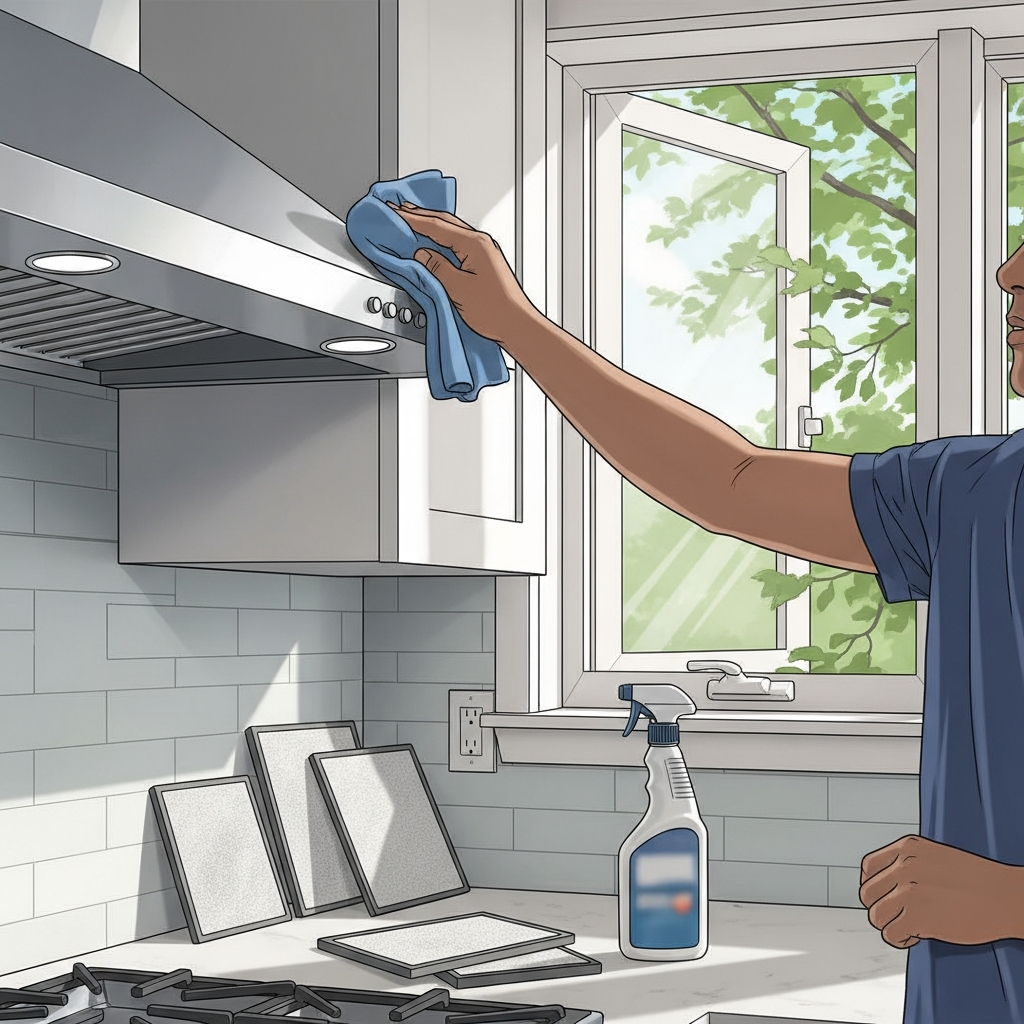
Homeowners can confidently handle several important tasks. Washing baffle filters in hot, soapy water or a mild degreaser every few weeks is the single most impactful step you can take. Wiping the interior of the hood and the plenum while the filters are out will keep residues from building up. Cleaning the underside edges, controls, and nearby backsplash maintains a tidy appearance and prevents grime from migrating back into the hood during use.
If your installation provides safe access to a small section of duct through a cleanout panel, you can wipe that area periodically. However, be careful not to introduce excess liquid that could pool in inaccessible sections. For the rooftop or exterior fan, only proceed if you are comfortable with ladder safety and weather conditions. Many homeowners prefer to leave fan and full-duct cleaning to professionals due to access, tools, and the need to protect electrical components.
When to Call a Professional
Consider bringing in a pro if your duct is long or winding, if the fan is difficult to reach, or if you notice heavy grease deposits that persist after normal cleaning. Strong vibrations, clanking noises, or obvious wobble indicate a fan issue that can lead to premature failure. Water leaks around the fan curb or roof penetration also require trained attention to prevent damage to the roof assembly. Finally, if you operate a home-based food business, your cleaning interval should be more frequent and comprehensive than for typical household cooking.
Professional service includes complete degreasing of the hood interior, baffles, ductwork, and fan assembly, followed by careful rinsing, drying, and reassembly. Technicians also check for airflow balance, damper movement, and terminations free of obstructions such as lint, leaves, or birds’ nests. Documented service helps you track performance and provides peace of mind during peak cooking seasons and family gatherings.
Setting a Practical Cleaning Schedule
Your perfect schedule depends on how and what you cook. As a starting point, wash filters every two to four weeks if you sauté or pan-fry regularly. Deep clean the hood interior every two to three months, and have the duct and fan serviced every six to twelve months depending on mileage. Households that mostly bake or steam can stretch these intervals modestly. During summertime, when humidity makes surfaces tacky, add a light mid-season wipe to stay ahead of films.
Keep a simple log. Note the date, what you cleaned, and any observations such as a new rattle or a slightly slower draw at the hood entrance. Over time, this record helps you fine-tune frequency and anticipate parts replacement like worn baffles or fan belts on older systems.
Choosing Safe and Effective Cleaners
Select degreasers labeled safe for stainless steel or aluminum depending on your filters and hood finish. Avoid harsh abrasives that scratch and create places for grime to cling. High-alkaline products can be powerful but may dull aluminum if misused; always follow label guidance. Microfiber cloths and non-scratch pads provide good friction without damage. Rinse with hot water and dry thoroughly to prevent water marks, especially on stainless.
Ventilation while cleaning matters. Open a window slightly or run a small portable fan to keep fumes from concentrating. Store cleaners safely away from heat and children, and never mix products. If you are sensitive to odors, choose low-VOC options designed for kitchens.
Step-by-Step Home Cleaning Process
Start by switching off power to the hood at the breaker. Remove light bulbs or protect them to avoid breakage. Slide out the baffle filters and place them in a sink or tub with hot water and a suitable degreaser. While they soak, spray the interior plenum and the underside of the hood with cleaner, letting it dwell to loosen heavy films. Wipe from top to bottom, paying special attention to seams and riveted joints where residue collects.
Rinse with clean, hot water by wiping repeatedly with damp cloths until no grease smears remain. Dry with fresh towels. Rinse and inspect the filters; if needed, repeat the soak. Allow them to air-dry fully before reinstalling to maintain airflow. Polish external surfaces and controls with a gentle cleaner. When everything is dry, restore power and test the fan at each speed, listening for smooth, even operation.
Improving Capture and Reducing Odors
Small habits enhance performance. Turn the fan on a minute before cooking so the air stream is established. Use lids and back burners when possible to place vapors closer to the capture zone. Keep the hood height and setback as recommended by the manufacturer, and avoid moving portable appliances too close to the intake where they could block flow. After high-odor meals, run the fan a few extra minutes to clear residual smells and moisture.
If odors return quickly even after cleaning, reassess your filter schedule and check the exterior termination for sticky residue or lint. In older Elizabeth homes with shared vent chases from past renovations, ensure your hood vents directly outdoors rather than into an attic or crawl space. Proper termination is critical for performance and moisture control.
Midyear and Seasonal Considerations
In winter, closed windows and dryer operation can create negative pressure that fights the exhaust flow. Slightly opening a nearby window during high-heat cooking helps the hood capture better. In summer, increased humidity makes films tackier; clean more frequently or use a final wipe with a mild detergent after degreasing to remove residual soap. After large gatherings or holiday cooking, plan a quick inspection to reset your baseline.
For homes near busy roads, particulate matter can combine with kitchen grease films, making surfaces dull. Regular polishing and filter washing curb this effect. If your hood has a charcoal filter in a recirculating setup, replace it per manufacturer guidelines; note that recirculating hoods capture odors but do not remove moisture as effectively as ducted systems.
Costs to Avoid and Value to Gain
While this guide does not discuss pricing, it is worth noting the hidden costs of neglect: louder fans, premature motor wear, persistent odors, and more time spent wiping surrounding surfaces. Routine attention spreads small efforts over the year, saving larger efforts later. Clean ventilation supports a calmer, more pleasant kitchen, especially in open floor plans where cooking spaces and living areas flow together.
Another value point is property care. Documented maintenance is attractive to future buyers who care about functional, efficient kitchens. Keeping manuals, filter sizes, and service dates in a folder makes ownership easier and shows stewardship of the home’s systems.
Comparing DIY Results with Professional Standards
As you refine your routine, it can be helpful to compare your outcomes with what trained technicians deliver. Look for streak-free, residue-free metal surfaces inside the hood, filters that are visibly clean and drain properly, quiet and balanced fan operation, and exterior terminations free of sticky films. If you want additional perspective, review best practices associated with kitchen exhaust hood cleaning so you can gauge when a pro visit would add value or simply confirm that your methods meet a high standard.
Frequently Asked Questions
How often should I wash my baffle filters? Every two to four weeks for frequent frying or sautéing; monthly or a bit longer for lighter cooking. If a filter feels sticky or airflow seems reduced, it is time to wash.
Is it safe to clean the fan myself? Only if you have secure access, the right tools, and the confidence to reassemble correctly. Many homeowners choose professional help for the fan and full duct to avoid roof and electrical risks.
What cleaners are best for stainless steel? Use degreasers labeled safe for stainless and follow with a gentle polish to remove water marks. Avoid steel wool, which scratches and makes future cleanings harder.
Why does my kitchen still smell after cleaning? Check the exterior termination for residue, ensure filters are dry and properly oriented, and consider airflow balance with a slightly open window during cooking.
Can I run the hood during winter without opening a window? Yes, but if you notice poor capture or backdrafts, introduce a small source of makeup air to help the system perform.
Putting It All Together
Homeowners in Elizabeth can achieve excellent results with a thoughtful plan that includes filter washing, periodic deep cleaning of accessible hood sections, and seasonal checks of airflow and terminations. Balance DIY effort with professional help for high or complex areas, and keep simple records so you can adapt to your family’s cooking patterns. Treat the hood like any other essential appliance—regular care yields quieter operation, faster smoke capture, and a fresher home.
Book Service and Keep Your Kitchen Fresh
If you are ready for a top-to-bottom clean, want help with long ducts or rooftop fans, or simply prefer a hands-off experience with documented results, connect with a trusted local provider and schedule a convenient appointment. You can review what to expect from comprehensive kitchen exhaust hood cleaning and choose the level of support that fits your household’s needs and cooking style.
