Professional Dryer Vent Installation Services in Elizabeth, New Jersey
When performance, safety, and code compliance matter, choosing professional dryer vent installation services in Elizabeth, New Jersey is the smart move. Experienced installers bring deep knowledge of building materials, local housing styles, and inspection expectations to every job, whether your laundry sits in a cozy Elmora basement or a compact Midtown apartment closet. From the first assessment to final airflow testing, working with experts in professional dryer vent installation helps ensure your system is efficient on day one and easier to maintain for years.
It is not enough to simply connect a hose and point it outside. The difference between a hastily assembled vent and a purpose-built system shows up every time you run a load. Shorter drying times, lower appliance temperatures, and reduced lint accumulation all trace back to correct routing, smooth-wall metal ducting, and well-sealed joints. For families juggling work, school, and activities, improved efficiency means more time saved and less frustration with back-to-back cycles that never seem to finish.
Why Rely on a Professional in Elizabeth
Elizabeth’s housing stock includes everything from early 20th-century homes to newer townhomes near The Mills at Jersey Gardens. Each building comes with its own constraints, such as brick or stucco exteriors, tight joist bays, or shared chases in multi-family properties. A professional understands how to plan around those obstacles, select the right tools for clean penetrations, and protect finishes during coring or drilling. Just as importantly, they know how to seal the installation against the region’s weather, preventing drafts and moisture intrusion.
Consider the challenges in a garden-level unit compared to a split-level house in Elmora Hills. Garden units may require careful waterproofing at penetrations, while split-levels often offer clearer side-wall routes that reduce overall equivalent length. Matching the method to the home style is a hallmark of professional work, and that tailored approach pays dividends in performance and long-term reliability.
Materials and Methods That Make a Difference
The hallmark of a great installation is smooth, rigid metal ducting with properly sealed joints. Professionals avoid long runs of flexible or thin foil ducting that sag and trap lint. They also evaluate route length and elbow count to stay within the dryer’s manufacturer limits. Whenever possible, they choose short, straight paths to the outdoors that allow the dryer to move air efficiently. These fundamentals help protect motors, heaters, and safety sensors from undue stress, while maintaining the throughput needed for heavy laundry days.
Exterior terminations deserve just as much attention. The termination hood should include a backdraft damper that opens freely during operation and closes when the dryer is off, preventing pests and cold air from entering. No screens should be installed at the vent hood because screens catch lint and can lead to blockage. Finally, flashing and sealant help prevent water from sneaking behind siding or brick faces—a critical step for New Jersey winters and spring rains.
A Step-by-Step Look at the Service
Professional service begins with a thorough evaluation of your home and appliance. Installers check the dryer’s location, potential route options, and any existing ductwork that can be reused safely. They measure room for clearances, verify make-up air considerations, and plan a route that minimizes elbows and total length. Once a route is finalized, crews protect nearby areas, then drill or core the exterior penetration with the appropriate bit, capturing dust where practical.
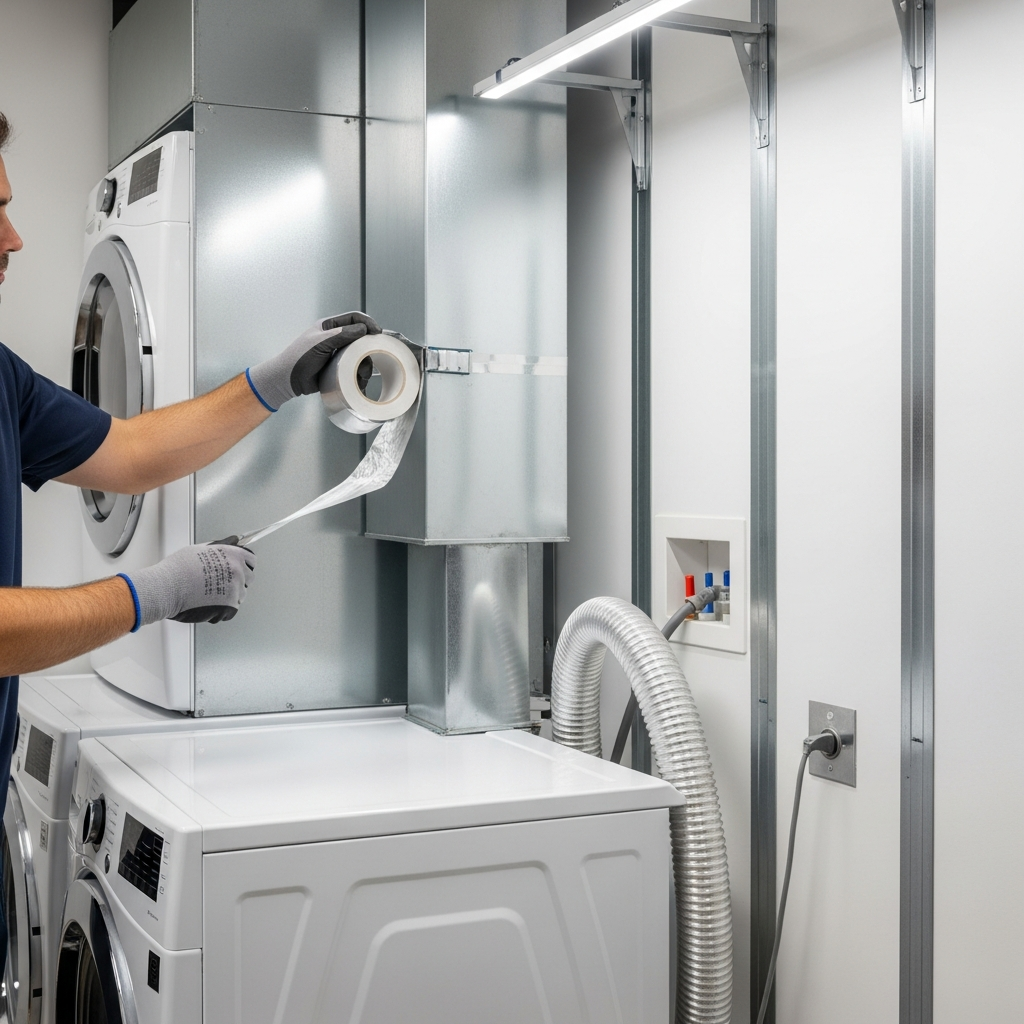
After the penetration, they assemble the duct run, orienting joints with airflow, and securing each connection with heat-rated metal foil tape or appropriate fasteners. Support hangers or straps keep the duct aligned and prevent sagging. The crew then mounts the exterior hood with an integrated damper, applies sealant, and reconnects the dryer using a short, UL-listed transition. The job concludes with airflow testing and checks to confirm the damper opens easily and the dryer reaches expected exhaust velocity.
Common Problems Solved by Pros
Professionals routinely fix long-standing issues such as excessive dry times, scorching laundry room temperatures, and persistent lint around the dryer or exterior hood. They replace hazardous materials like plastic vents and long, crushed foil connectors. They also address improper terminations—such as vents terminating into attics, garages, or crawlspaces—which can cause moisture problems, mold growth, and elevated fire risk. When a vent route is overly long or obstructed by framing, pros can often re-route or, if allowed by manufacturer and code, recommend approved solutions that restore airflow.
Midway through your planning, it is wise to compare options and confirm you are on track. If your goal is clean, safe, and durable performance, selecting a trusted provider for dryer vent installation ensures your system is built to standard, tested for airflow, and ready for the demands of daily life in Elizabeth.
Maintenance and Long-Term Care
Even the best installations need maintenance. Lint accumulation is inevitable, and cleaning intervals depend on laundry volume, vent length, and the number of elbows. Professionals often recommend annual or semiannual service for busy homes, with more frequent checks for large families or properties with pets. During maintenance visits, technicians remove lint from the entire run, verify the condition of the transition, and ensure the exterior hood operates smoothly. Proactive care extends dryer life and helps hold down energy use over time.
Homeowners can also adopt simple habits to protect their system between cleanings. Always clean the lint screen before each load, avoid overstuffing the dryer, and ensure the appliance is not pushed back so far that it crushes the transition. It also helps to glance at the exterior hood periodically; if the damper sticks or lint accumulates around it, schedule service promptly. These small steps support the professional work done during installation and keep the system performing at its peak.
Frequently Asked Questions
Q: What makes professional installation different from a DIY setup? A: Professionals bring deep experience, specialized tools, and a code-informed approach. They plan efficient routes, use rigid metal ducting, seal joints correctly, and verify airflow—details that are easy to overlook but central to performance and safety.
Q: How long does installation take? A: Many single-family installations finish in a few hours, depending on access and wall materials. Multi-family properties or complex routes may require additional time for planning and coordination with building management.
Q: Are there specific codes I should know about? A: Yes. While guidelines vary by jurisdiction and building type, common rules include smooth-metal ducting, limits on total equivalent length, and a prohibition on screens at the termination. A professional will translate those rules into practical choices for your home.
Q: How often should I schedule cleaning after a new installation? A: Many households benefit from annual cleaning, but usage, pets, and vent complexity may warrant more frequent service. Your installer can recommend a schedule based on your setup and laundry habits.
Q: Can the dryer be relocated to improve venting? A: In some cases, relocating the dryer or flipping its orientation can dramatically shorten the route. A professional can evaluate feasibility, costs outside the scope of venting, and potential impacts on plumbing or electrical connections.
Elizabeth’s Neighborhoods and Building Types
From historic homes in Peterstown to new construction closer to Route 1&9, dryer vent installations must adapt to different exteriors, attic spaces, and wall assemblies. Brick and stucco demand precise drilling and sealing. Vinyl siding needs careful flashing to prevent water intrusion. Multi-family buildings often require coordination to access shared spaces or to route vents safely to the outdoors. Working with a team experienced across these scenarios helps minimize disruption and protect finishes during the project.
Professional installers also understand how Elizabeth’s climate affects performance. Cold snaps can stiffen poorly supported ducts or freeze dampers that are not installed correctly. Spring rains test the quality of exterior sealing. Hot summers can expose sagging or crushed transition lines as indoor temperatures rise. Building for the full range of seasons is a hallmark of professional-grade work.
Take Control of Laundry Performance
An expertly installed system turns laundry from a chore into a routine you can count on. Faster cycles, less heat buildup, and reduced maintenance worries all flow from proper planning and craftsmanship. If you are tired of re-running loads or dealing with lingering humidity in your laundry area, it is time to consider a comprehensive solution.
Start Your Project with Confidence
When you are ready to streamline your laundry routine and improve safety, work with a local team that understands Elizabeth homes. Schedule a consultation and get a clear plan for materials, routing, and maintenance. For dependable results from day one, choose trusted experts offering comprehensive dryer vent installation services. You will gain a system tailored to your space, tested for performance, and supported by guidance you can rely on for the long run.
