Introduction
Your home kitchen should be a place of comfort, creativity, and connection. Yet every sauté, sear, and roast releases grease-laden vapors that travel into the hood filters and ductwork above your cooktop. Over time, these residues can reduce airflow, leave lingering odors, and create a fire risk. For homeowners and property managers in Elizabeth, New Jersey, routine residential hood maintenance is a smart way to protect your household and keep indoor air fresh. Professional kitchen exhaust hood cleaning restores safe ventilation, reduces buildup, and supports a clean, healthy cooking environment.
Even if your cooking habits vary—weeknight meals for a busy family, occasional baking, or regular weekend brunches—grease aerosols can accumulate faster than expected. Filters catch some of it, but residue continues into the plenum and ductwork where you cannot see it. When airflow declines, smoke and odors linger, and your fan may grow louder as it works harder.
This guide walks you through how residential hood systems function, what to watch for, how often to clean, and the difference between DIY maintenance and professional service. With a clear plan, you can safeguard your kitchen, preserve appliance performance, and enjoy better indoor air quality throughout the seasons in Elizabeth.
How a Residential Hood System Works
Residential ventilating hoods typically use a capture hood over the cooktop connected to either a ducted system that exhausts outdoors or a ductless system with recirculating filters. Ducted systems remove heat, moisture, smoke, and grease from the home, while ductless units filter and return air to the kitchen. Each style has maintenance needs, but ducted hoods require special attention to prevent hidden grease accumulation in the duct and at the exterior cap or fan.
As you cook, warm air and aerosolized grease rise into the hood, pass through baffle or mesh filters, and then travel to the fan and discharge point. Residue adheres to metal surfaces along the way. Over months of regular cooking, the buildup can impair capture efficiency and airflow, increasing the risk of flare-ups and smoke migration into living spaces.
Why Hood Cleaning Matters for Homes
Safety is the primary reason to keep your residential hood clean. While home cooking may not match the volume of a restaurant, many households use high-heat methods and oil-based recipes that generate significant grease. Clean systems also provide comfort and health benefits: they remove moisture that can contribute to condensation and help control odors that would otherwise sink into fabrics and cabinetry.
Performance is the second driver. A clean fan wheel, duct, and filter array move air more efficiently, which means better capture of steam and smoke during intense cooking. This is especially important in open floor plans, where weak capture can affect adjacent living and dining areas.
Finally, cleanliness supports the longevity of your appliances and cabinetry. Heat and grease residues can discolor surfaces over time, while a clean, balanced system reduces that exposure.
DIY vs. Professional Cleaning
Homeowners can and should perform routine surface care and filter maintenance. However, internal duct cleaning and fan disassembly require tools, experience, and safety practices that most households do not have. It is wise to combine DIY routines with periodic professional service to address the parts you cannot safely access.
- DIY-friendly: wiping hood exteriors, cleaning light lenses, soaking and washing filters, checking the exterior cap for obstructions
- Professional-only: internal duct cleaning, fan removal and deep cleaning, degreasing interior plenum surfaces, and correcting access issues
When a technician handles the deep clean, you can expect careful protection of your kitchen, targeted degreasing, hot-water rinsing, and reassembly with functional checks. The result is restored airflow and a quieter, more effective system.
Recommended Cleaning Frequency
Your cooking style and frequency determine how often to schedule service. Heavy frying, frequent searing, and cooking for large families all increase grease output. Conversely, lighter cooking or frequent use of countertop appliances may slow accumulation. Use these guidelines to start, then adjust based on observations.
- Heavy cooking households: professional deep clean every 6 months, with monthly filter cleaning
- Moderate cooking households: professional deep clean every 9–12 months, with filter cleaning every 1–2 months
- Occasional cooking households: professional deep clean annually, with filter maintenance quarterly
After a professional service, note any improvements in airflow, fan noise, and odor control. If performance declines significantly before the next scheduled cleaning, shorten the interval. In Elizabeth, considerations such as seasonal humidity and closed-window months can also influence airflow and comfort.
Signs Your Hood Needs Attention
Several early indicators signal that it is time to clean or call a professional. Paying attention to subtle changes prevents surprises and keeps your kitchen at peak performance.
- Persistent smoke or steam escaping the hood capture zone
- Lingering cooking odors in adjoining rooms or on fabrics
- Greasy sheen on cabinet faces near the hood
- Louder fan noises, vibration, or rattling during operation
- Reduced airflow felt at the exterior discharge point
If you notice two or more of these signs, begin with filter maintenance. If issues continue, schedule a professional deep clean to address internal buildup.
What to Expect During Professional Service
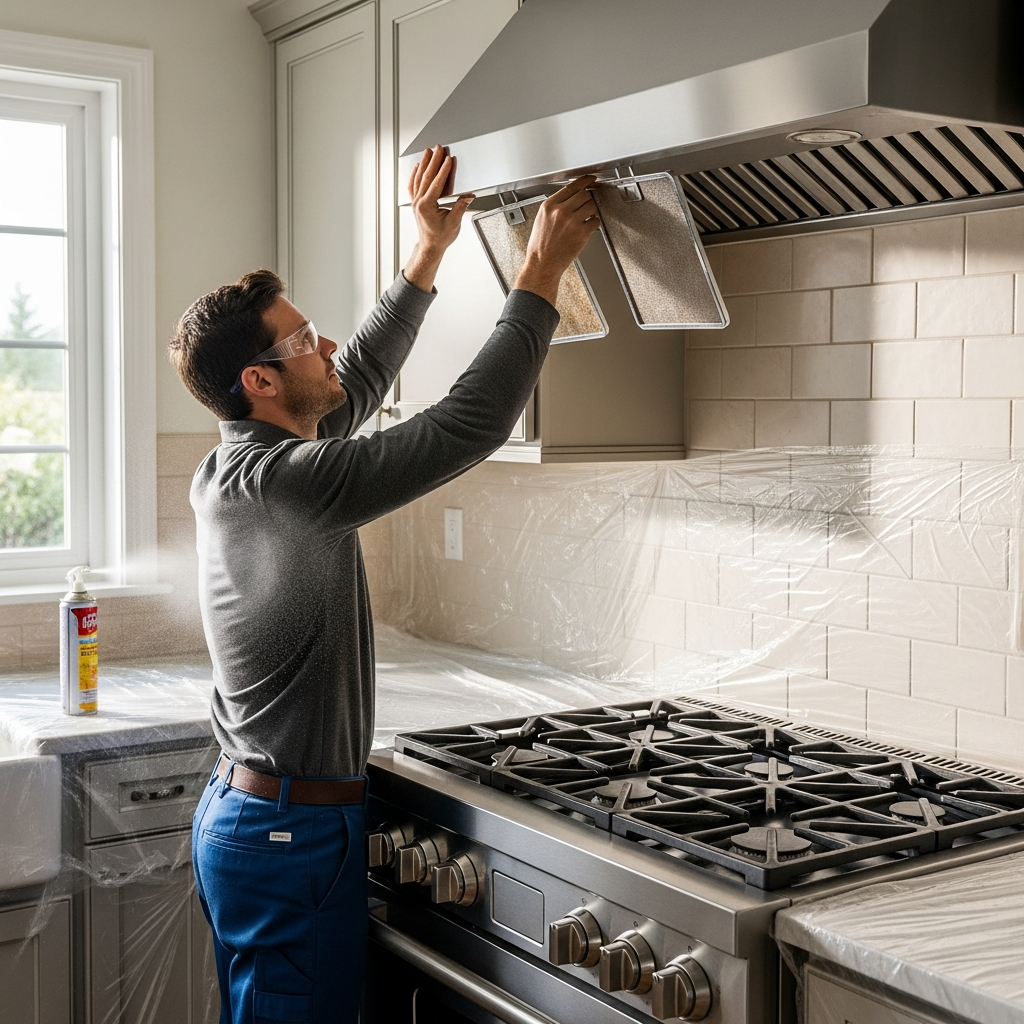
Residential hood cleaning focuses on protecting your home while accessing and cleaning the components that matter most. Technicians will survey the system, document access, and establish containment to safeguard counters, backsplashes, and flooring. They will remove filters, apply appropriate degreasers, and use hot water rinsing to remove residue from the hood interior, duct, and fan housing.
- Set up and protection: plastic sheeting, floor coverings, and safe routing for hoses
- Filter removal and soak: degreasing and thorough rinse of baffle or mesh filters
- Plenum and duct cleaning: chemical dwell and mechanical agitation as needed
- Fan and discharge cleaning: removal of grease from the fan wheel and exterior cap
- Reassembly: reinstall filters, test fan speeds, and confirm discharge airflow
- Cleanup: restore the kitchen to a ready-to-cook state with surfaces wiped dry
Before the crew leaves, ask for a walkthrough and basic maintenance reminders tailored to your cooking habits. This empowers you to keep the system clean longer and recognize early changes that suggest it is time to schedule again.
Safety Considerations for Homeowners
Never attempt to open or clean internal ductwork without the proper equipment and safety training. Sharp metal edges, electrical components, and slippery residues pose hazards. Choose a provider that uses appropriate containment and demonstrates care for your home. If you have children or pets, plan for them to be out of the work area during the appointment to prevent slips or contact with cleaning solutions.
Maintenance Tips Between Cleanings
Simple habits support performance and cleanliness between professional visits. These routines minimize buildup, help the fan operate efficiently, and keep your kitchen fresher day to day.
- Start the fan before cooking to establish airflow and run it several minutes after you finish
- Clean filters on a regular cadence suited to your cooking style
- Wipe the hood exterior and nearby cabinets with non-abrasive degreaser
- Check the exterior vent cap for obstructions like lint, leaves, or nests
- Listen for changes in fan sound, which can indicate imbalance or buildup
These small steps compound over time. By keeping surfaces cleaner and airflow stable, you extend the value of every professional cleaning and help maintain a pleasant, healthy home environment for your family.
Elizabeth, New Jersey Home Considerations
Homes in Elizabeth include a mix of historic properties and newer construction. Older homes may have longer or more complex duct routes to the exterior, while newer homes might favor high-efficiency range hoods with variable speeds. Knowing your home’s layout helps technicians plan access and contain water during rinsing. If you live in a multi-family building, coordinate with building management for access to exterior discharge points if needed.
Seasonal changes matter too. During winter, closed windows and increased indoor humidity can make proper ventilation especially important for comfort. In the summer, efficient capture helps limit heat gain and cooking odors when kitchens already run warm.
Mid-Guide Reminder
A thoughtful combination of DIY filter care and periodic professional deep cleaning is the most reliable way to keep your home’s system safe and effective. If you upgrade appliances, change cooking habits, or notice airflow changes, adjust your cleaning interval accordingly. Consistent, well-planned kitchen exhaust hood cleaning is a simple investment in the safety and comfort of your Elizabeth home.
FAQs
Q: How often should I wash my residential hood filters?
A: Many households benefit from monthly cleaning for heavy cooking and every 1–2 months for moderate cooking. Check manufacturer instructions for your filter type and adjust based on visible residue.
Q: Can I put my filters in the dishwasher?
A: Some baffle and mesh filters are dishwasher-safe, but verify the manufacturer’s guidance. If dishwasher use is recommended, always run a full rinse and dry cycle before reinstalling to prevent drips.
Q: What if I have a ductless hood?
A: Ductless hoods rely on charcoal and grease filters. Replace charcoal filters as recommended and clean or replace grease filters regularly. Because air is recirculated, keeping these filters fresh is critical for odor control.
Q: Do I need professional service if I rarely fry?
A: Even light cooking produces some grease and moisture. While your interval may be longer, periodic professional service addresses hidden areas that DIY maintenance cannot reach, maintaining safety and performance.
Q: Is there a fire risk at home from hood grease?
A: Any grease accumulation is a potential fuel source. A flare-up from a pan or a malfunction can ignite residues. Keeping the system clean reduces this risk significantly.
Q: What if my fan is noisy or rattling?
A: Noise can signal imbalance, loose components, or residue on the fan wheel. After basic filter cleaning, if noise persists, schedule professional service to evaluate and correct the underlying cause.
Q: Will cleaning help with lingering cooking smells?
A: Yes. Restored airflow improves capture, and clean filters help reduce odors that seep into fabrics. Running the fan before, during, and after cooking further enhances results.
Q: How do I prepare my kitchen for a cleaning appointment?
A: Clear the cooktop and nearby counters, remove fragile items, and ensure access to water and power. Keep children and pets away from the area until the service is complete and surfaces are dry.
Q: Can I schedule service during the day?
A: Yes. Residential services are often completed during daytime hours. Choose a time when you can avoid cooking to allow thorough cleaning and drying before your next meal prep.
Ready for a Cleaner, Safer Kitchen
If you have noticed reduced airflow, persistent odors, or greasy filters, take the next step to refresh your home ventilation. With the right balance of routine filter care and periodic professional attention, you will cook more comfortably and confidently. Book trusted residential kitchen exhaust hood cleaning in Elizabeth, New Jersey and enjoy a fresher kitchen for every recipe you make.
