Introduction
In a busy commercial kitchen, every second counts and every system must work flawlessly to support safety, speed, and food quality. Nowhere is that more apparent than inside the hood, ductwork, and exhaust fan that carry away heat, smoke, and grease-laden vapors. Restaurants, cafeterias, hotels, healthcare facilities, and school kitchens in Elizabeth, New Jersey rely on properly maintained exhaust systems to protect staff, guests, and their investments. That is why professional kitchen exhaust hood cleaning is a nonnegotiable cornerstone of fire prevention and regulatory compliance for commercial operations in the city.
Whether you operate a high-volume grill concept or a boutique bakery with a limited menu, your hood captures grease aerosols that gradually solidify on filters, plenum surfaces, horizontal and vertical ducts, and the fan assembly. Left unchecked, this residue fuels fires, reduces airflow, compromises indoor air quality, and burdens HVAC systems. A thorough, scheduled cleaning program carried out by trained technicians restores system efficiency, reduces risk, and helps you demonstrate due diligence during inspections and audits.
In Elizabeth’s dynamic food scene, operators face a mix of commercial buildings, older structures with legacy duct routes, and newer facilities designed for energy efficiency. Each building type presents unique access and cleaning challenges. With the right methods and documentation, however, these complexities are manageable and can even become a predictable maintenance routine that supports smooth, uninterrupted operations year-round.
Why Commercial Hood Cleaning Matters
For commercial kitchens, the primary reason to invest in exhaust cleaning is fire safety. Grease deposits are highly flammable, and ignition can occur from flare-ups, electrical faults, or even radiant heat. Once a deposit ignites inside a duct, fire can spread quickly beyond the cooking line and into concealed spaces, threatening lives and property. Rigorous cleaning reduces fuel sources and helps keep fire suppression systems within their design parameters.
Airflow performance is the second major driver. As residue accumulates, static pressure rises and exhaust fans work harder to move the same volume of air, which can increase energy use, raise kitchen temperatures, and cause odors to linger. Clean hoods and ducts support balanced ventilation, improve comfort for staff, and help maintain correct make-up air ratios that prevent negative pressure issues in the building.
Compliance and reputation are also on the line. Health departments, insurers, and fire authorities expect commercial operators to maintain safe equipment. Clean systems minimize the chance of citations, operational disruptions, and reputational damage. A consistent cleaning program also demonstrates to employees that safety is a core value, which strengthens culture and retention.
- Reduced fire risk by removing combustible grease deposits at their source
- Improved airflow, temperature control, and odor management
- Support for code compliance, inspection readiness, and insurance requirements
- Longer equipment life with less strain on fans and motors
- Healthier working conditions that boost productivity and morale
What a Professional Cleaning Service Includes
Effective commercial hood cleaning is a system-wide process. It must reach every grease-exposed surface from the hood filters to the rooftop fan and discharge. It is not a wipe-down; it is a methodical, documented service that relies on trained personnel, specialized tools, and comprehensive safety protocols appropriate for an operating business.
- Assessment and planning: Technicians survey the hood, plenum, filters, duct runs, clean-outs, and fan assembly. They identify access points, note deficiencies, and confirm the scope, including any special considerations such as welded-in filters or long horizontal ducts requiring additional access panels.
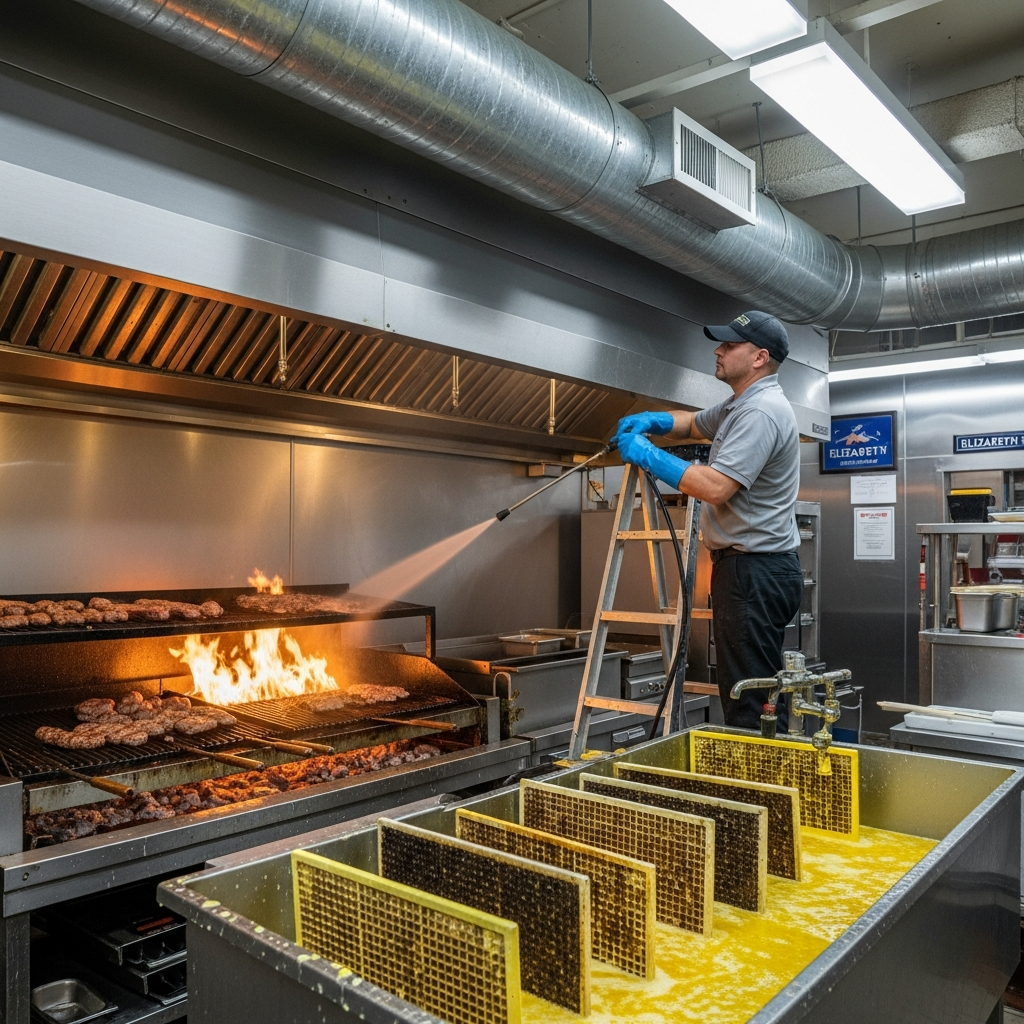
- Site protection: Crews protect cooking equipment, counters, and flooring with plastic sheeting and absorbent mats. Drains and containment systems are prepared to capture runoff safely. Electrical components near the hood are covered to prevent overspray.
- Filter removal and pre-clean: Filters are removed and soaked or pressure-washed separately. This allows unobstructed access to the plenum and duct openings and ensures the filters themselves are restored for proper airflow.
- Chemical application and dwell: Approved degreasers are applied to hood interiors, ductwork, and the fan housing. Adequate dwell time loosens carbonized grease without damaging surfaces. Technicians select products and temperatures according to the material and soil level.
- Mechanical agitation: Scrapers, brushes, and rotary tools are used to dislodge heavy buildup. This step is critical for older systems or lines that handle high-volume frying or grilling, where polymerized grease adheres tenaciously to metal.
- Hot water rinse: High-pressure, hot-water rinsing flushes loosened residue to containment. Technicians work methodically from the fan back toward the hood to ensure all byproducts are routed away from clean zones and captured for responsible disposal.
- Fan and rooftop care: The upblast or inline fan is opened, cleaned, and inspected. Belts, bearings, and damper function are checked. Weatherproofing is verified to prevent water intrusion. Rooftop surfaces are protected and left clean.
- Reassembly and polish: Filters are reinstalled, and the hood is wiped to a shine. Nearby surfaces are cleaned, and protection is removed. The space is restored to a ready-to-cook condition.
- Documentation and tagging: The service is documented with date, scope, and any corrective recommendations. A visible tag is placed on the hood to show the most recent service date and next suggested interval.
Elizabeth, NJ Considerations
Elizabeth’s commercial properties range from historic main street buildings to modern mixed-use developments near transit hubs. Duct routes may traverse tight chases, multiple floors, or long horizontal runs. Professional crews familiar with the city’s building styles know how to establish access points compliant with best practices and how to protect both interior spaces and rooftops during cleaning.
Local operations also contend with seasonal humidity and temperature swings that influence ventilation loads. During peak summer heat, clean systems are vital for keeping cooklines comfortable. In winter, well-maintained fans and make-up air help stabilize building pressure when doors are opening frequently for deliveries and customer traffic.
How Often Should Commercial Kitchens Be Cleaned?
Cleaning frequency depends on menu, volume, and cooking methods. High-grease operations accumulate residues faster than low-volume or primarily baking-oriented kitchens. Inspectors and insurers expect operators to adhere to intervals that reflect actual conditions, not one-size-fits-all schedules.
- High-volume frying and charbroiling: monthly to quarterly depending on observed buildup
- Moderate-volume cooking with mixed methods: quarterly to semiannual
- Low-volume or seasonal operations: semiannual to annual, with periodic inspections
- Wood- or solid-fuel cooking: more frequent inspection and cleaning due to spark and ember hazards
Ultimately, the most reliable strategy is to establish a routine inspection cadence and adjust the cleaning schedule as real-world conditions evolve. When in doubt, err on the side of safety to reduce risk and protect uptime.
Preparing Your Facility for Service
Advance planning helps crews work efficiently and minimizes disruption to service. Confirm the service window, ensure access to water and power, and communicate equipment shutdown times with your kitchen team. If your operation runs late, schedule cleaning during a low-traffic period to allow proper dwell times and thorough rinsing.
- Secure smallwares, food, and open containers away from the work zone
- Shut down and cool equipment per manufacturer guidance
- Identify alarm zones and coordinate with building management if needed
- Provide rooftop access and confirm ladder or hatch safety
- Plan for make-up air and exhaust restart testing after cleaning
Post-Cleaning Verification
A quality service includes transparent verification so you know the job was done right. Clear documentation also streamlines inspections and internal audits. Ask your provider to walk the system with you and review the report.
- Before-and-after photos of hood interiors, ductwork, and the fan
- Service tag with date and recommended next interval
- Notes on deficiencies such as missing access panels, worn fan belts, or damaged filters
- Recommendations for repairs or improvements to access and drainage
Maintenance Between Professional Cleanings
Daily, weekly, and monthly habits extend the benefits of professional work. While in-house staff should never attempt to open ducts or disassemble fans, they can maintain the visible components and support system performance by following simple routines that align with your cleaning schedule.
- Degrease hood exteriors and backsplashes daily using approved, non-abrasive cleaners
- Rotate and wash baffle filters regularly according to use and manufacturer instructions
- Inspect for unusual fan noises, vibration, or odors that indicate diminished airflow
- Monitor make-up air temperatures and balance to maintain comfort and capture
- Keep combustibles away from the cookline and maintain clearances
Mid-cycle touchpoints, such as monthly filter service and a quick hood interior inspection with a flashlight, can reveal if grease is accumulating faster than expected. Adjust your professional cleaning frequency accordingly to maintain a conservative safety margin.
Common Mistakes to Avoid
Commercial operators juggle daily demands, and it is easy to fall into patterns that undermine safety or compliance. Awareness is your first defense against avoidable problems. Avoid these pitfalls to protect staff and assets.
- Treating hood cleaning as a cosmetic wipe-down rather than a system service
- Ignoring horizontal ducts and fan housings where grease accumulation is hidden
- Letting schedules slip during busy seasons when cooking volume spikes
- Using untrained staff for internal duct cleaning, risking damage and incomplete results
- Overlooking documentation that proves due diligence during inspections
Mid-Article Insight
A reliable partner will tailor service scope to your menu, volume, and building layout, not just a calendar date. They will also provide guidance when conditions change, such as adding a fryer bank, switching to solid-fuel cooking, or expanding hours. This pragmatic approach keeps your plan current and your risk low. It is also the ideal time to ensure your mid-cycle checklists and filter rotation routines are aligned to support smooth operations. Remember that consistent, professional kitchen exhaust hood cleaning is the backbone of a safer, more efficient cookline.
FAQs
Q: How long does a typical commercial hood cleaning take?
A: Duration depends on system size, grease accumulation, access, and rooftop logistics. Many standard restaurant systems can be cleaned overnight within a few hours, while large facilities with multiple hoods and extensive duct runs may require longer. Providers will estimate time after a site assessment.
Q: Will cleaning disrupt my operations?
A: Most services are scheduled during off-hours to minimize disruption. With proper preparation, your kitchen can resume normal operations after reassembly and a brief ventilation test. Communicate your opening times so the crew can plan accordingly.
Q: Are my employees responsible for any part of the internal cleaning?
A: No. Staff should handle surface wipe-downs and filter washing per training, but only trained technicians should access internal ductwork and the fan assembly. This ensures safety and a complete, verifiable outcome.
Q: What documentation should I receive?
A: Expect a service tag, a written report, and dated photos showing key system points before and after cleaning. You should also receive recommendations for repairs, access improvements, or schedule adjustments based on actual conditions.
Q: How do I know if my fan or duct needs repair?
A: Warning signs include unusual vibration, scraping sounds, persistent odors, reduced capture of smoke, or visible grease seepage at seams. Your cleaning provider may note loose belts, failing bearings, or damaged duct seals during service.
Q: What cleaning chemicals are used?
A: Professionals use degreasers formulated for commercial kitchens and compatible with stainless steel and other common materials. The choice balances effectiveness with surface protection, and rinse processes ensure residues are removed.
Q: Can I reduce cleaning frequency by switching menus?
A: Grease output varies by cooking method. If you move from heavy frying to lighter sautéing or baking, you may justify longer intervals, but only data from inspections should guide changes. Always verify with observations rather than assumptions.
Q: What about solid-fuel appliances?
A: Wood- and charcoal-fired equipment introduce sparks, embers, and higher soot loads. These systems often require more frequent inspection and cleaning, specialized spark arrestors, and careful ash management.
Q: Will cleaning help with odors in the dining room?
A: Yes. Restored airflow improves capture and reduces recirculation of cooking odors. Balanced make-up air and a clean fan wheel contribute to better pressure control, which helps keep smells out of guest areas.
Q: How does weather affect my ventilation?
A: Seasonal shifts in temperature and humidity alter air density and load. Clean systems are more resilient and better at maintaining target capture rates during hot summers and cold winters common in Elizabeth, NJ.
Your Next Step in Elizabeth, NJ
Protect your team, guests, and brand by putting a proven maintenance plan in place. Coordinate service windows that fit your schedule, commit to routine inspections, and keep thorough records to demonstrate diligence. When you are ready to reinforce safety and performance across your cookline, schedule professional kitchen exhaust hood cleaning and keep your Elizabeth, New Jersey operation prepared for every rush.
