Discovering or suspecting mold inside air ducts can be unsettling for any homeowner in Elizabeth, New Jersey. Beyond appearance and odor, the presence of microbial growth signals a moisture problem that must be addressed at its source. Effective remediation is a structured process built on inspection, containment, removal, and prevention. In this guide, you will learn how professionals assess potential mold, the steps involved in responsible remediation, the factors that influence overall cost, and the habits that keep growth from returning. If you are starting research and want a clear picture of best practices, consult a local expert in air duct cleaning who can explain options tailored to your duct materials and home layout.
How mold develops in ductwork
Moisture and organic material are the two ingredients that allow mold to thrive. In air ducts, moisture can enter through several paths: high indoor humidity, condensation on cool duct surfaces, clogged or poorly draining condensate pans, or unsealed air leaks that pull damp air from crawlspaces or basements. Organic dust—made of skin cells, fabric fibers, pet dander, and other particles—provides a food source. When air is stagnant in certain sections, conditions become even more favorable for colonization.
Elizabeth’s seasonal swings in temperature and humidity increase condensation risk, especially where cold supply air meets warm, humid spaces. Uninsulated metal ducts in attics and porous materials like fiberboard are particularly vulnerable. Addressing the underlying moisture driver is essential; otherwise, even a thorough cleaning will only provide temporary relief.
Inspection and assessment
The first step is a careful inspection to determine whether suspected growth is truly mold and to locate contributing moisture sources. Technicians examine accessible sections of supply and return trunks, branch lines, plenums, and the air handler area. They look for staining, visible growth, musty odors, and signs of standing water or leaks. In some cases, air or surface sampling may be recommended to confirm the nature and extent of contamination, though visible growth with a clear moisture source often allows for direct action.
Assessment also includes understanding the duct materials present. Metal ducts can often be cleaned and returned to service after proper remediation. Flex ducts require gentle handling and, if significantly compromised, may warrant replacement of affected sections. Fiberboard has unique considerations due to its porous surface. A thorough plan respects these material differences and matches methods accordingly.
Containment and safety
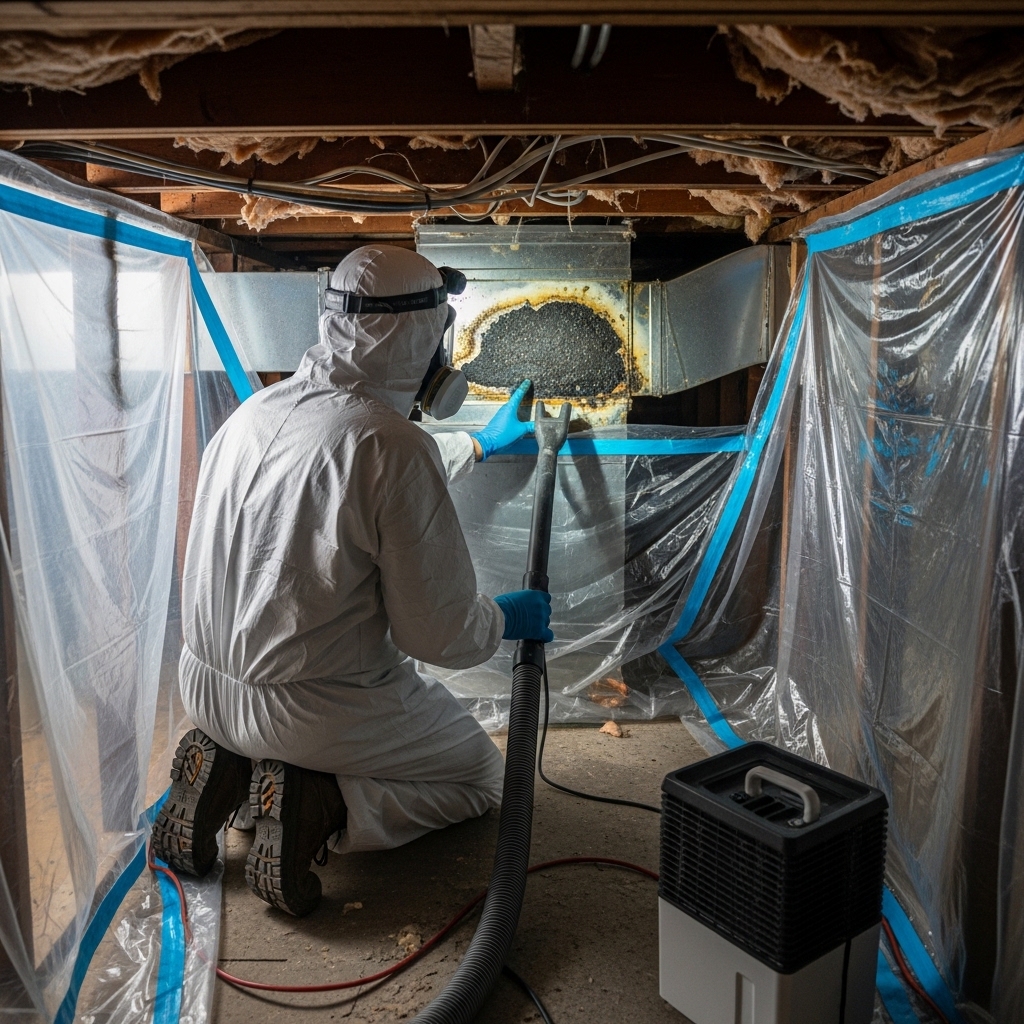
When remediation is warranted, containment protects occupants and prevents cross-contamination. Negative pressure is established so disturbed particulate moves toward filtration. Technicians use personal protective equipment, and work areas are isolated to limit movement of spores. Registers and grilles are carefully removed and cleaned, and access points are created and sealed as needed to reach interior surfaces.
Communication is part of safety. Reputable providers explain the sequence of steps, where they will work first, and how they will handle materials that cannot be effectively cleaned. If particularly sensitive occupants are present—such as individuals with asthma or compromised immunity—scheduling and temporary isolation can be planned to minimize exposure during active work.
Mechanical removal and cleaning
Physical removal is the backbone of responsible remediation. Under negative pressure, mechanical agitation dislodges particulate and growth from duct surfaces. HEPA-filtered capture devices collect debris without redistributing it into rooms. Approaches are adjusted to protect the material: rod-based agitation for metal, gentle methods for flex, and appropriate techniques for fiberboard. Registers, grilles, and accessible cabinet surfaces are cleaned thoroughly.
Where growth is present on non-porous surfaces, cleaning focuses on full removal with tools suited to the geometry of trunks and branches. On porous materials, decisions are guided by the extent of contamination and structural condition. The goal is to remove contamination effectively while preserving system integrity and occupant safety.
Treatments and when they are appropriate
After physical removal, some situations call for targeted treatments. Any product use should be specific to the material and situation, applied according to manufacturer instructions, and paired with adequate ventilation. The purpose of these steps is to address residual contamination that mechanical removal cannot reach, not to mask odors or replace robust cleaning.
It is important to avoid unnecessary applications. A trustworthy provider will explain why a treatment is proposed, its benefits and limitations, and how it fits into the larger plan of stopping moisture at its source. Unjustified treatments add complexity without improving outcomes.
Addressing the moisture source
No remediation is complete without solving the moisture problem that enabled growth. Common drivers include high indoor humidity, poorly insulated or unsealed ducts in hot attics, clogged drain lines, and drainage issues around the air handler. Solutions range from improving condensate drainage and insulating duct sections to sealing air leaks and managing whole-home humidity.
In Elizabeth, warm summers and cold winters create conditions where ducts in attics or unconditioned spaces can accumulate condensation. Upgrading insulation on applicable sections, verifying proper slope and drainage at the coil and pan, and checking for air leaks near returns or filter doors are practical steps that support long-term success.
Factors that influence overall cost
Project cost is shaped by scope and complexity. The size and layout of the home, the number of returns and supply branches, and the accessibility of trunks and plenums influence time and equipment setup. Material type matters; flex and fiberboard require gentler handling, and significant compromise may lead to replacement of affected sections. The extent and location of growth, particularly in long attic runs or tight crawlspace areas, also affect the plan.
Additional factors include the need for specialized containment, documentation, and post-remediation verification. If moisture corrections require coordination—such as improving insulation or drainage—scheduling those steps alongside remediation can streamline the overall effort. Each of these variables shapes the investment needed to achieve a thorough, durable outcome.
What to expect during the appointment
After a final walkthrough to confirm the plan, the team sets protections, places equipment, and establishes negative pressure. Registers and grilles are removed and cleaned while agitation proceeds through branch lines and trunks. Access points are created as needed, then sealed when complete. The air handler area and cabinet exteriors are cleaned appropriately, with coil care addressed per the plan.
Throughout the process, technicians communicate findings and confirm that moisture corrections are in motion, whether that means clearing a clogged drain line, improving insulation at a critical section, or adjusting humidity management. At the end, they provide a summary of actions taken and recommendations for follow-up.
Verification and documentation
Before-and-after photos at key locations give you confidence that remediation was thorough. Documentation should identify where growth was observed, what methods were used to remove it, and which steps were taken to address the moisture source. If sampling was performed, results are included or shared when available. Clear records support maintenance planning and provide a baseline for future inspections.
Post-remediation, you should notice improved odors and a reduction in visible residue at registers. Sustained improvements rely on ongoing moisture control and consistent filtration, so make sure recommended corrections are completed and filters fit snugly to prevent bypass.
Prevention: habits that keep mold from returning
Control humidity by using exhaust fans in bathrooms and kitchens and considering dehumidification during muggy months. Ensure condensate drains are clear and properly sloped. Inspect insulation and sealing on ducts in unconditioned spaces and address gaps that invite humid air. Keep returns unobstructed and replace filters on schedule to limit dust accumulation that can serve as a food source.
If your home has experienced water events, follow up quickly with drying and inspection. Share renovation plans with your HVAC professional, especially if attic or crawlspace work could affect duct insulation or sealing. Proactive communication helps prevent conditions that favor microbial growth.
Elizabeth, NJ specifics
Local housing styles range from historic single-family homes with plaster returns to newer builds with flex branches in attic spaces. Each configuration requires a tailored approach. Seasonal humidity and temperature swings increase condensation risk in unconditioned areas, so attention to insulation, drainage, and sealing is particularly important here. Parking and access can influence equipment placement; communicating those details early keeps the site safe and organized.
Working with a provider familiar with local homes makes the process smoother. They can anticipate common trouble spots, such as long attic runs that develop cold spots or basement returns that pull humid air. Local experience translates into realistic timelines and effective prevention advice.
Frequently asked questions
Do I need testing to confirm mold? If growth is visible and a moisture source is evident, many providers proceed with remediation using standard best practices. Testing can be helpful for documentation or if the situation is unclear.
Can all duct materials be cleaned effectively? Metal is often restored successfully with mechanical removal. Flex can be cleaned with gentle methods; severely compromised sections may be replaced. Fiberboard requires careful evaluation due to porosity.
How disruptive is the process? Expect steady noise from agitation and negative air machines. Responsible crews protect floors and finishes, communicate progress, and clean up thoroughly.
Will treatments be used? Only when appropriate and explained clearly. Mechanical removal remains the foundation of effective remediation.
What if odors persist after remediation? Persistent odors may indicate an unresolved moisture source or contamination in an area that needs further attention. Revisit documentation and address remaining drivers.
How can I keep growth from returning? Manage humidity, maintain drainage, insulate and seal ducts in unconditioned spaces, and replace filters on schedule. Address water events promptly.
Take the next step toward a healthier system
Addressing suspected mold in air ducts calls for a structured plan that removes contamination and solves the moisture problem that fueled it. With clear communication, careful containment, and thorough documentation, you can restore cleaner, fresher airflow and protect your home for the long term. When you are ready to proceed, reach out to local professionals focused on air duct cleaning who can coordinate inspection, remediation, and prevention. Schedule your preferred time and move forward with confidence, knowing your ducts are on a cleaner, safer path.
