Cleaning a kitchen exhaust hood is both a safety measure and a performance booster. In Elizabeth, New Jersey—where restaurants, commissary kitchens, and shared spaces support busy service hours—keeping your hood, ducts, and fan in top shape protects against fire hazards, controls odors, and maintains comfortable working conditions. This step-by-step guide explains what your staff can do safely, what should be left to trained technicians, and how to coordinate service so your kitchen stays inspection-ready. To understand what thorough professional work looks like, review examples of complete kitchen exhaust hood cleaning so you can set expectations and plan effectively.
Before you begin, remember that interior ductwork and rooftop components require specialized access, chemicals, and safety procedures. Your staff can handle exterior surfaces and baffle filter care, but interior ducts and the exhaust fan should be serviced by qualified professionals. Use the following guidance to build a routine that keeps your system efficient between professional visits and helps those visits proceed smoothly.
Safety first: prepare the area
Safety and preparation determine whether cleaning is effective and incident-free. Plan ahead and follow these steps:
- Schedule cleaning when equipment is cool and the kitchen is closed to the public.
- Turn off relevant appliances and follow your facility’s lockout procedures where applicable.
- Wear gloves and eye protection; ensure adequate ventilation while using degreasers.
- Protect adjacent surfaces with plastic sheeting and absorbent mats to capture runoff.
- Designate a sink or container for wastewater; never discharge into unauthorized drains.
With the space staged correctly, you can focus on results rather than cleanup or interruptions.
Daily and weekly tasks your team can handle
Staff-driven routines slow down grease accumulation and keep the system efficient. Build the following into your schedule:
- Daily: Wipe the hood exterior with a suitable stainless cleaner, paying attention to seams and edges.
- Daily: Empty and clean grease cups and troughs so they do not overflow during service.
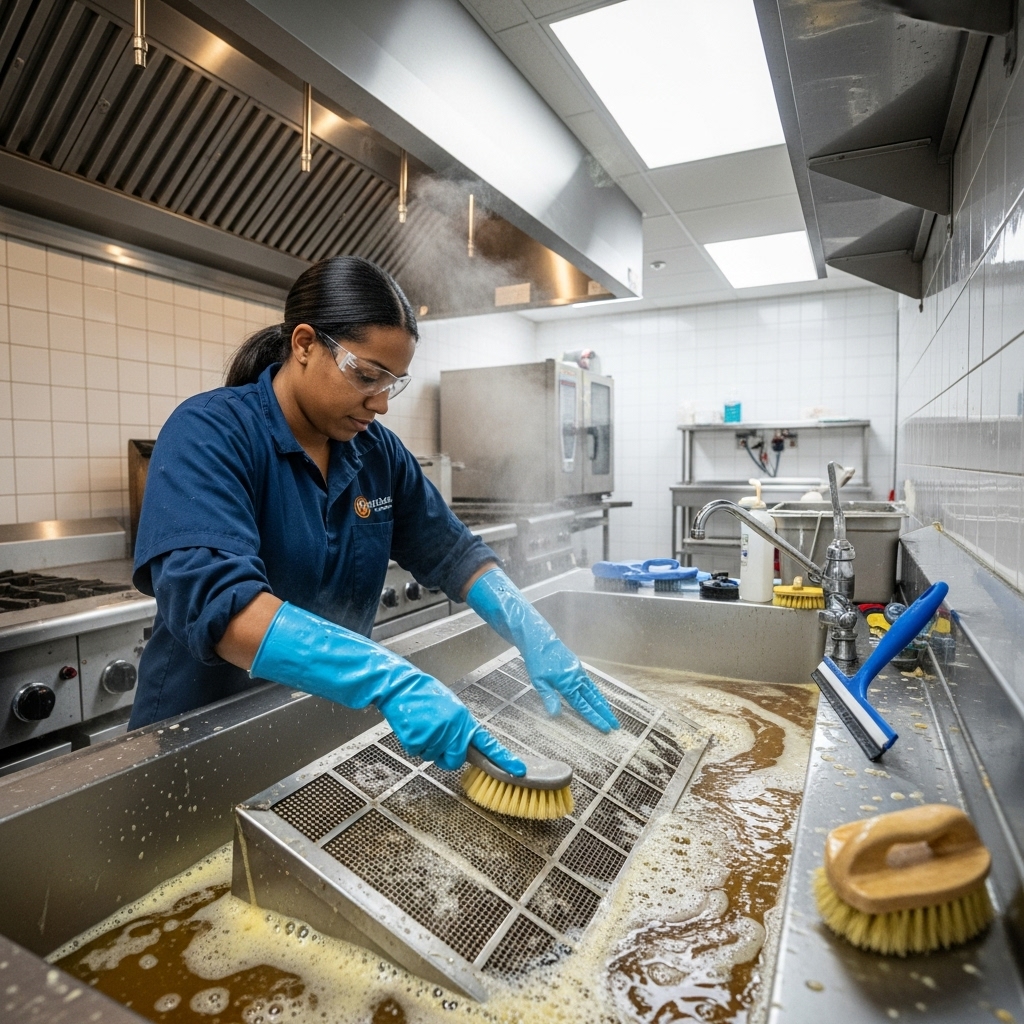
- Weekly: Remove baffle filters for washing. Use hot water and a degreasing solution, then rinse and dry completely before reinstalling.
- Weekly: Inspect the visible interior of the hood plenum and wipe reachable surfaces without entering ductwork.
- Weekly: Check for unusual odors or smoke patterns that could indicate restricted airflow.
These simple steps make a noticeable difference during busy periods and reduce the workload for professional crews.
How to clean baffle filters
Baffle filters are the front line of grease capture. Clean filters maintain airflow and reduce duct contamination. Follow this approach:
- Let filters cool. Remove them carefully to avoid spills.
- Soak in hot water with a commercial degreaser or run them in a dishwasher if manufacturer guidance allows.
- Agitate with a soft brush to free stubborn residue.
- Rinse thoroughly and allow to dry completely to prevent drips.
- Inspect for damage. Replace dented or warped filters that no longer seat properly.
Clean filters support efficient capture, which protects the rest of the system.
Exterior hood cleaning: step-by-step
While interior ductwork requires professional service, your team can restore the exterior to a clean state with the following routine:
- Turn off nearby appliances and ensure the fan is running to draw vapors away from your face as you clean.
- Apply a food-service-appropriate degreaser to the exterior stainless surfaces of the hood, including seams and corners.
- Scrub with non-abrasive pads to avoid scratching.
- Wipe away residue and rinse with clean water.
- Dry with lint-free cloths and, if desired, polish with stainless cleaner for a streak-free finish.
Staying on top of exterior cleaning preserves the hood’s appearance and reduces odors.
What professionals handle inside the system
The sections beyond the filter—the plenum, ductwork, and exhaust fan—should be serviced by trained technicians who can open access panels, degrease interior surfaces to bare metal, and restore the fan to peak condition. Technicians will also manage rooftop grease containment and ensure that wastewater is captured and disposed of properly. In Elizabeth’s busy corridors and multi-story buildings, safe access and thorough documentation matter just as much as the cleaning itself.
Coordinating with a professional service
Plan your professional visits for times that minimize disruption. Overnight or early morning windows are common. Provide clear details: roof access, building rules, preferred drains for wastewater, and the location of electrical shutoffs. Ask for before-and-after photos of ducts and the fan, along with a written summary of work performed and any maintenance recommendations. These records help your team prepare for inspections and schedule the next visit based on real conditions rather than guesswork.
Recognizing when you need service sooner
Several signs indicate that your system needs attention ahead of schedule. Watch for:
- Increased smoke or heat at the cookline even with the fan at full speed.
- Greasy drips from the hood or seams.
- Stronger odors in the dining room or outside near the rooftop fan.
- Fan belt squeal, vibration, or reduced pull when holding a paper test at the canopy.
- Filters that become coated quickly after cleaning.
Respond promptly to these signals to reduce risk and prevent downtime.
Rooftop awareness and grease containment
Grease that escapes onto the roof can damage membranes and invite pests. Professional teams should inspect and maintain grease containment, clean the fan curb area, and confirm that the fan can be safely opened and serviced. If your staff has rooftop access, limit it to visual checks and housekeeping around the access path; leave the fan interior and curb cleaning to trained personnel.
How often should you schedule professional cleaning?
Frequency depends on your menu, cooking volume, and operating hours. Many Elizabeth kitchens benefit from quarterly service, while lighter operations may extend intervals. Use data to decide: track filter condition, note odors and smoke, and review fan performance. When in doubt, consult a specialist who can establish a baseline and recommend an interval based on your specific system and usage.
Training and communication for your team
Short, regular training sessions reinforce good habits. Cover filter washing, exterior wipe-down standards, and the importance of cooldown time before scheduled service. Encourage staff to report unusual smells, noises, or airflow changes immediately. A culture of attention makes it easier to maintain a clean system and reduces surprises during professional visits.
What to expect after a thorough cleaning
Following a complete service, you should notice cooler, clearer air along the cookline, quieter fan operation, and a visibly pristine hood interior and exterior. Filters will drain properly, and the rooftop area around the fan should be clean and contained. Your report should include labeled photos and any recommendations for small repairs, such as replacing worn belts or adding access panels on long duct runs.
FAQ
Q: Can my staff clean inside the ducts? A: Interior ducts require specialized access and safety procedures. Leave this to professionals. Your team should focus on exterior surfaces and filters.
Q: Are all baffle filters dishwasher-safe? A: Not necessarily. Verify manufacturer guidance. If unsure, soak in hot degreaser, rinse thoroughly, and dry before reinstalling.
Q: What should I ask a service provider before scheduling? A: Ask about their process for ducts and fans, rooftop protection and containment, wastewater handling, documentation, and how they schedule around your hours.
Q: How do I know if cleaning was done thoroughly? A: Look for before-and-after photos of ducts and the fan, clean and dry baffle filters, smooth fan operation, and a tidy kitchen restored to service.
Q: Does weather affect rooftop work? A: Yes. Heavy rain, wind, or ice can limit safe access. Providers monitor conditions and may adjust schedules for safety and quality.
Q: What if my kitchen is shared or in a multi-tenant building? A: Coordinate with building management for access, elevator use, and rooftop safety. Clear communication avoids delays and protects shared spaces.
Putting it all together in Elizabeth
With a clear division of responsibilities—staff handling exterior care and filters, professionals tackling ducts and fans—you can sustain a clean, safe ventilation system that keeps pace with Elizabeth’s busy food scene. If you are ready to align expectations, set intervals, and document results, partner with a team that specializes in comprehensive kitchen exhaust hood cleaning. The right collaboration will keep your kitchen comfortable, compliant, and ready for the next rush.
Ready to schedule a thorough service?
Protect your team and your kitchen by planning a visit that fits your hours and addresses the entire system from canopy to rooftop. For dependable results, clear documentation, and minimal disruption, work with professionals who focus on full-system kitchen exhaust hood cleaning. Book a convenient window and keep your ventilation performing at its best.
