When operators in Elizabeth, New Jersey explore the financial side of kitchen exhaust hood cleaning, they quickly realize the numbers are only part of the story. The bigger picture includes safety, uptime, compliance, equipment longevity, and reputation. While this topic often invites hard figures, it is more useful to understand the drivers behind the investment and the value that a thorough service delivers. With that perspective, you can plan proactively, avoid surprises during inspections, and keep your ventilation system operating at peak efficiency without compromising safety. If you are evaluating vendors or planning your maintenance calendar, reviewing professional kitchen exhaust hood cleaning standards will help you compare scope and quality.
Elizabeth’s kitchens—ranging from neighborhood eateries to high-volume quick-service outlets—share a common reality: cooking generates grease-laden vapors that accumulate in hoods, ducts, and fans. Over time, that buildup becomes a fire risk and a performance drag. The level of effort required to reset your system to a clean baseline varies from one site to another. Understanding those variables is the key to planning your spend wisely and aligning expectations with your provider.
What drives the overall investment
Several factors influence the resources and time a team needs to clean your system thoroughly. These variables, considered together, explain why one kitchen may require a lean, efficient visit while another needs a more intensive, staged approach:
- Cooking volume and style: Heavy frying, charbroiling, and wok cooking generate more aerosolized grease than baking or light sauté.
- Operating hours: Long daily hours shorten the interval between cleanings and increase the work required each visit.
- Time since the last thorough cleaning: Longer gaps allow heavier accumulation in ducts and on fan blades.
- Duct complexity and length: Multiple turns, vertical risers, and hard-to-access runs increase the need for access panels and detailed work.
- Number of hoods and fans: Multi-line or multi-tenant setups require additional coordination and service time.
- Rooftop conditions: Grease containment status, membrane protection needs, and safe access considerations all matter.
- Onsite constraints: Parking, elevator or stairwell access, and building protections can add logistical steps.
These inputs shape the scope and duration of the visit and, in turn, the resources the provider must allocate.
Scope clarity prevents surprises
When you align with a vendor, insist on a clear scope that lists the specific components to be cleaned and the methods used. A transparent scope typically includes the hood interior, plenum, baffle filters, horizontal and vertical ducts with access points, the exhaust fan and housing, and rooftop grease containment. It will also describe how work areas are protected, how wastewater is managed, and what documentation you will receive. Clarity here helps you evaluate proposals side by side and understand what you are receiving for your investment.
Baseline versus corrective cleaning
Some kitchens require a corrective visit before they can settle into a predictable maintenance rhythm. Corrective work addresses neglected systems, missing access panels, and heavy residues that require extra time and specialized techniques. Once the system is returned to a true baseline, ongoing visits tend to be faster and more predictable, making your planning smoother and your operations more consistent.
Value beyond the numbers
The benefits of a well-maintained exhaust system reach beyond spreadsheets. Improved airflow can reduce smoke along the cookline, keeping staff comfortable and attentive. Cleaner ducts and fans reduce fire load and may support smoother inspections. Protected rooftops avoid staining and membrane damage that could otherwise lead to building repairs. And well-documented maintenance demonstrates diligence to stakeholders, from landlords to insurers to public officials.
How documentation supports planning
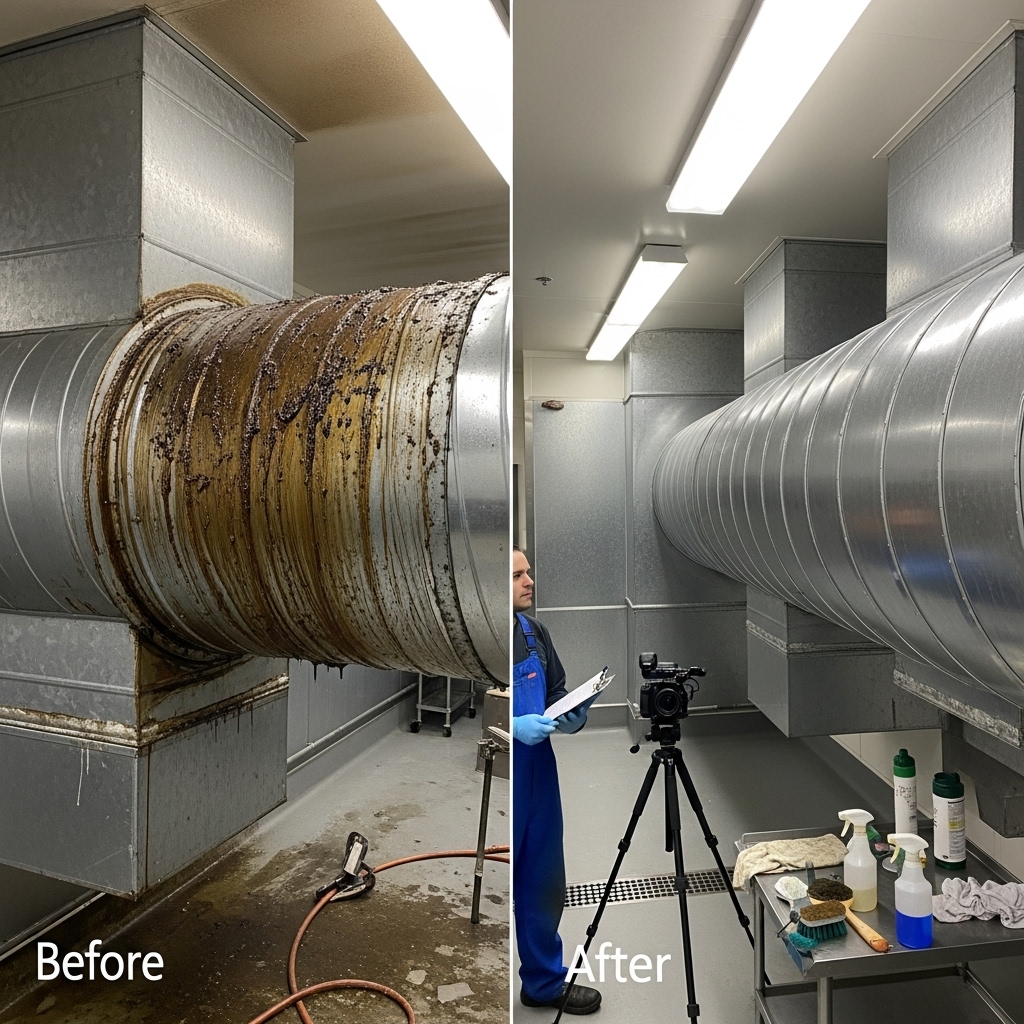
After each visit, request before-and-after photos and a written summary that highlights any developing issues. With a few cycles of documented service, you will see patterns in grease accumulation and can plan intervals accordingly. That history allows you to adjust service timing to your busiest periods, coordinate with other maintenance tasks, and minimize downtime.
Comparing providers on quality and completeness
Not all proposals reflect the same level of thoroughness. When comparing options, look for evidence that the provider cleans the entire pathway from canopy to rooftop, not just the visible areas. Ask how they open and reseal access panels, how they handle rooftops and grease containment, and how they ensure wastewater does not harm your drains or surroundings. The more complete the service, the better your outcomes in safety and performance.
Interval strategy and operational realities
Rather than anchoring your plan to a generic interval, use data from your kitchen. Track how quickly baffle filters become coated, note when smoke and odors return, and record any fan performance changes. For many busy operations, quarterly professional visits paired with diligent filter maintenance is a strong starting point. You can then adjust up or down seasonally, especially around holidays or promotional periods when volume spikes.
Staff-driven maintenance that saves effort later
Your team can do a lot to keep the system clean between visits. Establish simple habits: wash baffle filters on a schedule, wipe exterior stainless surfaces daily, empty grease cups and troughs, and report any unusual fan noises or vibrations. These actions slow buildup in the ducts and on the fan, making each professional cleaning more efficient and predictable.
Rooftop stewardship reduces risk
Grease that reaches the roof can damage membranes and attract pests. Part of a complete service is evaluating containment, cleaning the fan curb area, and confirming that grease is not escaping onto the roof surface. Including this step in your expectations preserves the building envelope and reduces the likelihood of larger facility repairs down the line.
Safety and access considerations
Safe access is non-negotiable. Providers should use appropriate personal protective equipment, respect lockout/tagout procedures for fans, and secure ladders and rooftop pathways. In multi-story buildings or complex footprints, pre-planning the route to ducts and fans saves time and ensures that technicians can work efficiently and safely.
How to communicate needs and constraints
Provide your vendor with key details before the visit: operating hours, preferred service window, roof access process, locations of sinks or drains designated for wastewater, and any building rules for overnight work. The more information they have upfront, the more accurately they can plan labor and materials. Clear communication translates directly to a smoother service experience.
Evaluating outcomes without fixating on numbers
After the visit, evaluate results using objective criteria: photo documentation that shows bare metal in ducts where accessible, spotless baffle filters and hood interiors, smooth and quiet fan operation, a clean and protected rooftop area, and a tidy kitchen restored to service. If these outcomes are consistent, your investment is delivering safety and performance benefits that matter every day you cook.
Frequently asked questions
Q: How do I decide on a service interval that fits my operation? A: Start with your cooking volume and menu. Track filter condition, fan performance, and odors; then adjust intervals based on real-world observations.
Q: What distinguishes a baseline cleaning from routine maintenance? A: Baseline or corrective service removes heavy accumulations and addresses access issues so subsequent visits can proceed efficiently. Routine maintenance preserves that clean state.
Q: Can my team reduce the intensity of future visits? A: Yes. Consistent filter washing, daily exterior wipe-downs, and prompt reporting of airflow changes all help keep the system manageable.
Q: What documentation should I expect to receive? A: Before-and-after photos of ducts and fans where accessible, a written summary of work performed, and notes on any components that may require attention.
Q: How do building features affect the effort required? A: Long duct runs, multiple turns, rooftop access constraints, and multi-tenant configurations require more planning and hands-on time.
Q: Is there a best time of day for service? A: Overnight or early morning windows typically work best so equipment can cool and technicians can work safely without disrupting service.
Planning your next step in Elizabeth
If you manage a kitchen near Broad Street, in Elmora, or close to the port, align with a provider who understands local realities and prioritizes full-system cleaning. For scope clarity, risk reduction, and dependable outcomes, consider partnering with a team that specializes in comprehensive kitchen exhaust hood cleaning. With the right approach, you can protect your team, your guests, and your operation while maintaining a responsible, predictable maintenance plan.
