Restaurants in Elizabeth, New Jersey thrive on speed, consistency, and safety—and the heart of that equation is a clean, well-functioning kitchen ventilation system. From sizzling fryers to charbroilers, grease-laden vapors accumulate rapidly in hoods, ducts, and rooftop fans. Properly managed, your system captures those vapors and exhausts them outside. Neglected, it becomes a conduit for fire and performance issues. If you are reviewing your maintenance plan or preparing for inspection, explore what professional kitchen exhaust hood cleaning entails and how it keeps your kitchen compliant, efficient, and comfortable.
Elizabeth’s dining scene spans family-owned pizzerias, bustling quick-service spots, and full-service restaurants serving late-night crowds near transportation hubs. High volume and extended hours make ventilation a critical safety system. The right cleaning partner adapts to your schedule, aligns with standards such as NFPA 96, protects your roof and equipment, and provides documentation your managers can use during inspections. Clean ventilation is not just a back-of-house detail—it is a foundational part of your restaurant’s reliability and reputation.
What professional hood cleaning covers in a restaurant setting
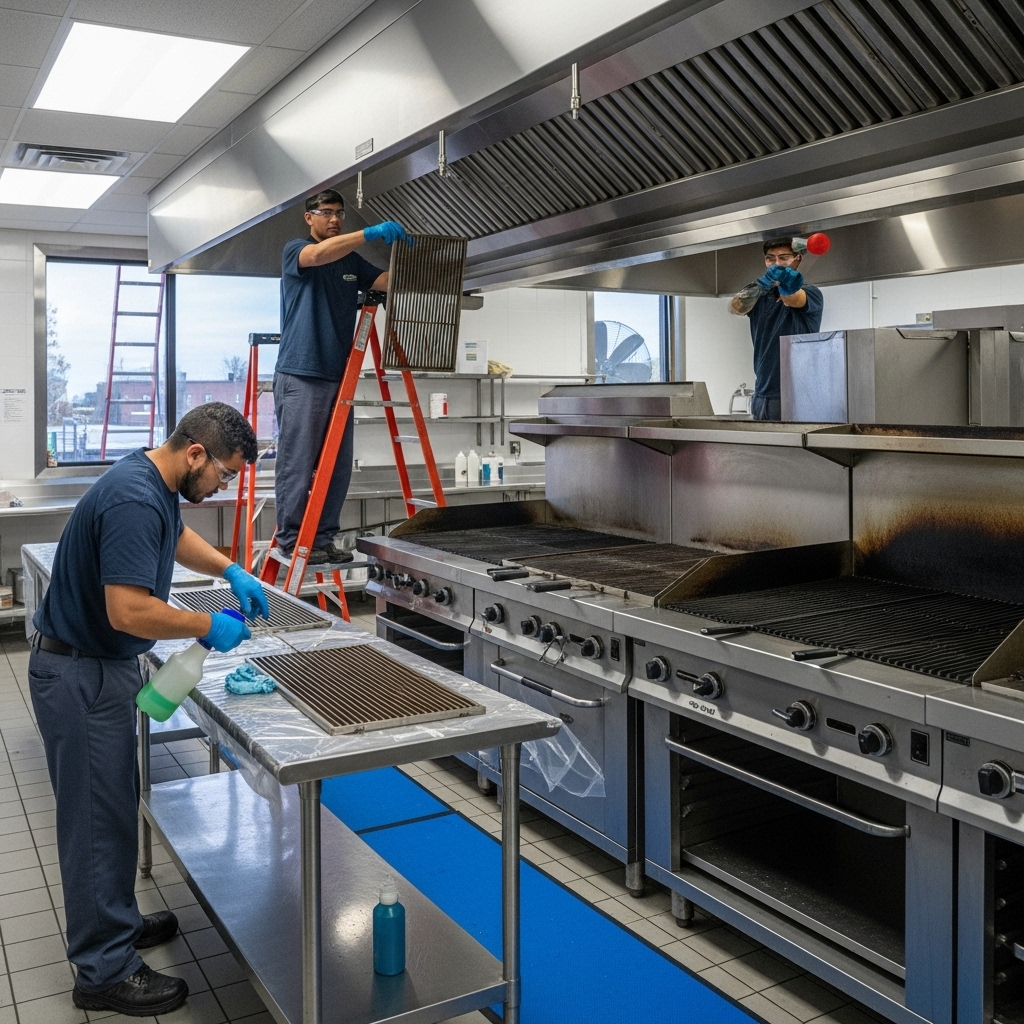
A thorough service addresses the entire capture and exhaust path. For restaurants, that means focusing on high-heat and heavy-grease stations, complex duct runs, and rooftop components that often get overlooked. Here is the typical workflow:
- Pre-clean walkthrough and hazard identification with your manager or chef on duty.
- Protective sheeting over equipment, counters, and floors to contain overspray and runoff.
- Shutoff or lockout of gas/electric and confirmation of fire suppression readiness per protocol.
- Removal and hot soak of baffle filters; mechanical agitation to ensure full degreasing.
- Cleaning of hood plenums, grease troughs, and seams to bare metal.
- Access panel opening along ducts to clean each section thoroughly, both horizontal and vertical.
- Rooftop fan service: belt check, blade and housing cleaning, and grease containment inspection.
- Wastewater capture, neutralization, and disposal per best practices; no discharge to improper drains.
- Reassembly, polish of exterior stainless, operational test of exhaust fans, and site cleanup.
- Photo documentation and a written report that notes any deficiencies or repair suggestions.
This process restores airflow, reduces fire load, and supports a sanitary workspace, which translates to fewer surprises during inspections and smoother service during peak periods.
Scheduling around restaurant hours
Most restaurants in Elizabeth operate long hours, and prep often starts before dawn. A good cleaning partner will offer overnight service windows and coordinate closely so the line is cool and accessible at the scheduled time. They will also plan around weekly shipments, deliveries, and events so that loading docks, rooftops, and stairwells are clear for safe access. A predictable cadence—often quarterly for high-volume operations—keeps grease manageable and cleaning durations consistent.
Health and fire code alignment
Health inspectors and fire officials look for more than shiny hoods. They expect evidence that grease is removed where it matters most: inside the ductwork and at the exhaust fan. For restaurants, this includes proper access panels, documentation showing the areas cleaned, and observations about fan belts, vibration, and grease containment on the roof. Clear records make inspections efficient and demonstrate that you manage risk proactively.
Staff responsibilities between professional visits
Restaurant teams are the first line of defense. While duct interiors and fans belong in professional hands, your crew can maintain cleanliness on the exterior and at the capture point. Consider the following habits:
- Daily wipe-down of the hood’s exterior stainless surfaces with appropriate cleaner.
- Scheduled washing of baffle filters—either in the dishwasher (if allowed by the manufacturer) or in a designated sink with hot degreaser.
- Emptying and cleaning of grease cups and troughs before they overflow.
- Visual checks for unusual smoke patterns, drips, or odors that indicate restricted airflow.
- Immediate reporting of fan belt squeal, vibration, or reduced pull at the canopy.
Documenting these tasks helps your managers spot trends and prioritize follow-up before small issues escalate.
Protecting your roof and building
Grease that escapes to the rooftop can stain membranes, degrade roofing materials, and attract pests. Restaurant operators should expect their hood cleaning team to check and maintain grease containment, clean the fan curb area, and report any signs of overflow or structural damage. When rooftop components are clean and properly contained, you reduce the risk of leaks and expensive building repairs.
Common restaurant pitfalls and how to avoid them
- Relying on exterior shine while duct interiors remain neglected.
- Skipping access panel installation on long duct runs, making thorough cleaning impossible.
- Allowing grease to migrate to the roof without adequate containment.
- Overlooking fans that are hard to reach or require special access equipment.
- Infrequent filter washing, which reduces capture efficiency and strains the fan.
Establish a schedule, verify that access is adequate, and insist on photos of internal components after each visit. These steps keep your system honest and your team informed.
Choosing a restaurant-focused provider
Restaurant kitchens are demanding environments with tight timelines. Seek a provider with a track record in high-volume operations, references from local managers, and a clear communication process. Ask about technician training, rooftop safety protocols, wastewater handling, and insurance. Review photo documentation from similar kitchens to gauge thoroughness and consistency, then align on a service window that does not disrupt prep or cleanup routines.
A mid-process quality check you can use
About halfway through the service, a manager can ask to see an accessible duct section and the fan shroud to verify progress. The interior should look wet from active degreasing and show areas where residue is being removed to bare metal. If you want a benchmark for what complete service looks like, review examples of professional kitchen exhaust hood cleaning so you can align expectations and hold the result to a high standard.
Inspection readiness and documentation
After each visit, store reports and photos in a shared folder accessible to managers and compliance staff. Label files with the service date and areas cleaned. This simple practice helps you respond quickly if an inspector asks for documentation and gives you a clear record for planning the next visit. When you can show repeated, consistent cleaning, inspections tend to proceed smoothly.
Training your team to support ventilation performance
Consider a short monthly huddle where cooks and porters review filter handling, hood wipe-down standards, and signs of airflow problems. Encourage staff to report issues immediately and reward proactive observations. When everyone understands why ventilation matters, they are more likely to respect cooldown periods before service appointments, protect access pathways, and avoid ad hoc fixes that can create safety issues.
FAQ
Q: How often should a busy restaurant schedule professional hood and duct cleaning? A: Many high-volume kitchens benefit from quarterly service, while lighter operations may extend intervals. Menu type, hours, and equipment all play a role.
Q: What exactly do inspectors expect to see? A: Clean internal duct surfaces where accessible, serviced fans with grease contained on the roof, documentation of work performed, and evidence of routine filter maintenance.
Q: Can dishwashers safely clean baffle filters? A: Some filters are dishwasher-safe; check the manufacturer’s guidance. When in doubt, hand wash in hot degreaser and allow to dry completely before reinstalling.
Q: Will cleaning damage my rooftop or create leaks? A: Properly performed cleaning protects the roof through containment mats, controlled runoff, and attention to fan curb integrity. Damage risk rises when grease is allowed to pool or when containment is ignored.
Q: What if my restaurant operates nearly 24/7? A: Coordinate a narrow overnight window, prioritize frequent filter maintenance, and consider shorter, more frequent professional visits to keep conditions manageable.
Q: Do I need to close the restaurant during cleaning? A: Work is usually scheduled when the kitchen is closed and equipment is cool. Dining rooms can often remain untouched, provided pathways are clear and protected.
Ready to keep your restaurant safer and more efficient?
Set your team up for smooth services, cleaner air, and reliable inspections by partnering with specialists who understand restaurant demands in Elizabeth. For a thorough, schedule-friendly approach to kitchen exhaust hood cleaning, coordinate your next visit and maintain momentum with consistent, professional care.
