Finding reliable kitchen exhaust hood cleaning near you in Elizabeth, New Jersey is about more than convenience—it is about fire safety, indoor air quality, health code compliance, and peace of mind. Whether you manage a busy restaurant on Broad Street, operate a food truck by the port, or run a community kitchen in Midtown, the right partner can keep your operation safe and efficient. If you are starting your search and want a trusted resource, explore professional kitchen exhaust hood cleaning to understand what thorough, code-conscious service should look like.
In Elizabeth, kitchens face unique challenges: dense urban traffic that tracks in dust, heavy cooking volumes during rush periods, and humid coastal weather that can accelerate grease buildup in ducts and on fans. A well-maintained hood and duct system captures smoke, steam, and grease-laden vapors at the source, preventing them from depositing on ceilings, walls, and rooftop assemblies. Done correctly, cleaning reduces fire hazards, limits odors, and helps your staff breathe easier, all while extending the service life of expensive ventilation equipment.
This guide explains what to expect from professional cleaning, how often to schedule service, how to prepare your kitchen, and how to choose a qualified provider in Elizabeth. You will also find maintenance tips and a clear checklist you can use to evaluate results after a visit. By the end, you will be ready to keep your hood system in top condition—every day, during inspections, and throughout the busy season.
Why professional hood cleaning matters in Elizabeth
Grease is highly flammable. When it accumulates inside hood canopies, baffle filters, horizontal ducts, vertical risers, and rooftop fans, a single flare-up can ignite a fire that travels rapidly through the ductwork. Professional cleaning targets not just visible surfaces, but also the hidden areas where heat and airflow concentrate. That matters for safety, and it also matters for compliance with recognized standards such as NFPA 96, which outlines ventilation control and fire protection for commercial cooking operations.
Beyond safety, a clean system works better. Proper airflow reduces smoke and heat in the cookline, helping equipment run at its intended temperature and allowing staff to work comfortably. Efficient exhaust can reduce lingering odors, improve makeup air balance, and support consistent indoor air quality. In a city like Elizabeth—where restaurants sit near apartments, schools, and retail—controlling emissions and odor is part of being a considerate neighbor as well as a responsible operator.
What “near me” should mean in Elizabeth, NJ
When you search “near me,” you are not only seeking proximity—you are seeking responsiveness, familiarity with local expectations, and the ability to schedule service around your operations. A local team understands Elizabeth’s dining rush patterns, parking realities, and access limitations around places like the seaport, Midtown, Elmora, Peterstown, and the Goethals Bridge corridor. That local knowledge helps technicians arrive prepared with the right gear, manage rooftop access safely, and complete the work efficiently so you can reopen on time.
“Near me” should also mean a provider who understands what health inspectors and fire officials look for. That includes complete grease removal down to bare metal in ducts and on fans where accessible, careful protection of cooking equipment and prep surfaces, proper wastewater capture, and clear documentation after the job. Proximity is helpful, but readiness, training, and process discipline are what ultimately protect your kitchen.
What a complete hood cleaning service includes
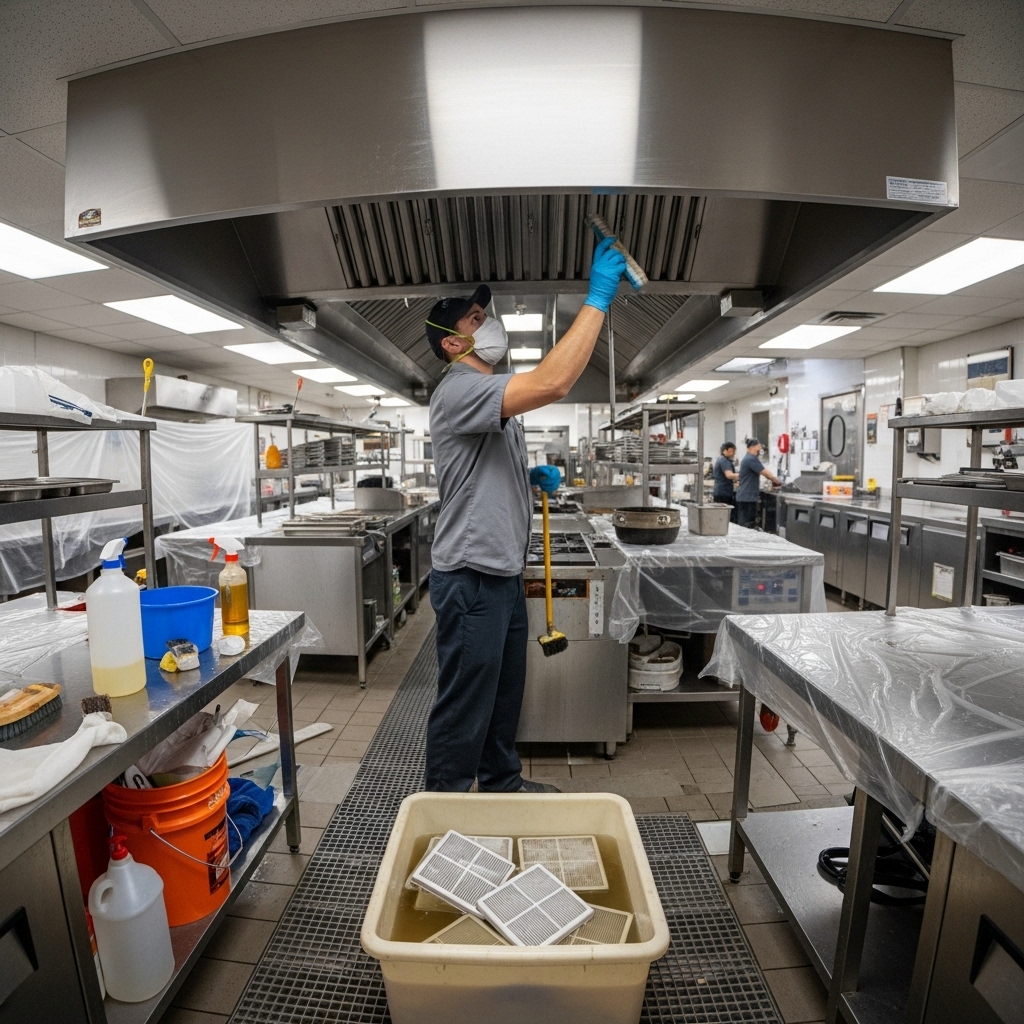
Comprehensive service is systematic. While each kitchen is different, a professional visit typically includes these stages:
- Site assessment and photo documentation of starting conditions.
- Covering and protecting appliances, counters, and floors with plastic sheeting and absorbent mats.
- Shutting down gas and electrical where required, and isolating the fire suppression system per procedure.
- Removing baffle filters and soaking them in hot degreaser; scraping heavy accumulations as needed.
- Cleaning the hood plenum, grease troughs, and drip cups to bare metal.
- Opening access panels in horizontal and vertical duct runs and cleaning each section thoroughly.
- Locking out the rooftop fan, removing the fan housing where appropriate, and cleaning blades, shroud, and curb.
- Checking and clearing grease containment on the roof to prevent staining and water intrusion.
- Rinsing, neutralizing, and drying all cleaned surfaces; reassembling filters and access panels.
- Polishing exterior stainless surfaces and performing a functionality test of the fan.
- Final photos, cleanup of the work area, and a post-service report noting any repair recommendations.
That end-to-end approach is what separates a surface wipe-down from true risk reduction. It is also what keeps inspection results predictable and your staff confident.
How often should you schedule cleaning?
Frequency depends on your volume, menu, and hours. High-volume fryers and charbroilers generate more aerosolized grease than ovens or light sauté stations. Many establishments that cook daily at scale benefit from quarterly service, while some low-volume or seasonal kitchens can extend intervals. A good rule is to inspect baffle filters weekly, pay attention to odors and visible residue, and consult with a professional after any major menu shift or surge in business. When in doubt, err toward more frequent service during peak season and evaluate intervals during slower months.
Signs you need cleaning now
- Persistent smoke or haze along the cookline, even with the fan at full speed.
- Greasy film returning to stainless surfaces shortly after wiping.
- Visible grease drips from the canopy, trough, or duct joints.
- Noticeable fan vibration, belt squeal, or reduced airflow.
- Stronger-than-usual cooking odors in the dining room or outside near the roof.
- Staff complaints of irritated eyes or throat, especially during high-heat cooking.
If you recognize several of these indicators, move up your service date to reduce risk.
Choosing a qualified provider near you
Credentials and consistency should guide your choice. Look for training in hood and duct cleaning practices, documented safety protocols, and proof of insurance. Ask how technicians access difficult duct sections, how they protect your cooking line and floors, and how they collect and dispose of wastewater. The best providers will share before-and-after photos, explain their chemical approach, and leave a written report with maintenance notes specific to your kitchen and equipment. They will also schedule during off-hours, coordinate roof access, and confirm any special building requirements in advance.
Midway through your evaluation process, it helps to benchmark what thorough work looks like. Review examples of professional kitchen exhaust hood cleaning so you can compare scope, detail, and documentation standards before you decide who to bring into your space.
How to prepare your kitchen for service day
- Communicate the schedule to your team and plan for cooldown time on hot equipment.
- Clear counters and shelving near the hood; store open food properly.
- Cover sensitive electronics and point-of-sale terminals; ensure outlets are accessible.
- Provide safe rooftop access and confirm any building keys, codes, or escort needs.
- Verify the fire suppression system’s service status and coordinate any required standby.
- Walk through with the lead technician to confirm scope, areas of concern, and any recent equipment changes.
Preparation prevents delays and helps crews finish efficiently. It also protects your kitchen from unnecessary disruptions.
Between-visit maintenance your staff can handle
- Run baffle filters through a hot, degreasing wash on a set schedule, and replace damaged filters promptly.
- Wipe exterior stainless surfaces of the hood daily to prevent film from building up.
- Check the grease cup and trough; empty and clean them before they overflow.
- Listen for belt noise and vibration from the fan and report changes immediately.
- Keep the area around the rooftop fan clear of stored items and debris.
- Document observations in a simple log so trends are obvious during the next professional visit.
These small efforts keep airflow strong, reduce odors, and extend the benefits of a full cleaning.
What to expect after the service
After cleaning, your kitchen should feel cooler during peak hours, and visible smoke should decrease markedly. The hood’s stainless exterior will be polished, baffle filters will look fresh and drain properly, and the fan should spin smoothly without wobble or squeal. You should also receive photos showing the duct interior, fan blades, and roof curb both before and after, plus notes about any issues that require follow-up, such as worn belts, bent fan blades, missing access panels, or grease containment that is nearing capacity.
Keep the documentation on file. When inspections occur, being able to show detailed records—including dates, locations serviced, and any corrective actions—demonstrates diligence and helps inspections proceed quickly.
Common mistakes to avoid
- Relying on filter cleaning alone and ignoring hidden duct surfaces.
- Allowing grease to run onto the rooftop where it can damage the membrane and attract pests.
- Skipping access panel installation, which makes thorough cleaning impossible.
- Using household degreasers on commercial systems, which can be ineffective or unsafe.
- Postponing service after a menu change that increases grease output.
Avoiding these pitfalls keeps your system safer and easier to maintain.
FAQ
Q: How long does a typical professional hood and duct cleaning take? A: Duration depends on system size, accessibility, and buildup. Many single-hood systems are handled overnight in several hours, while multi-hood or complex duct runs take longer.
Q: Will cleaning disrupt my dining room or neighbors? A: Professionals schedule during off-hours, protect floors and equipment, and manage wastewater to minimize impact. With proper planning, disruptions remain minimal.
Q: Can my staff clean inside the ducts to save time? A: Staff should focus on exterior surfaces and filter maintenance. Interior ducts and fans require specialized access, chemicals, and safety procedures best handled by trained technicians.
Q: What documentation should I receive? A: Expect before-and-after photos, a service report summarizing areas cleaned, and notes on any deficiencies or maintenance recommendations.
Q: How do I know it was done thoroughly? A: Photos of accessible duct sections, the fan interior, and the hood plenum are key. You should also see clean, residue-free surfaces and properly reinstalled baffle filters and access panels.
Q: Does weather affect rooftop fan cleaning? A: Yes. Heavy rain, wind, or ice can limit safe access. Crews monitor conditions and may reschedule for safety and quality.
Q: What if my kitchen operates nearly 24/7? A: Coordinate a short downtime window, often in the early morning hours, and consider more frequent visits to keep the system manageable.
Ready to schedule your service?
Protect your team, your guests, and your property by partnering with specialists who understand Elizabeth’s kitchens and expectations. If you want thorough results, clear documentation, and minimal disruption, connect with a provider that focuses on comprehensive kitchen exhaust hood cleaning. Schedule a visit that fits your hours, and keep your ventilation system performing at its best all year long.
