In Elizabeth, New Jersey, commercial buildings range from distribution centers near the port to medical offices, schools, retail spaces, multifamily common areas, and historic structures undergoing adaptive reuse. Each type of property brings unique air distribution layouts, occupancy profiles, and regulatory expectations. When facilities teams and building owners evaluate professional air duct cleaning for commercial spaces, they want a clear understanding of the scope, drivers that influence proposals, and how to plan projects with minimal disruption. This guide explains the major factors that shape a commercial engagement in Elizabeth and provides a framework for comparing vendors and deliverables. At the outset, it helps to understand what comprehensive air duct cleaning entails for a commercial system so decision-makers can align expectations with outcomes.
Commercial HVAC systems differ dramatically across building types. A downtown office might rely on packaged rooftop units feeding VAV boxes, while a warehouse complex may use large makeup air units with long supply runs at height. Health-care suites or labs can involve layered filtration and pressure relationships. Even within one property, mechanical rooms and duct pathways can vary between wings or tenant fit-outs. Clarity about layout and function is essential before stakeholders request proposals.
What commercial air duct cleaning includes
Although each job is customized, a professional process typically includes:
- Discovery and documentation: Reviewing mechanical drawings (when available), walking the site, counting diffusers and returns, and noting elevations, access points, and safety requirements.
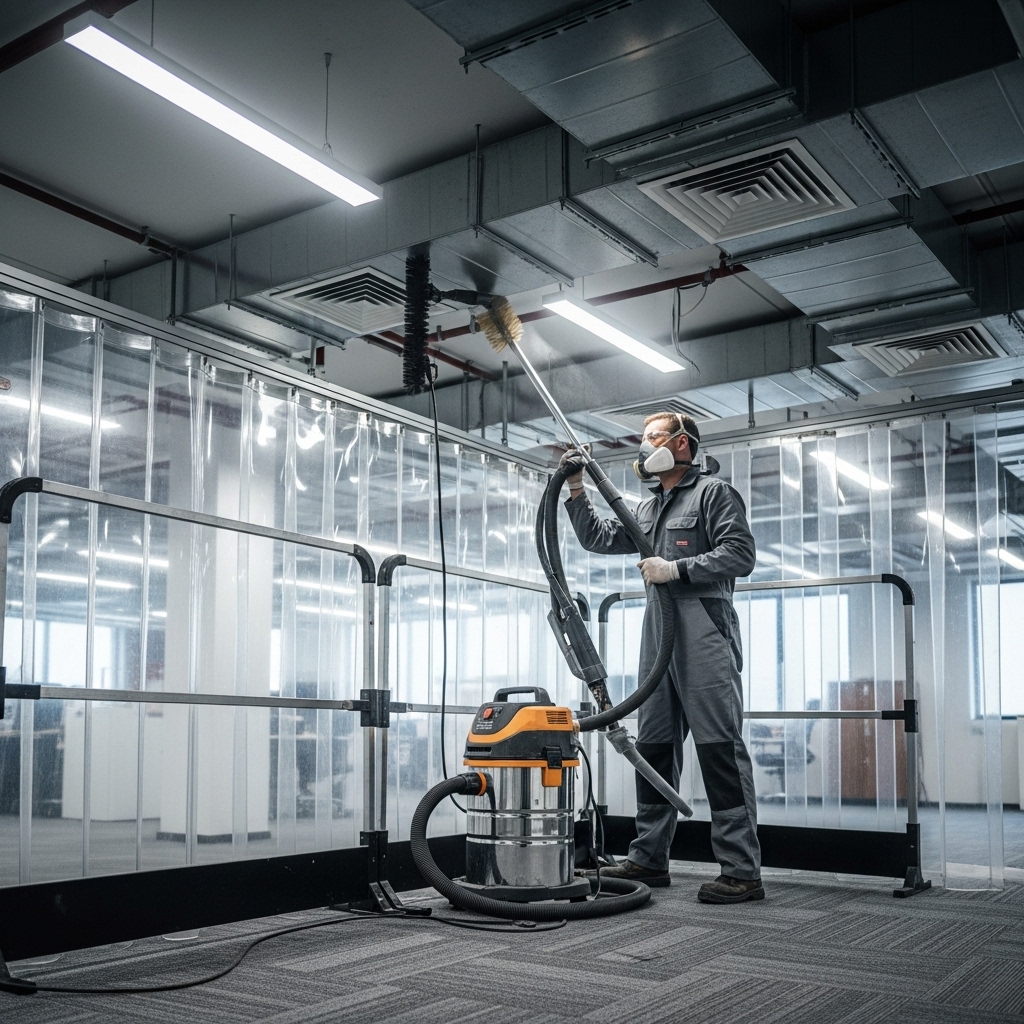
- Containment and protection: Barrier systems to isolate work zones, protective coverings for finishes, and plans to handle debris where ducts pass over production lines or sensitive equipment.
- Access strategy: Installing service panels or ports for agitation tools and vacuum connection points while maintaining duct integrity, insulation, and fire-rated assemblies.
- Mechanical agitation: Using whips, brushes, and compressed air tools to dislodge adherent dust from duct interiors, branches, and trunks, with technique adjusted for lined or flex sections.
- Negative pressure collection: High-powered, filtered vacuum equipment positioned to capture and remove debris without redistributing particulates into occupied areas.
- Component attention: Cleaning air handlers, blower compartments, and return drops; addressing coils and drain pans when included in scope; and confirming that VAV boxes or dampers are left in serviceable condition.
- Verification: Visual or photographic validation, sign-off checklists, and as-requested reporting that documents locations, methods, and outcomes.
For properties requiring special compliance—food handling areas, health-care spaces, or facilities with strict cleanliness protocols—project planning includes communication with on-site compliance leads to coordinate timing, isolation measures, and post-work validation.
Key drivers that influence proposals
Instead of focusing on a single number, facility leaders benefit from understanding the drivers that shape proposals. The following elements commonly affect scope and schedule:
- System complexity: Multiple air handlers, zones, and control devices increase the number of access points and the care required to protect components.
- Square footage and diffuser count: More supply and return points typically mean more time for setup, agitation, and verification.
- Access and elevation: Ducts at height, above ceilings, or over production areas require lifts, scaffolding, or specialized fall protection planning.
- Contamination level: Light dust calls for standard agitation and collection; heavier accumulations, construction debris, or foreign objects can require repeated passes and more containment.
- Scheduling constraints: Night work or weekend access may be necessary to protect business operations and occupant comfort.
- Documentation and compliance: Some properties need detailed reporting, photo logs, or certifications to satisfy internal policies or third-party requirements.
- Coordination with other trades: When cleaning is integrated with renovations, filter upgrades, or controls work, coordination effort increases but can improve overall outcomes.
By mapping these drivers to your building’s realities, you can anticipate the scope and questions that will appear in proposals, making comparisons more meaningful.
Scoping your Elizabeth property
Start with a site walk. Inventory air handlers, count supply and return points by area, and note special conditions such as clean rooms, server spaces, or food prep zones. Identify ceiling heights, access limitations, and whether there are plenum returns or ducted returns. If you manage a campus with multiple buildings, consider whether a phased approach is appropriate for operations and occupant communication.
Gathering this information before requesting proposals helps vendors tailor their approach. It also encourages apples-to-apples comparisons because each bidder is responding to the same baseline data and goals. Ask for clarity about what is included and excluded: Are coils, drain pans, and blower compartments addressed? Will the team reinstall and set diffusers to existing positions? How will lined ducts be agitated without damaging the lining? Precise questions lead to precise responses.
Minimizing disruption to operations
Commercial projects live or die on logistics. Clear plans for staging, debris removal, after-hours work, and communication with building occupants reduce headaches. For tenants and visitors, the most noticeable aspects of the job are likely to be temporary barriers, signage, and some noise during agitation. A thoughtful vendor will propose ways to isolate work zones, protect pathways, and return spaces to service quickly each shift.
Consider bundling related tasks: filter changes immediately after cleaning, inspection of dampers and actuators while ceilings are open, and sealing of observed leaks. Combining tasks can shorten the overall timeline and produce a cleaner, better-balanced system when the job is complete.
Comparing vendors and deliverables
Strong proposals do more than present a scope. They explain the rationale behind access points, list equipment to be used, and describe how the team will protect property and occupants. When comparing providers, look for:
- Experience with similar property types in Union County and the broader metro area.
- References from local facility managers and property owners.
- Detailed safety plans, including lift certifications and fall protection when applicable.
- Clear communications protocols and a primary point of contact available throughout the project.
- Post-work validation methods, such as photo documentation keyed to floor plans.
These elements are as crucial as the proposed schedule. A vendor who communicates well and documents work thoroughly is easier to manage and better aligned with stakeholder expectations.
Managing indoor air quality goals
For office buildings, schools, and health-care-adjacent settings, clean ductwork is only one part of an indoor air quality strategy. To capture the full benefit, integrate duct cleaning with filter selection, outside air balancing, and humidity management. If the building has undergone recent construction, coordinate cleaning after major dust-generating activities are complete but before new filters are installed. In facilities where odors or occupant complaints have been persistent, make sure return pathways are inspected for gaps that draw air from dusty or odorous spaces.
Mid-project checkpoints
Large commercial engagements benefit from defined checkpoints: a kickoff meeting to finalize the plan, daily or weekly progress updates, and a close-out review with documentation. During the midpoint, verify that access ports are being installed cleanly, that barriers and signage match expectations, and that work areas are returned to service each shift. This is also a good time to confirm that post-clean filter changes or balancing tasks are queued up. If your team is ready to proceed and wants a clear, thorough process, consider scheduling professional air duct cleaning with a provider that can meet commercial documentation and communication needs.
Safety and compliance in Elizabeth
Properties in and around Elizabeth may have additional safety considerations: proximity to port operations, logistics-heavy corridors, or older buildings with legacy materials. A robust safety culture is non-negotiable. Verify that your vendor’s crew members are trained in lockout/tagout for air handlers, comfortable with lift operation, and prepared to coordinate with building security and fire life safety protocols. For projects requiring hot work or special permits, discuss documentation and scheduling in advance.
What to include in your request for proposals
To receive well-structured proposals, include the following in your RFP or bid request:
- Building overview: Address, occupancy type, hours, and critical operations.
- Mechanical summary: Number and type of air handlers, approximate diffuser/return counts, and ceiling heights.
- Access constraints: Areas with limited access, sensitive spaces, or work-at-height requirements.
- Project goals: Reduce dust complaints, address odors, prepare for a turnover, or align with a broader IAQ upgrade.
- Deliverables: Photo documentation, floor-plan markups, and a close-out report.
- Schedule expectations: Night, weekend, or phased work windows.
- Point of contact: Who will coordinate daily with the crew and sign off on work areas.
Providing this structure enables vendors to craft accurate, comparable responses and reduces change orders driven by unknowns.
Frequently Asked Questions
How long do commercial projects typically take?
Timing varies by building type, system complexity, and access. A single-floor office with standard ceiling heights may be completed in a few shifts, while a multi-story facility or warehouse with elevated runs may require phased work over several days or weeks. Clear scheduling windows and coordinated access speed progress.
Can work be done after hours?
Yes. Many commercial properties schedule work at night or on weekends to minimize disruption. With a well-planned approach, spaces can reopen the next morning with barriers removed and areas cleaned.
What documentation should we expect?
At minimum, expect a summary of methods, locations serviced, and visual validation. Many facilities also request photo logs linked to room numbers or floor plans, along with notes on any repairs recommended.
Will cleaning disrupt building controls?
Controls are left in their operating states once areas are completed. When VAV boxes, fire dampers, or actuators are encountered, technicians work carefully and note any devices that are not operating properly so your controls contractor can address them.
Do we need to stage anything in advance?
Clear access helps. Move or cover items directly beneath diffusers where possible, coordinate lift access for high areas, and communicate any security or escort requirements so crews can plan accordingly.
Next steps for Elizabeth facilities
Whether you manage a single office, a retail complex, or a logistics facility, a transparent process and careful documentation are your best tools for success. By aligning the project with your building’s operations, you protect occupant comfort and keep schedules on track. When you’re ready to improve indoor air quality and system performance with a partner that understands commercial needs, connect with a provider for expert air duct cleaning and a well-managed project from start to finish.
